

Wayfare Tour operator website template
Wayfare is for small tour operators with a set range of trips that run every season. Each trip has its route, length, departure months, group size and from-price, and its own enquiry form.
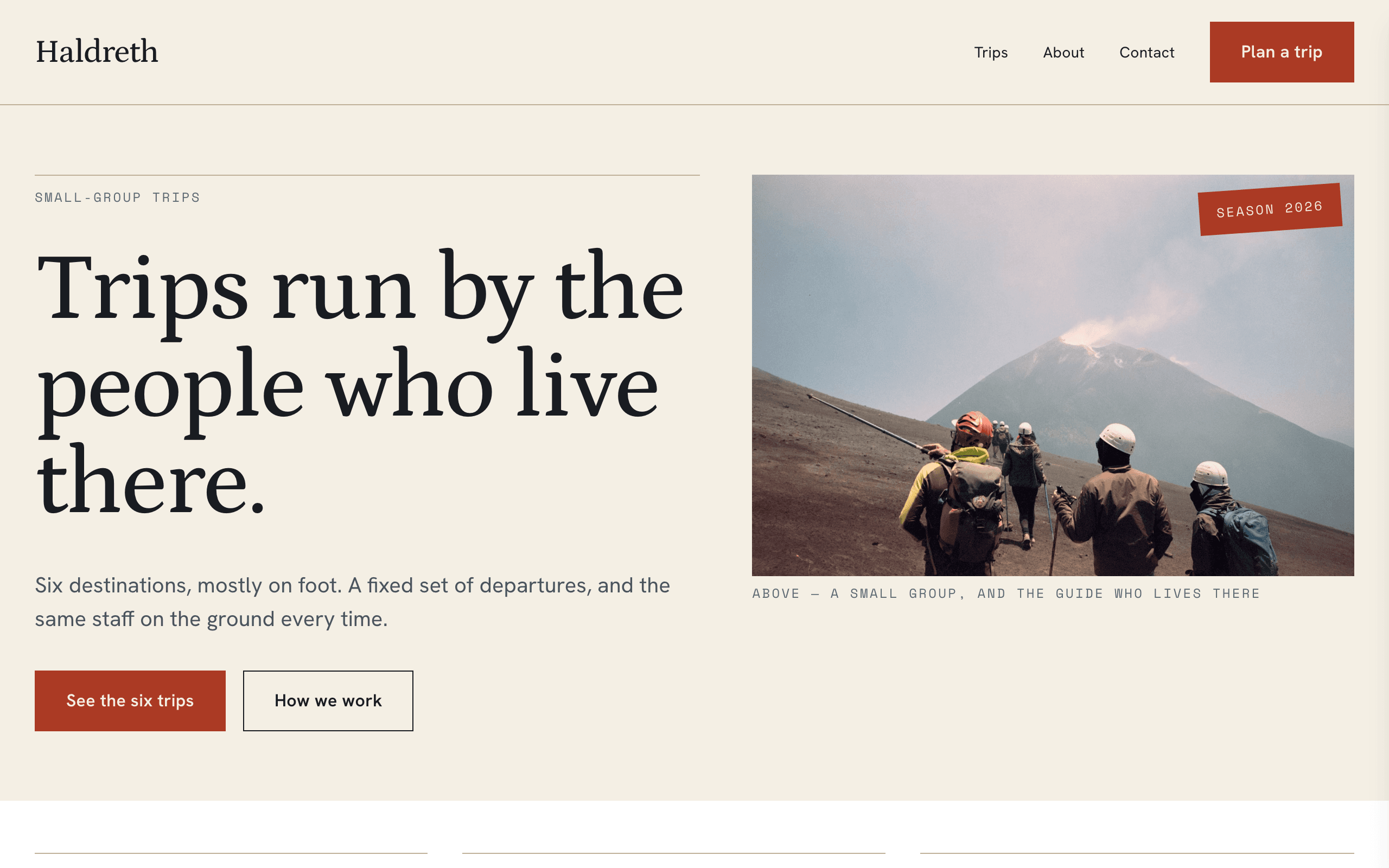
Who Wayfare is for
Built for these, and tested against them.
- Small tour operators with a fixed range of destination packages
- Walking, cycling and small-group adventure specialists
- Operators whose pitch is their own staff in the country, not the lowest price
- Anyone currently sending trip details out as an emailed PDF
- Two- to ten-person outfits that take enquiries rather than bookings
What’s included
Everything below ships with the template, already filled in.
- Pages
- 4 pages, written and laid out
- Grows with you
- 6 package entries at /trips/ — add one and its index and detail page both update
- Enquiries
- A working form — messages land in your Sitelas inbox
- Fonts
- Petrona and Hanken Grotesk · light theme
- Everywhere
- Built and checked at phone, tablet and desktop widths
- Yours to change
- Every colour, word and photograph — in the editor or by asking an AI agent
Build Wayfare by asking your AI agent
No editor required. The agent writes your copy, swaps the photos and publishes the site.
- 1Connect Sitelas to Claude, ChatGPT or another AI agent that supports MCP. How to connect
- 2Ask for it in plain words: “Build a website for a small tour operator with a fixed range of destination packages using the Wayfare template.”
- 3Open the preview link it sends back, ask for changes, and publish when it reads right.
Then keep changing it from the same chat
- Rewrite the copy“Rewrite every page in a warmer, friendlier voice.”
- Change the design“Make the colours earthier and use a serif for headings.”
- Add or remove pages“Add a Pricing page and remove the Blog.”
- Rearrange sections“Move the testimonials higher and add an FAQ.”
- Swap the photos“Replace the photos with ones that fit my business.”
- Run the site“Show me this week's form messages, then publish.”
Everything here can also be done by hand in the visual editor.
About the Wayfare template
Built for small tour operators
Wayfare is for walking, cycling, food or wildlife holiday companies with a fixed set of trips. Travellers get the facts they compare on, and each trip page ends with its own enquiry form.
What's on the site
- Home with featured trips
- The trips, each with its route, length, departure months, group size and from-price
- A day-by-day itinerary and an enquiry form on every trip page
- About and Contact
What to know
Every enquiry records which trip it came from. There is no live availability or checkout, so many operators add a Stripe Payment Link for deposits.
When to pick something else
Wayfare is the wrong template for these. Where there is a better one, it is linked.
- Single hotel, B&B or guesthouse — one venue, not a range of trips — try Amber or Beacon
- Preschool, camp or term-based kids' programme — try Marigold
- Physical goods with a price and a payment link — try Kilnwork or Counter
- Restaurant or cafe with a menu — try Amber or Juniper
- Anything needing a cart, live availability or real inventory — Sitelas has neither
- Travel writing or a trip journal rather than trips for sale — try Narrative
Free to use · No credit card required
- 1Opens in the editor with the starter content in place
- 2Change the words and pictures to yours
- 3Publish to a sitelas.com address, or your own domain
Key Highlights
Questions about Wayfare
Do I know which trip an enquiry is about?
Yes. Each trip page has its own form, and every enquiry carries the trip it came from.
Can I take bookings and payments?
No. Wayfare collects enquiries; there is no live availability or checkout. Many operators add a Stripe Payment Link for deposits.
Who is Wayfare for?
Wayfare is built for a small tour operator with a fixed range of destination packages, a walking or trekking holiday specialist and a small-group adventure travel outfit. Not built for single hotel, B&B or guesthouse — one venue, not a range of trips — try Amber or Beacon instead.
What pages come with Wayfare?
4 pages, already written and laid out: Home, The trips, About and Contact. Add, rename or remove pages whenever you like.
Can Claude or ChatGPT build my site from Wayfare?
Yes. Connect Sitelas to your AI agent and ask for a site that uses Wayfare. It fills in your details, sends you a preview link, and publishes when you approve. The same chat can keep running the site afterwards.
Can I change Wayfare without code?
Yes. Click any text, photo or colour to change it in the visual editor, or ask your AI agent to make the change. Nothing is locked.
What does it cost?
Nothing to start, with no trial clock. A free site runs on a sitelas.com address; Pro is $9 a month per site ($90 a year) for your own domain, analytics and more room.
Can I use my own domain?
Yes, on Pro. Point your domain at the site and the SSL certificate is issued and renewed for you.
Make Wayfare yours
It opens in the editor with every page already written. Change what you want, publish when it reads like you.
Free to use · No credit card required
Related templates
All clinics, schools & studios templates →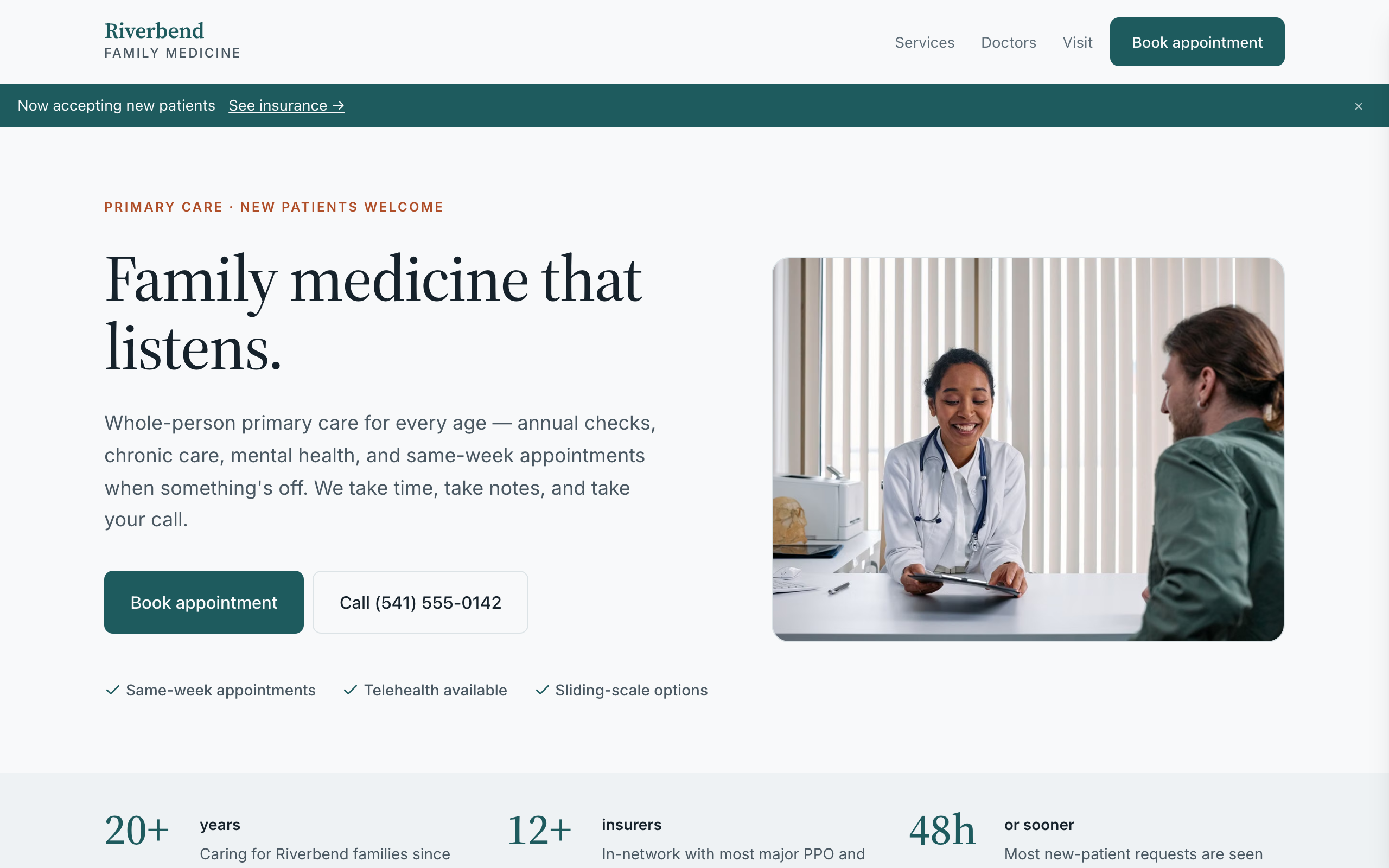
Riverbend
For family practices and small clinics: appointment requests, your care team, services and visit info.
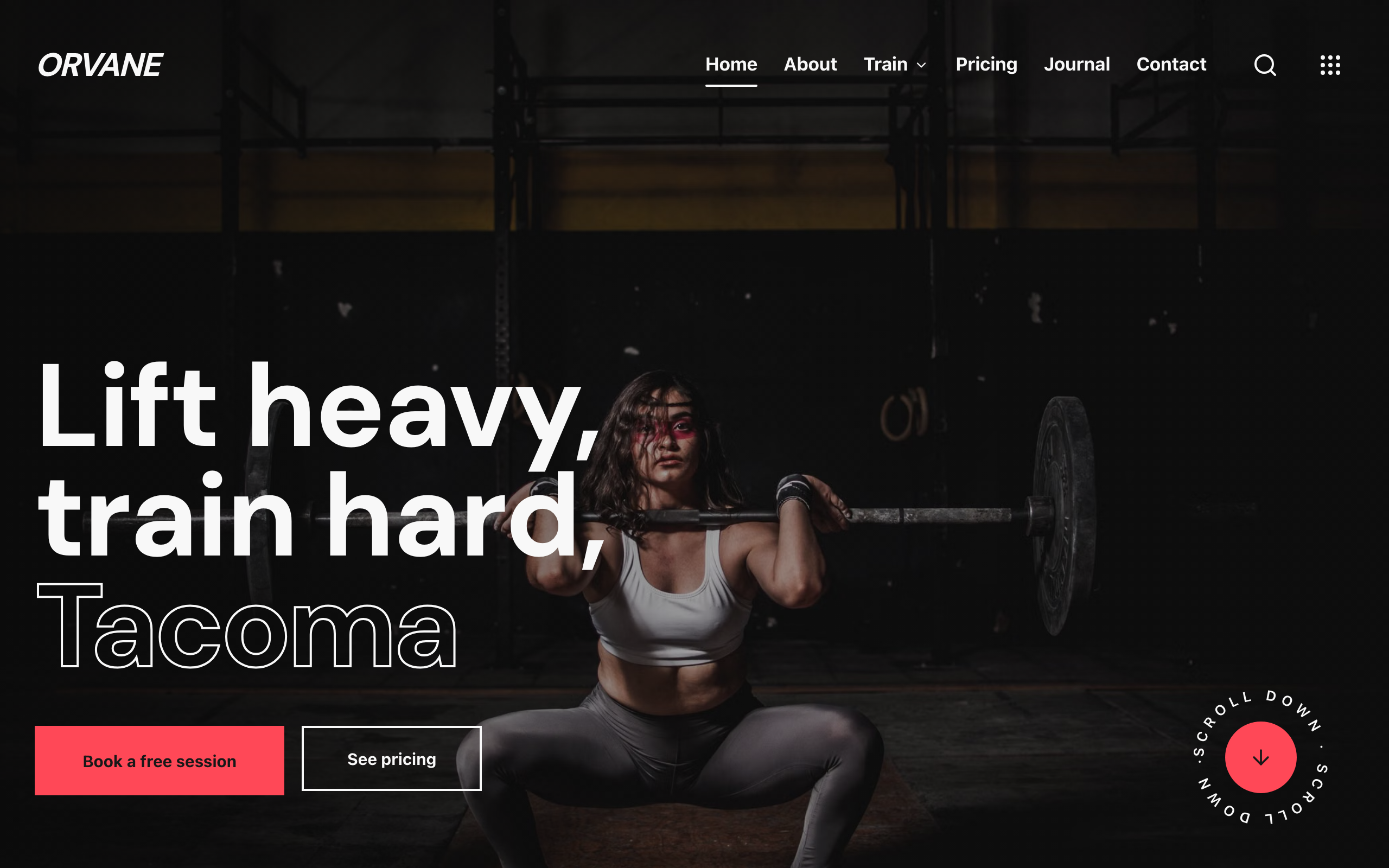
Kilo
For strength gyms and CrossFit-style boxes: programs, coaches, three monthly plans and a free first session.
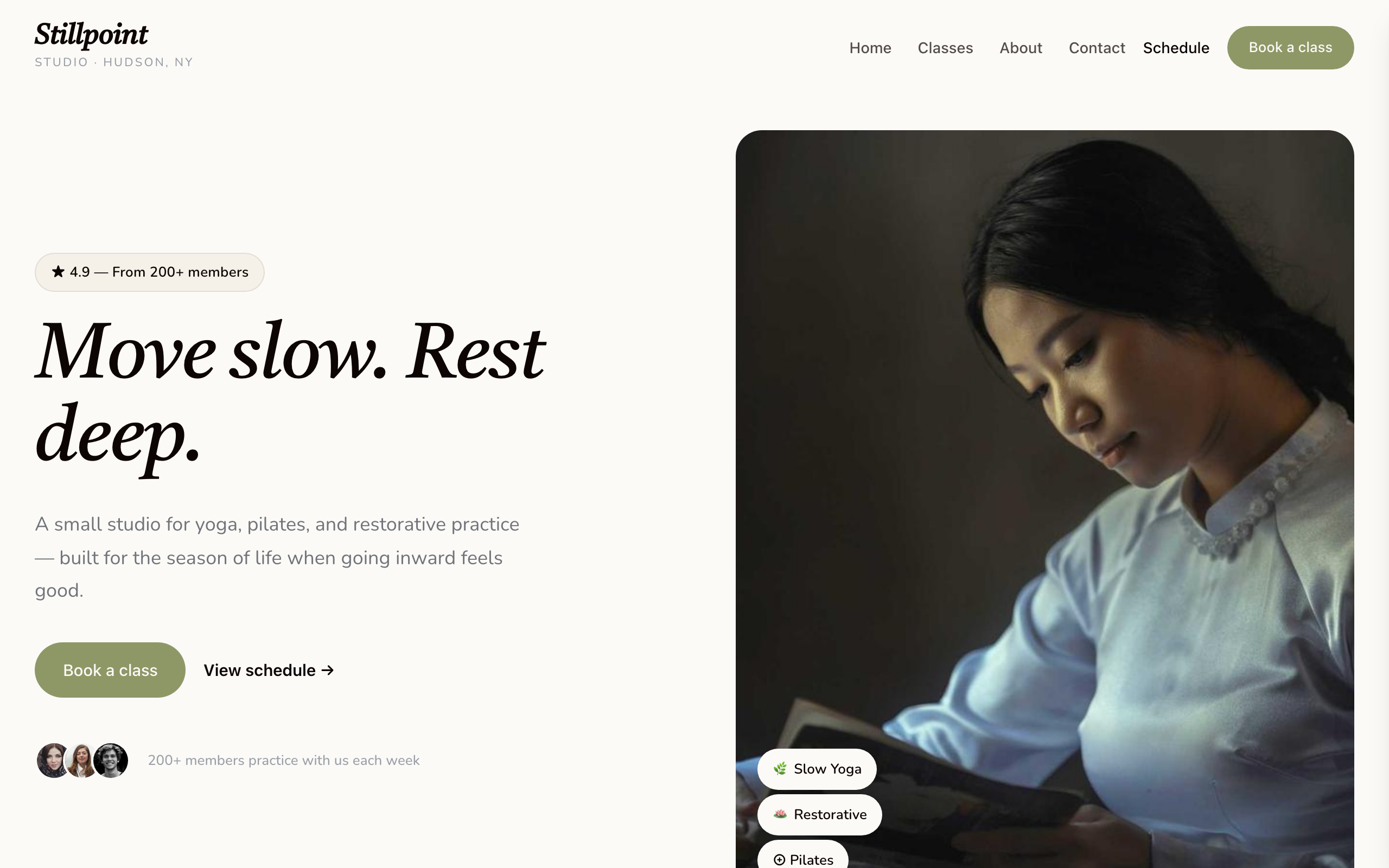
Lotus
A calm site for yoga and pilates studios: classes, memberships, teachers and an enquiry form.

Marigold
A warm site for preschools and daycares: classrooms, teachers, a child's day and tour booking.
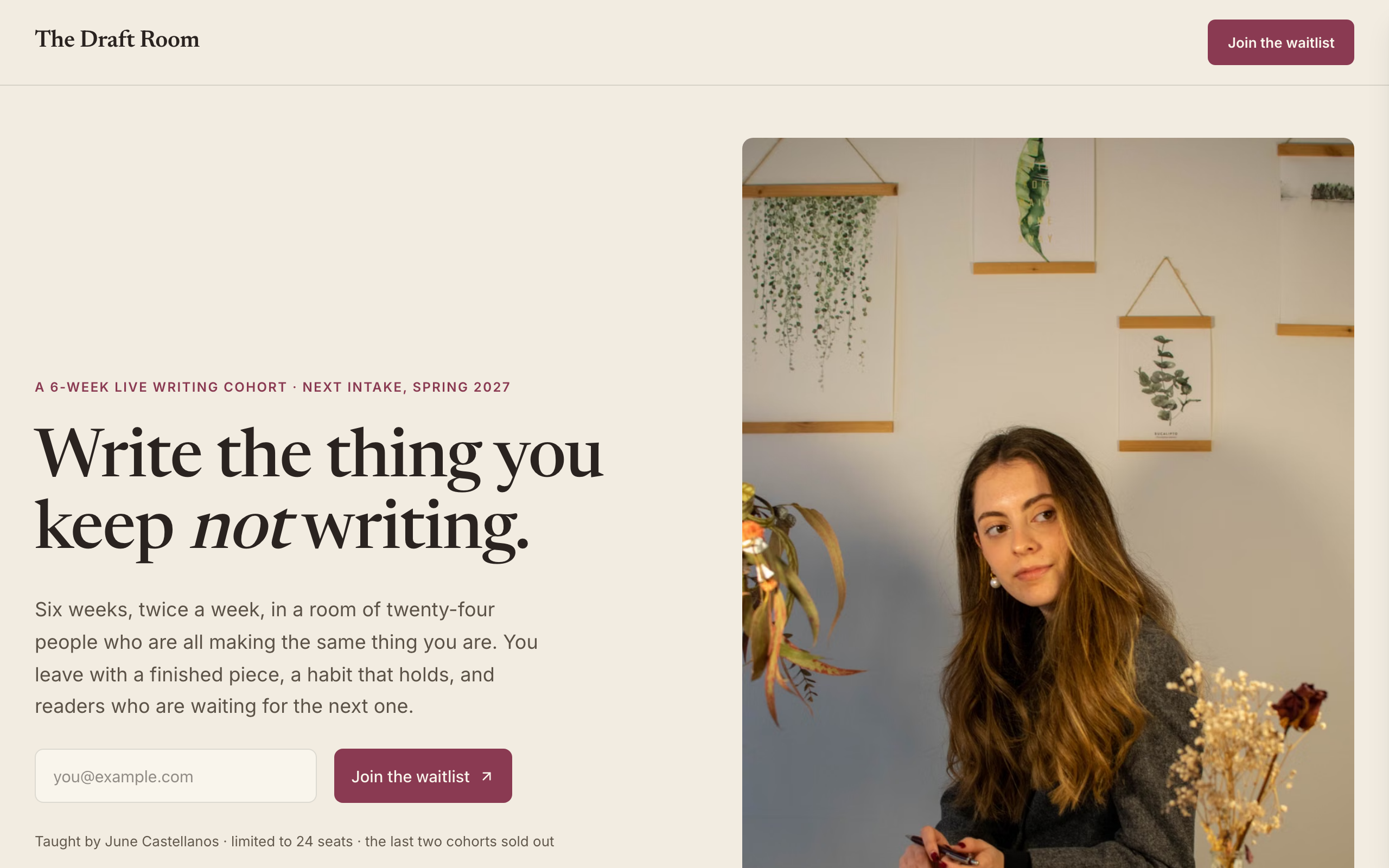
Atelier
A waitlist page for a cohort course: the instructor, the syllabus week by week and a join-the-list form.
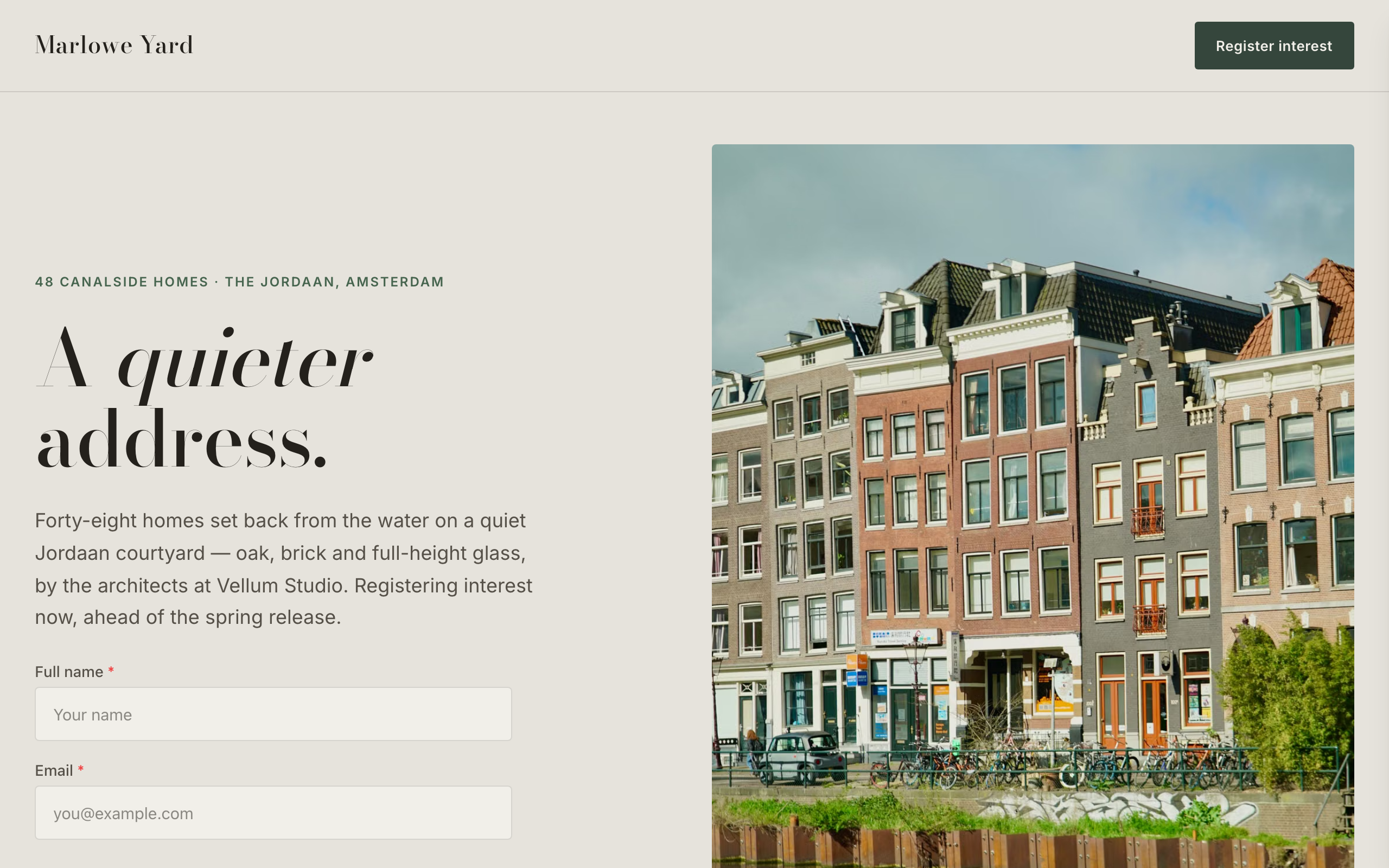
Atrium
A pre-launch page for a new residential development: residences, location and a register-interest form.