

Kilnwork
A website template for ceramics studio selling a stocked range
Most of the template library assumes the work is a portfolio — the pitch is the craft, and the conversion is an enquiry. Kilnwork assumes the opposite: there is a shelf of finished pieces with prices on them, and the visitor came to buy one.
Who Kilnwork is for
Built for these, and tested against them.
- Ceramicists, jewellers and woodworkers with a stocked range
- Small-batch food and drink producers selling direct
- Candle, soap and print makers who also take custom orders
- Studios that sell at markets and want the same range online
- Any maker who currently sends people to Instagram DMs to buy
What’s included
Everything below ships with the template, already filled in.
- Pages
- 4 pages, written and laid out
- Grows with you
- 6 product entries at /shop/ — add one and its index and detail page both update
- Enquiries
- A working form — messages land in your Sitelas inbox
- Type
- Young Serif and Inter · light theme
- Everywhere
- Built and checked at phone, tablet and desktop widths
- Yours to change
- Every colour, word and photograph — in the editor or by asking an AI agent
About This Template
For makers who sell what they make
The shop is a product collection. Each item carries a photograph, a price, a description and its own Stripe payment link, so the owner adds stock by talking to Claude rather than editing a page. The index and the detail pages both come from that one collection.
Both halves of how a studio trades
A stocked range rarely covers everything — the wedding gift, the café's repeat order, the dinner set in a particular glaze. Those go through the commissions page, which carries a structured enquiry form (piece, timeline, budget) rather than a bare contact box.
No cart, on purpose
Sitelas has no basket or inventory system. One payment link per item is the whole checkout, which suits a maker with tens of items rather than thousands — and means there is nothing to reconcile when a piece sells out.
When to pick something else
Kilnwork is the wrong template for these. Where there is a better one, it is linked.
Free to use · No credit card required
- 1Opens in the editor with the starter content in place
- 2Change the words and pictures to yours
- 3Publish to a sitelas.com address, or your own domain
Key Highlights
Questions about Kilnwork
Can I change how Kilnwork looks?
All of it. Colours, type, spacing, photographs and every word are yours to edit — in the visual editor, or by asking an AI agent to do it for you. Nothing is locked.
Do I need to know how to code to use Kilnwork?
No. You edit the page by clicking the thing you want to change. There is no code to write and nothing to install.
Can I add more product entries later?
Yes — that is what the product collection is for. Adding one from the editor creates its own page at /shop/ and updates the index automatically. You are not editing a list by hand.
What does Kilnwork cost?
Nothing to start, and there is no trial clock. A free site runs on a sitelas.com address; Pro is $9 a month per site when you want your own domain, analytics and more room.
Can I use my own domain?
Yes, on Pro. Point your domain at the site and SSL is issued automatically — there is no certificate to buy or renew.
Make Kilnwork yours
It opens in the editor with every page already written. Change what you want, publish when it reads like you.
Free to use · No credit card required
Related Templates
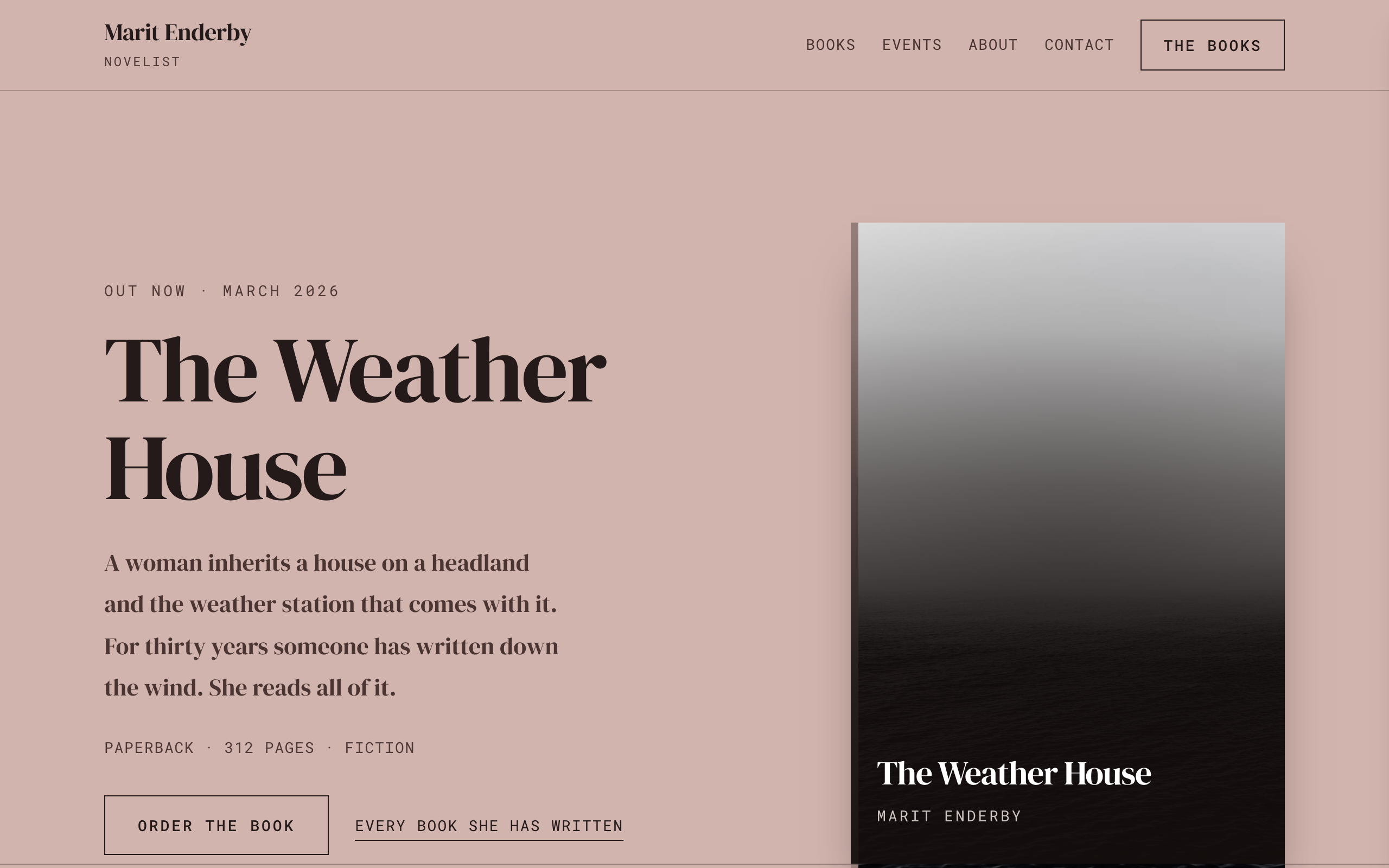
Deckle
A shelf, and the jacket you take off it. Built for anyone who sells books they wrote — novelists, poets, cookery writers, small presses, self-published authors. Every cover stands on a hairline rule that runs off both edges of the screen, and the whole site sits on one continuous dusty-rose ground with no bands between sections. Titles, blurbs and reader letters are set in DM Serif Display; formats, extents, dates and ISBNs are Roboto Mono, so prose and facts never wear the same face. Books and readings are both collections, so the backlist and the diary are things the owner adds to rather than pages a developer edits. Out-of-print titles say so and say where to look instead. Distinct from quire (digital files, no covers), counter (a short shelf of product plates), kilnwork (craft-luxury, the making is the pitch) and stockroom (a price list, not a catalogue).
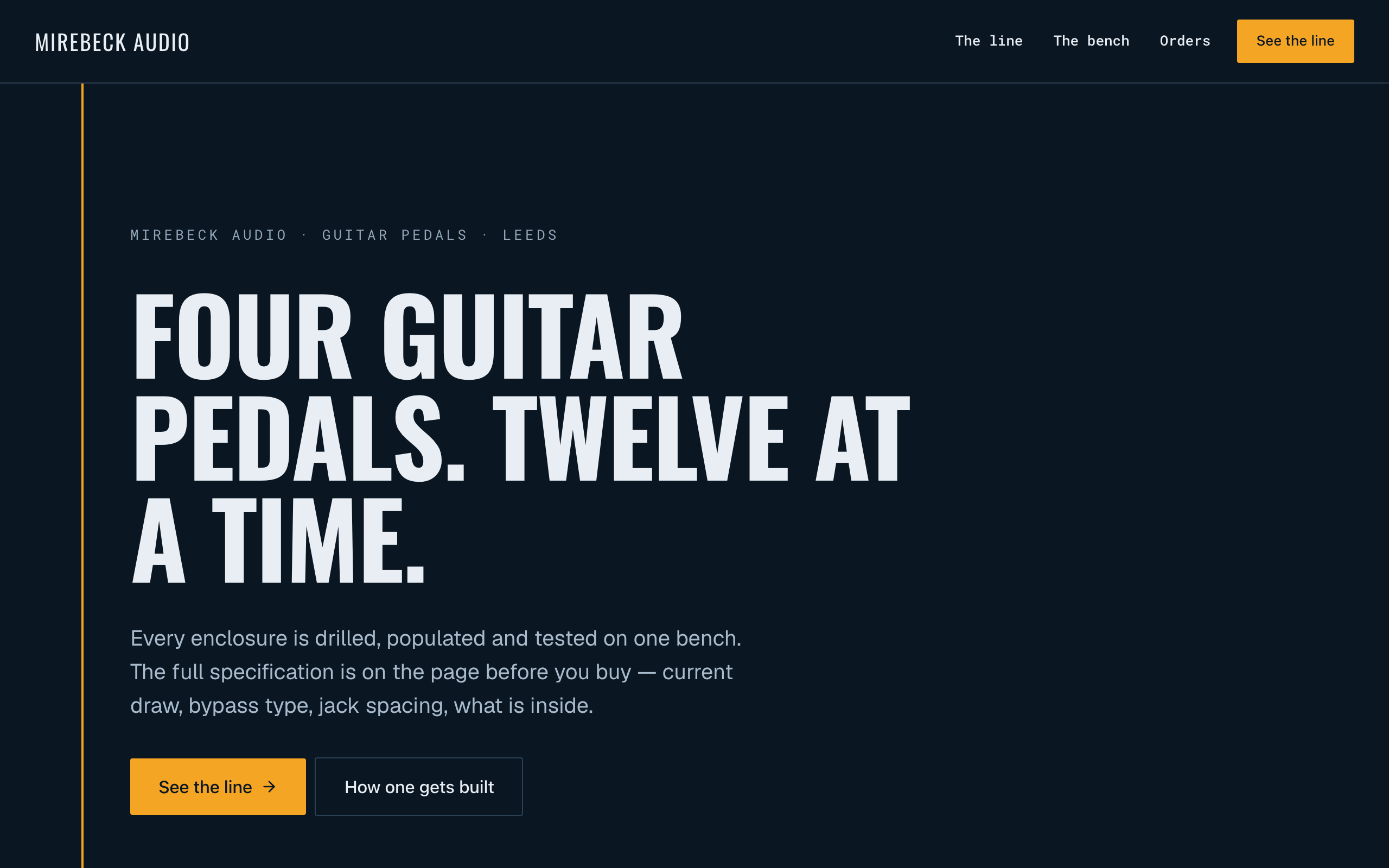
Ferrite
A specification-led shop for anyone who sells a made object that a buyer compares by its numbers. A single accent spine runs the whole height of every page, with each section hung off it at a labelled node — the page is a signal chain and the sections are stations on it. Navy ink ground, warm amber signal, Oswald condensed caps for display and Roboto Mono for every figure. The product collection carries circuit, current draw, bypass, enclosure and controls beside price and availability, so the specification block is doing the selling rather than the photograph. Entrance motion is used deliberately in three places: the stat strip arrives left to right, the range switches on in sequence, the build stages pass the signal down the page. Distinct from kilnwork (warm craft-luxury, the making is the story), counter (a neutral white shelf that suits any object) and quire (a downloadable file sold on a free sample).

Flagship
A full-width section-stack layout with alternating backgrounds, numbered service list, staggered project grid, and bold typographic hero. The classic modern agency pattern.