

Atrium
A website template for a new residential development registering interest before sales launch
Atrium is for a new residential DEVELOPMENT registering interest before sales open — a boutique block of homes, a canalside conversion, a limited release. Every other Sitelas waitlist sells software, an app, or a product; atrium sells addresses. The register is image-led architectural: cool limestone, ink, a single deep architectural-green accent, Bodoni Moda display against Inter. It reads like a property brochure, not a landing page.
Who Atrium is for
Built for these, and tested against them.
- New residential development registering interest before sales launch
- Boutique apartment or townhouse release (10–60 homes)
- Canalside / waterfront / conversion development pre-launch
- Developer or sales agent building a priority list before the brochure
- Off-plan release capturing interest ahead of a public launch
What’s included
Everything below ships with the template, already filled in.
- Pages
- 1 page, written and laid out
- Enquiries
- A working form — messages land in your Sitelas inbox
- Type
- Bodoni Moda and Inter · light theme
- Everywhere
- Built and checked at phone, tablet and desktop widths
- Yours to change
- Every colour, word and photograph — in the editor or by asking an AI agent
About This Template
The first real-estate waitlist
Real-estate-native signatures
A register-interest form takes a name and an email — the vernacular buyers expect, no reservation or deposit. A residences table lays out the home types, sizes, from-prices and availability the way a price list does. A location datasheet gives walk-times to the things that decide a neighbourhood. And a completion timeline sets expectations honestly. None of these belong on a software waitlist.
Newsletter-signup / register-interest conversion
The page funnels to one register-interest form. Submissions land in the Sitelas inbox; add a webhook to forward them to the sales agent or CRM. Swap the architectural photographs for the development's real renders — and mind the disclaimer line already in the footer.
When to pick something else
Atrium is the wrong template for these. Where there is a better one, it is linked.
Free to use · No credit card required
- 1Opens in the editor with the starter content in place
- 2Change the words and pictures to yours
- 3Publish to a sitelas.com address, or your own domain
Key Highlights
Questions about Atrium
Can I change how Atrium looks?
All of it. Colours, type, spacing, photographs and every word are yours to edit — in the visual editor, or by asking an AI agent to do it for you. Nothing is locked.
Do I need to know how to code to use Atrium?
No. You edit the page by clicking the thing you want to change. There is no code to write and nothing to install.
What does Atrium cost?
Nothing to start, and there is no trial clock. A free site runs on a sitelas.com address; Pro is $9 a month per site when you want your own domain, analytics and more room.
Can I use my own domain?
Yes, on Pro. Point your domain at the site and SSL is issued automatically — there is no certificate to buy or renew.
Make Atrium yours
It opens in the editor with every page already written. Change what you want, publish when it reads like you.
Free to use · No credit card required
Related Templates
Reyes
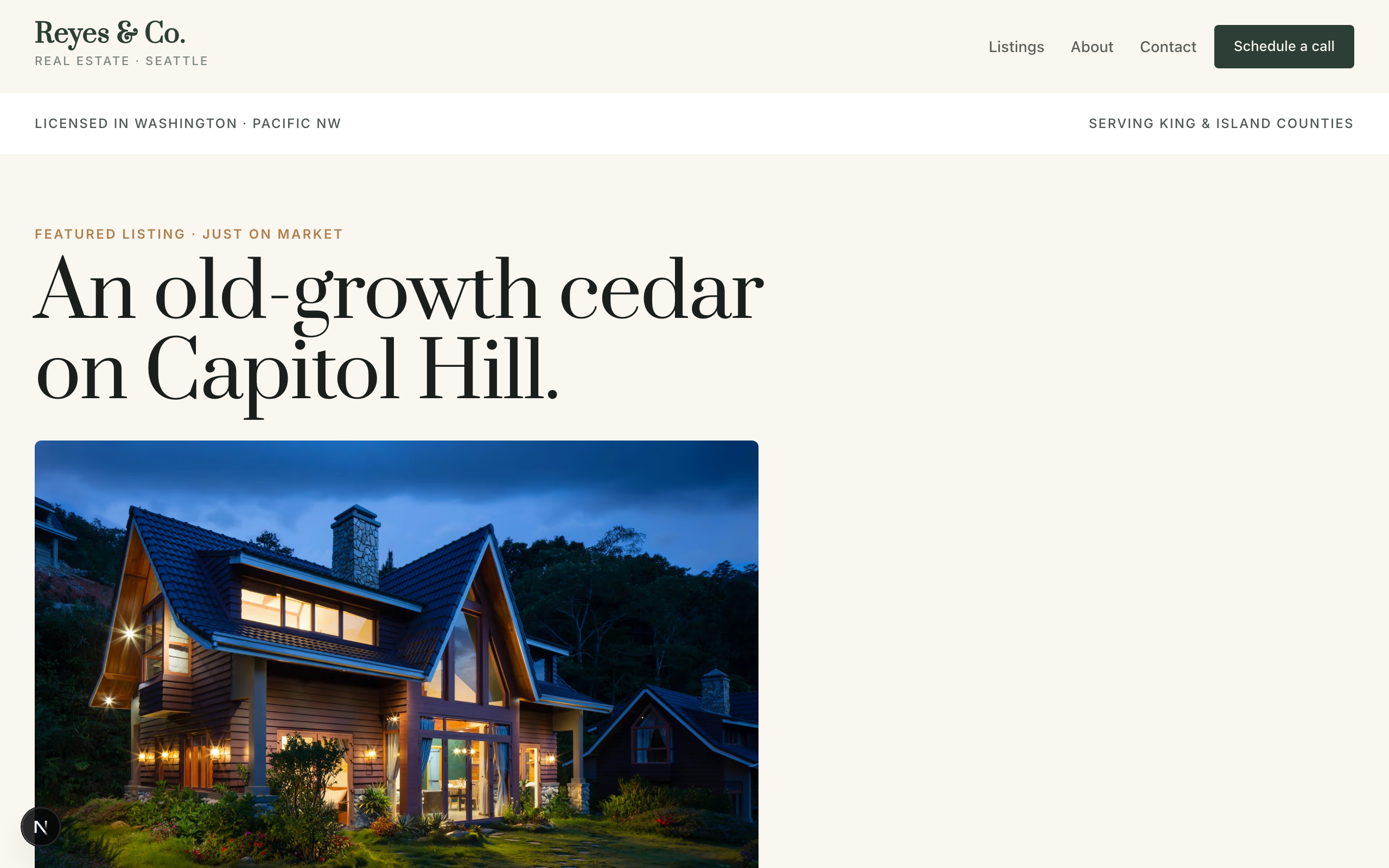
Real estate broker template. Deep forest green with warm ochre accents on warm off-white — grounded-luxury, not breathless. Prata display (high-contrast Didone) paired with Inter body. Introduces the listings-as-catalog pattern: a featured-listing hero with price / address / beds / baths / sqft, a listing grid with status chips (For Sale / Pending / Sold) and price labels, a client-testimonial block tied to specific transactions. No commerce primitives — real estate intake is qualitative, handled via contact form. This fixture unlocks adjacent archetypes: boutique hotel, vacation rental, car dealership — anywhere the site sells a catalog of high-value individual items.
Riser
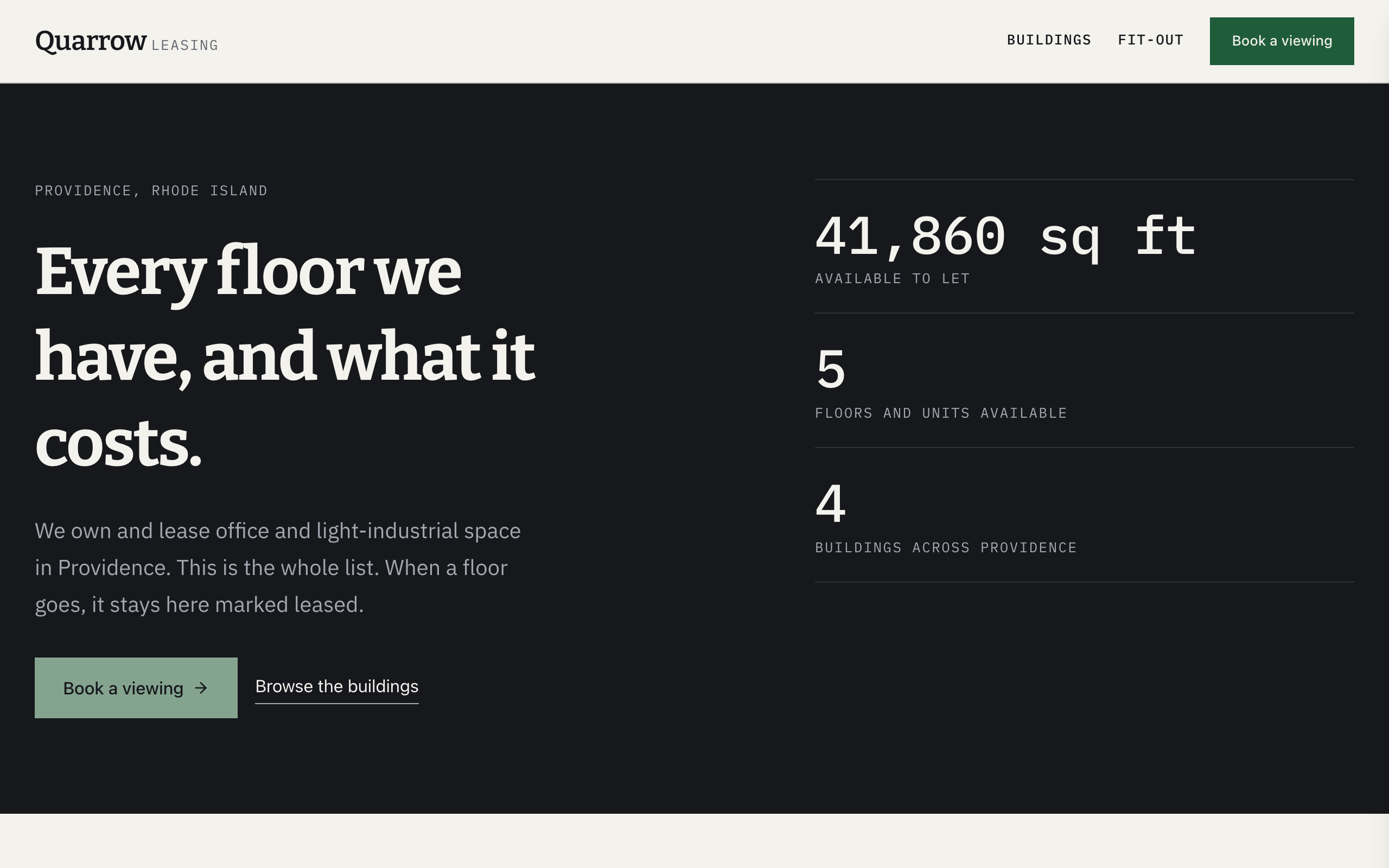
A commercial leasing site built as the document a broker actually keeps: the stacking plan. The whole availability schedule is a real table, full-bleed across the page, with every floor's status the loudest thing on screen — available, under offer, or leased and struck through. Warm paper ground, Bitter slab headings, IBM Plex Mono on every figure. Buildings are a collection, so marking a floor let on its building page is a three-field edit on one row rather than a page rewrite, and those pages stay true the week after launch. A before/after slider carries the fit-out story that photography alone cannot. Distinct from reyes (craft-luxury broker listings where the photograph does the selling), atrium (one pre-launch development capturing interest before anything exists) and foundry (a firm selling its team rather than its inventory).
Parcel
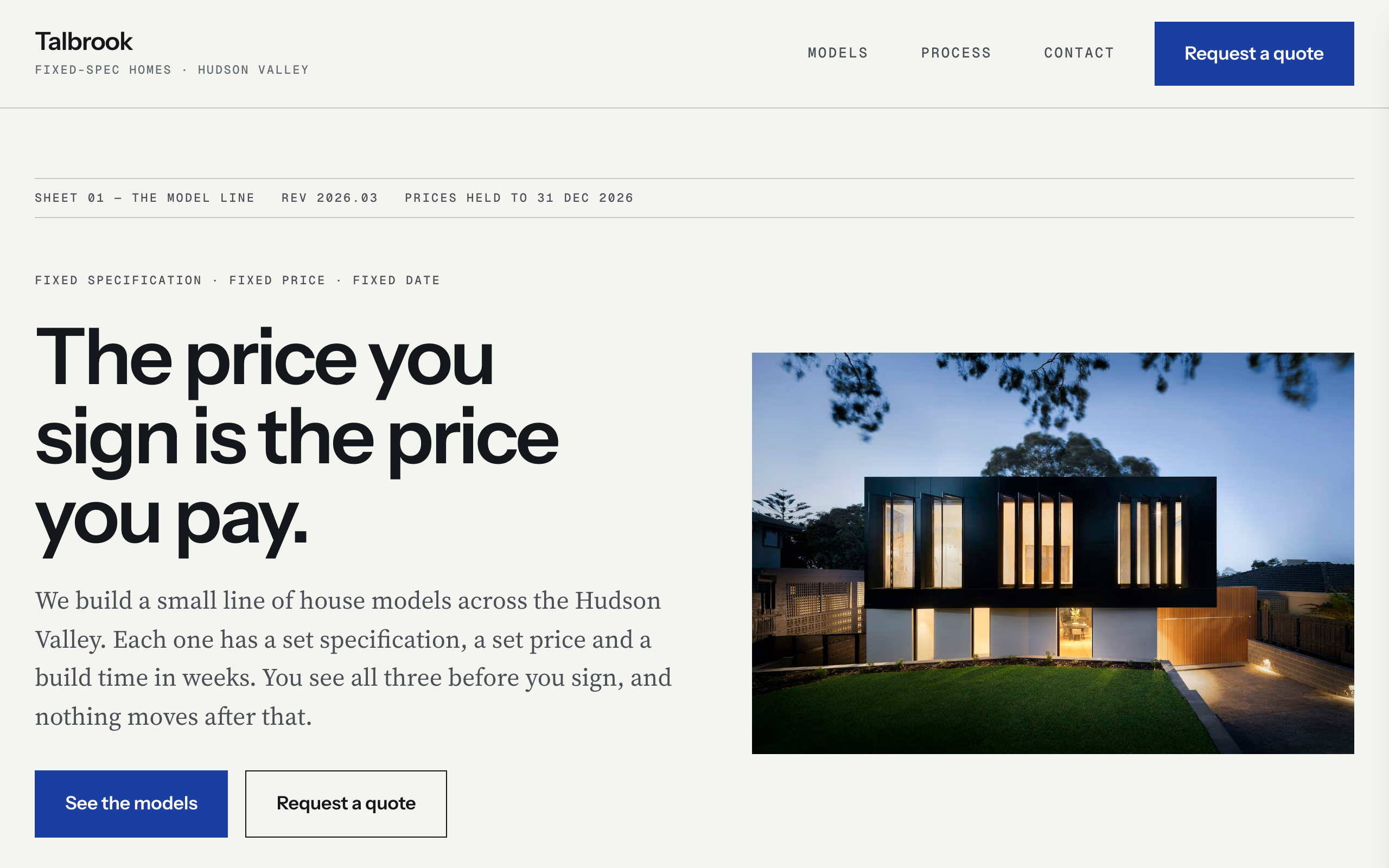
For a builder or developer selling standard house MODELS rather than one-off listings. Fixed specification, fixed from-price, build time in weeks. The whole site is laid out as a spec sheet you could sign: hairline-ruled label/value ledgers carry the pitch on the home page, the comparison columns on the model index, and the specification on every model page. The signature move is a double ledger — 'In the price' beside 'Not in the price' — because the argument is 'no change to the price halfway through', not aspiration. Models are a content collection, so one row drives the home strip, the index and its own page. Instrument Sans display over a Source Serif 4 body with Geist Mono data labels; cool paper, ink and a single drafting blue. Quote-intake form, no commerce, no booking.