Insurance Agency Website Design: What Clients Check Before They Call
What insurance agency website design needs: a page per kind of cover, a safe quote form, a claims page, your license and your agents. Then a real build from one message to Claude.

Usman Haider

A homeowner's renewal notice arrives with a higher price. They search for a local agent and open a few sites. This is where insurance agency website design matters: they usually want three answers. Do you write the cover they need? Are you licensed? And how do they ask for a quote without handing over private numbers?
Good insurance agency website design answers those on the first screens. This guide covers what to put on the site. Then it shows a real build for a made-up agency in Portland, Maine. One message to Claude built it, and ChatGPT made a second change.
What insurance agency website design needs
Your phone number and a quote button, on every page
Put a tap-to-call number in the header and a "Get a quote" button on the first screen. Some people would rather fill in a form than call, so give them both.
A page for each kind of cover
Auto, home, renters, life and business cover are different searches from different people. Give each its own page. Say what it covers, what changes the price and what to have ready. A page about home cover can also say what it doesn't cover, like flood.
A quote form that never asks for sensitive numbers
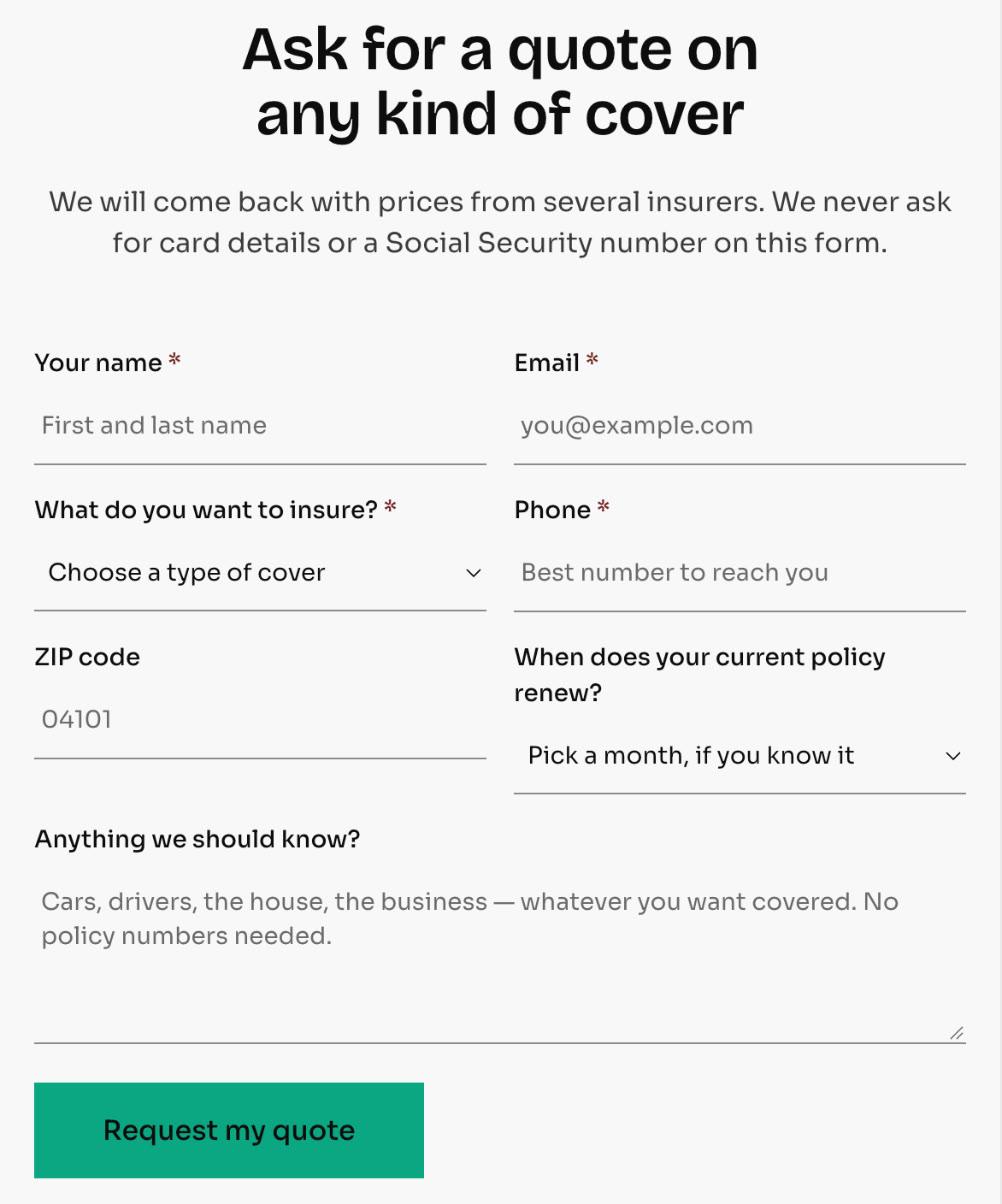
Ask what they want to insure, a phone number, a ZIP code and when their current policy renews. Leave out policy numbers, card numbers and Social Security numbers. A website form is the wrong place for them. Say so above the form. It tells people you take their data seriously.
The insurers you work with
Independent agencies compare several insurers, and that is their advantage. Name the insurers you place business with, if your agreements allow it. Clients want to know you can shop more than one company for them.
How to make a claim
When something goes wrong, people look for the claims number first. A claims page with each insurer's claims line saves a frantic call to your office. Explain when to call the insurer and when to call you.
Your license number and your people
Show your producer license number in the footer. Your state may have rules about what an agent's ads must show. Check with your state's insurance department. Then show your agents with their names, roles and photos. People buy cover from someone they can picture.
Your office and your area
Put the street address, a map and the towns you serve on the site. A local agency's advantage is being down the road, so make that obvious.
Plain answers to common questions
A short FAQ or a few articles help. Cover adding a teen driver, what flood cover is and what to do after a storm. Keep them general and say they aren't advice for a specific policy.
Insurance agency website mistakes
- One "Products" page for all your cover. It can't match five different searches.
- A form that asks for a policy or Social Security number. Many will leave, and you'd hold data you don't need.
- No claims page. A client with a smashed car shouldn't have to hunt for a number.
- Stock smiles instead of your agents. Show the people who will answer the phone.
- Testimonials you can't trace. Link to real reviews, such as your Google profile.
Once the site is right, being found is the next job. Insurance agency SEO covers the Google profile, reviews and local links, step by step.
Building an insurance agency website by asking Claude
I added Sitelas to Claude and sent one message. It was for a made-up agency, Harbor Point Insurance, with three agents on Fore Street in Portland:
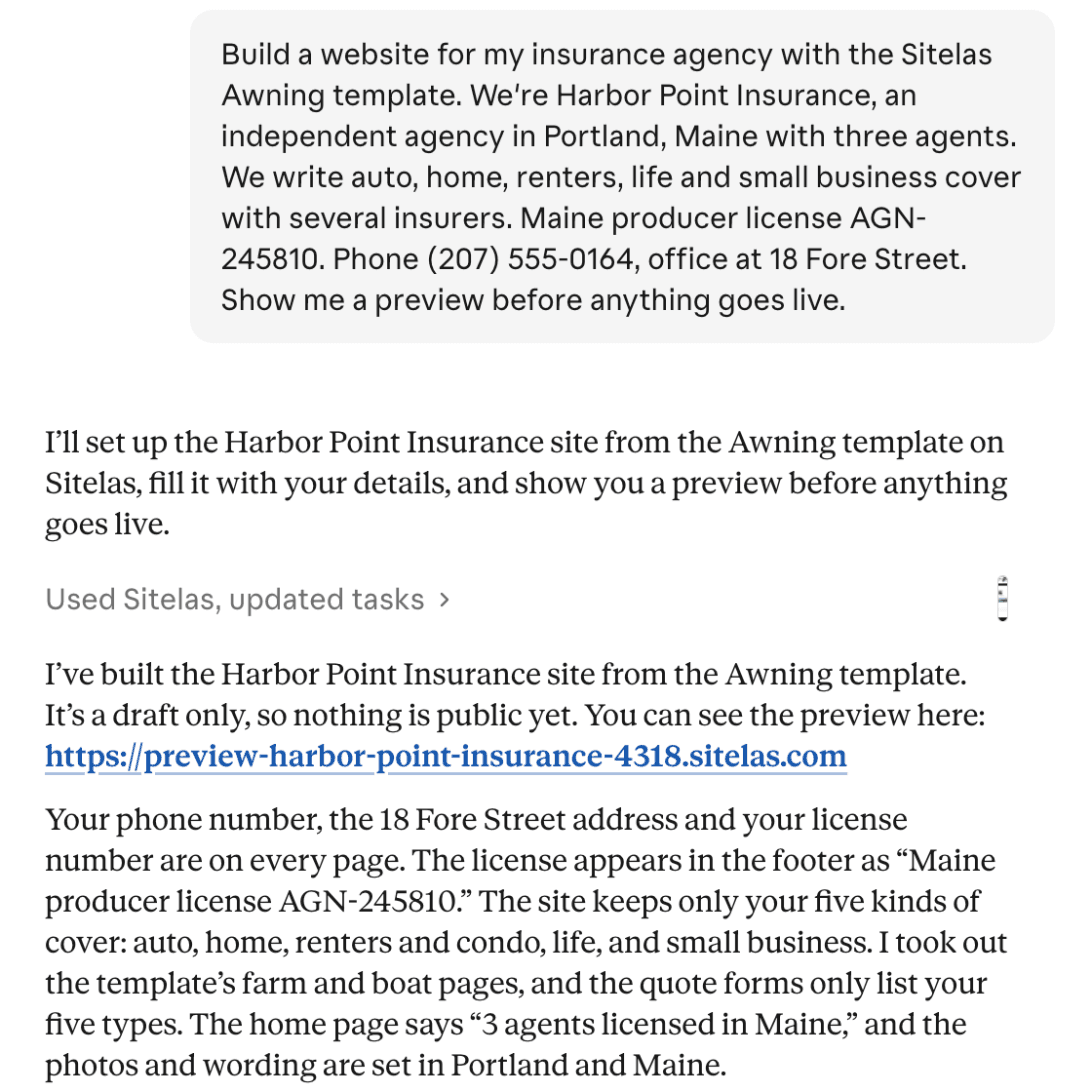
Claude used Awning, Sitelas's insurance agency template. Nothing went live: it saved a private draft and sent a preview link. It removed the template's farm and boat pages, because this agency doesn't write that cover.
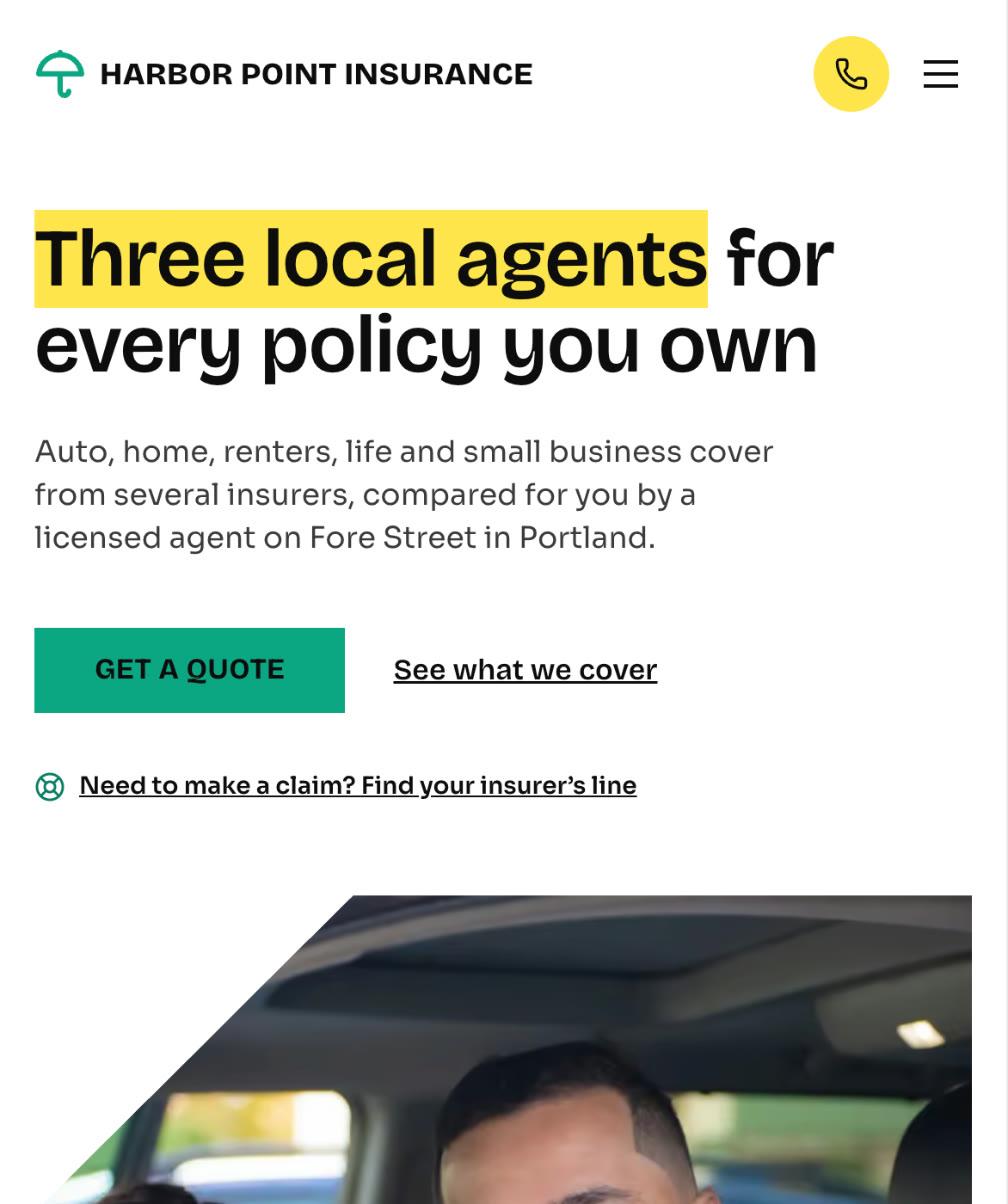
The first screen on a phone says there are three local agents, and names the cover and the street. It has a quote button and a link to claims lines:
The quote form asks what to insure, a ZIP code and the renewal month. Above it, a line says the form won't ask for card details or a Social Security number:
What Claude wouldn't make up
I didn't give Claude the insurers or the agents' names. So it left marked spots on the site and asked for them:

Here is the claims page as it stands. A real agency fills these in before publishing:

It also removed the template's sample reviews, and added no email, office hours or social links.
A change from ChatGPT
I filled in the three agents from ChatGPT, with Sitelas added there too. The reply lists each one; here are the first two:
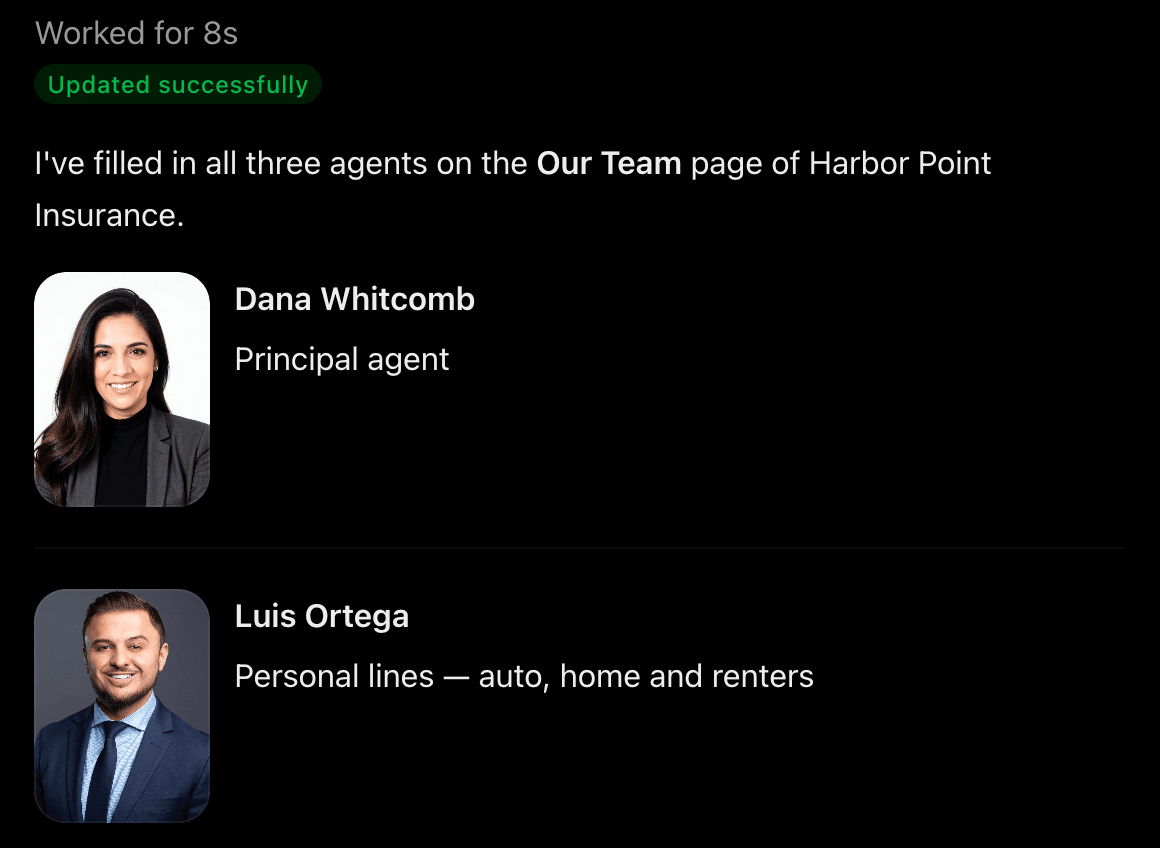
The names appeared on the preview's team page. The photos are still stock, so a real agency would send its own. Nothing goes live until you publish.
What it can't do
Sitelas builds and runs the website. It doesn't rate policies, give instant quotes, run a client portal or take premium payments. Those stay with your agency software and each insurer's own portal. Link to them from the site.
Quote requests land in a Sitelas inbox. The Free plan lets you read 5 a month, and renewal season will pass that. Pro reads up to 500 a month and adds your own domain. It costs $9 a month per site, or $90 a year.
Before you publish, check the site page by page, especially the claims numbers. For other licensed advisers, see our guides to a mortgage broker website and a small law firm website.
Questions people ask
What should an insurance agency website include? A phone number and quote button on each page, and a page per kind of cover. A quote form that skips sensitive numbers. Then a claims page with each insurer's line, your license number, your agents and your office address.
How do I create an insurance agency website? Pick a template built for agencies, then fill in your cover, insurers, agents and license. With Sitelas, you describe your agency to Claude or ChatGPT. Then you check the preview before it goes live.
Can clients get an instant quote on the website? Not on Sitelas. The quote form collects what to insure and when the policy renews, and an agent replies with prices. For instant rating you would need other software, such as a comparative rater.
What is the best website builder for insurance agencies? Agency-specific vendors such as Zywave, EZLynx and BrightFire sell sites with insurance content and tools. General builders such as Wix and Squarespace leave the insurance content to you. Sitelas sits between them: an insurance template you build and update by asking an AI assistant.
Try it
Copy this into a new Claude or ChatGPT chat after adding Sitelas. Swap in your own details first.
Use Sitelas to build a website for my insurance agency, [name] in [town],
on the Awning template. We write [auto, home, life, business...]
with [insurers]. License: [number]. Agents: [names and roles].
Phone: [number]. Office: [address].
Keep it as a preview until I say publish.
- Add to Claude: Sitelas in Claude's connector directory
- Add to ChatGPT: Sitelas in ChatGPT
- See the design we used: the Awning template
- More business templates: agency and professional services templates
Templates to start from
Build this with a ready-made design, then change anything.

Awning
For an independent insurance agency: a page per kind of cover, a quote form, a claims page and your license number.

Ballast
For a fee-only financial advisor or small practice: services, advisors, fees, client stories and a consultation form.

Lintel
For an independent mortgage broker or loan officer: an inquiry form, loan types, partners and a disclosures page.

Usman Haider
Founder of Sitelas — the website builder for AI agents.