Insurance Agency SEO: Getting Found by People Shopping Their Renewal
Insurance agency SEO in plain steps: the lines and towns to target, a Google Business Profile, a page per line of cover, a quote form that asks when the policy renews, reviews and local links.

Usman Haider

Insurance agency SEO means being found by people near you who are looking for cover or a better price. Think "home insurance agent in Lancaster", "independent insurance agent near me" or "farm insurance Pennsylvania". This guide covers what an agency owner can do without hiring an SEO firm, starting with what matters first.
What insurance agency SEO covers
A local agency can show up in two places on Google. One is the map, with three agencies, their stars and a phone button. The other is the list of web pages below it.
Google says map results come mainly from three things. Relevance: does your listing match the search? Distance: how close are you to the searcher? Prominence (Google also calls it popularity): how well known are you, including your reviews? Google also says there is no way to pay for a better local ranking.
The web pages that win answer one question well. What does this cover cost to get right, and who do I talk to?
1. Pick the lines and towns you really serve
You will not outrank the big insurers or comparison sites for "cheap car insurance". You can win the searches where a local agent is the answer:
- Line plus town: "home insurance agent Lancaster", "business insurance Lititz".
- Independent agent searches: "independent insurance agent near me".
- Specialty cover: farm, boat and RV, contractors, landlords.
- Questions: "why did my home insurance go up", "is flood covered".
Start from the lines you write most and the towns your clients live in. A short list you can serve beats a long one you can't.
2. Set up your Google Business Profile properly
The profile is what fills the map. The job is to fill in each field and keep it true:
- Name. Your real agency name only. Google's guidelines don't allow extra words like "Best Auto Insurance" in the name. Agents who meet clients may have their own profiles too, in the format Google sets.
- Category. Pick the main category that says what you are. Add others only if they also describe the agency, and keep the list short.
- Address. Show it if clients can visit. If you meet clients at their homes instead, Google says to hide it and set a service area. An agency that never meets clients in person may not qualify for a profile.
- Hours. Regular hours. Confirm your hours for each public holiday, even when they don't change.
- Photos. The real office and the real people who answer the phone.
Google says complete and accurate profiles are more likely to show up. Our Google Business Profile guide walks through the setup. It was written for trades, but the steps are the same for an agency.
3. Give each line of cover its own page
A search for "home insurance agent Lancaster" should land on your home insurance page, not your home page. One page per line gives Google a page that matches each search. It also gives the visitor the answer they came for.
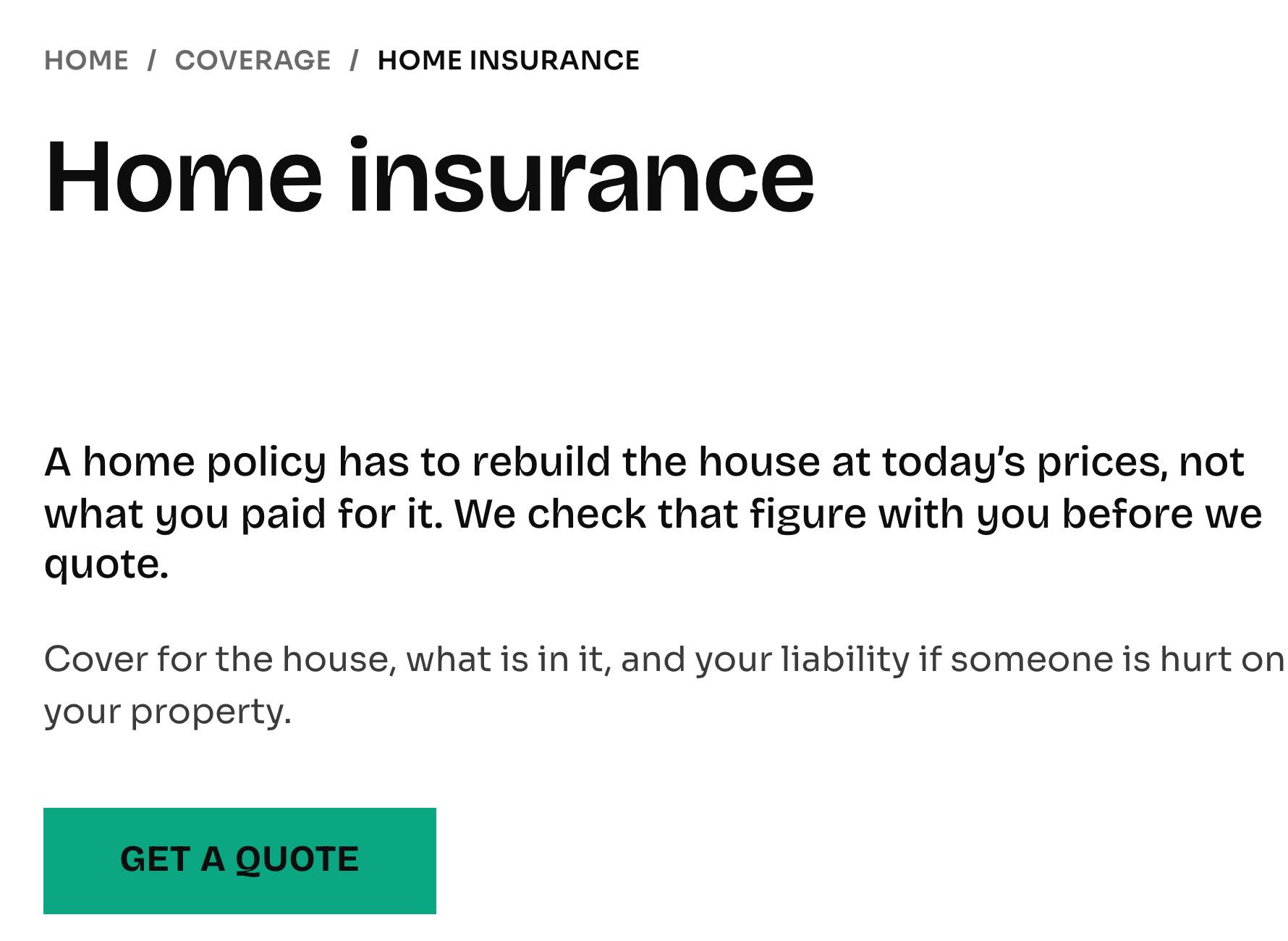
A coverage page on a demo agency site built from the Awning template. Each kind of cover has a page like this one.
A useful coverage page says:
- what the policy covers, in plain words;
- what moves the price;
- what people near you get wrong, such as flood being a separate policy;
- how to ask for a quote, and how fast you reply.
Keep each page different. Seven pages that only swap "auto" for "home" read as filler to people and to Google. Don't promise what a policy will pay. Cover depends on the policy's terms. Your state's insurance advertising rules may apply to your website too, so check with your compliance contact.
4. Make the quote form easy, and ask when they renew
Leave Social Security numbers and card details off a website form. Ask only what a first call needs: name, contact details, what to insure and a ZIP code.
One more question earns its place: when does the current policy renew?
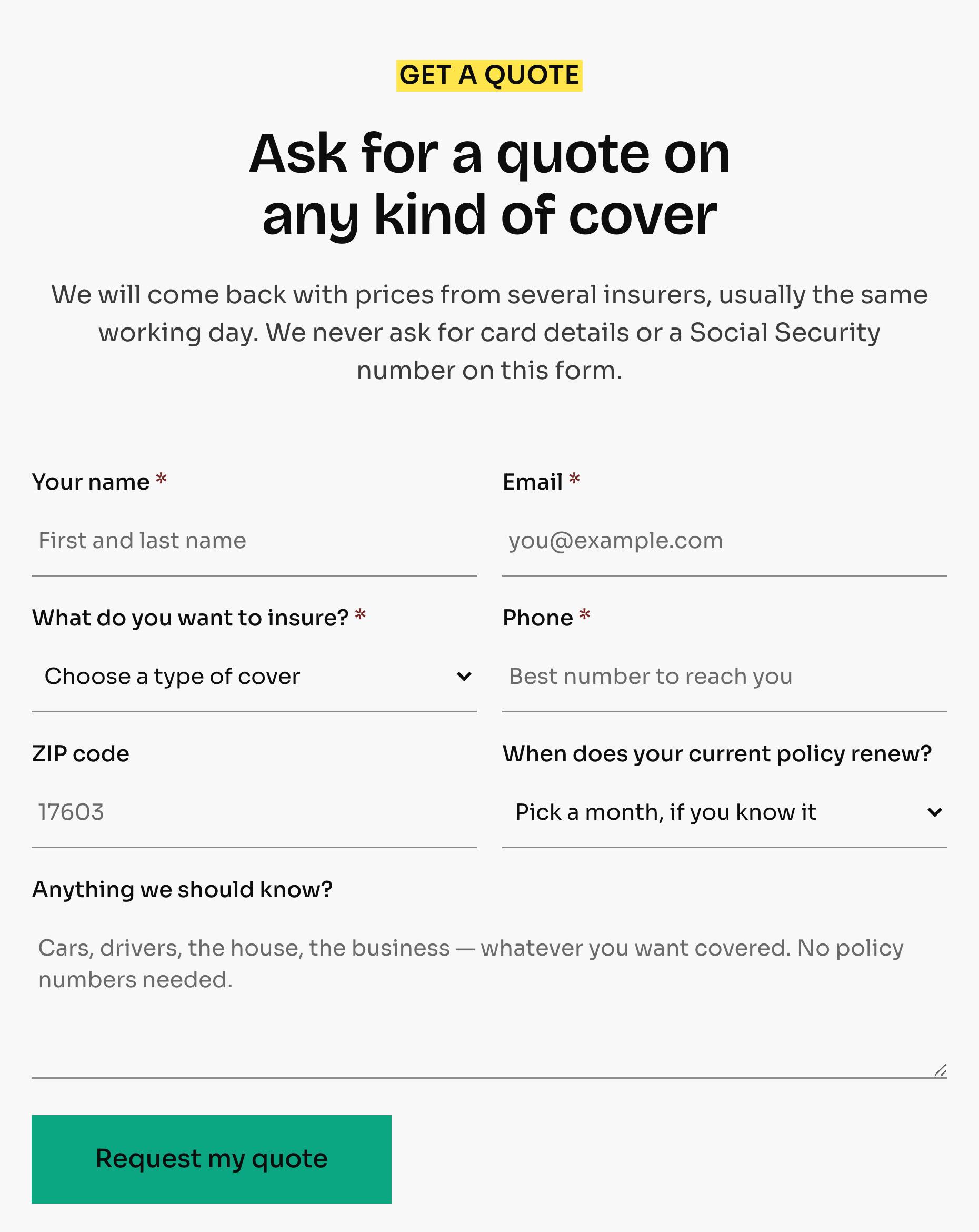
The quote form on the demo site's Contact page. The renewal month tells the agent when to call back with prices.
A client who renews in June doesn't need a call in November. The renewal month lets you call when the comparison matters, and it tells the visitor you won't rush them.
5. Show who answers, and your license
People want to know who they will be talking to before they hand over a driving record. A team page with real photos, names, and the lines each person handles reassures them.
Put your agency's license number on the site, in the footer or on the About page. Some states require it on advertising, websites included. If you represent several insurers, say so plainly. Name them only if your agreements with them allow it.
6. Ask for reviews the way Google allows
Reviews move both the map and the decision. Ask after something went well: a claim handled, a policy moved to a better price, a renewal explained.
Two rules from Google's review policy matter here:
- No rewards. No gift card, no discount and no entry into a draw in exchange for a review.
- No picking. You can't ask only your happiest clients, or discourage unhappy ones.
Reply to each review. Google notes that replying shows you value the feedback. Keep policy numbers, claim details and health information out of public replies, even when the reviewer mentions them first.
7. Get listed, and earn local links
Your agency's name, address and phone should read the same everywhere. That means Google, Apple Maps, Bing, Yelp and your social pages.
Are you a member of the Big "I", the independent agents' association? Then ask them about a listing in the TrustedChoice.com agency locator. Ask the insurers you represent whether they list appointed agents on their own sites.
Local links come from people who already send you clients. Real estate agents, mortgage brokers, car dealers and accountants all meet people who need cover. A "trusted partners" page on each other's sites is a link that makes sense to a reader. Keep it to real partners, and don't pay for referrals unless your state allows it.
8. Get the website basics right
- Page titles. Each page needs its own title with the line and town. For example: "Home Insurance in Lancaster, PA · Your Agency".
- Descriptions. One or two sentences per page that make someone want to click.
- Business details for search engines. Tell Google you are an insurance agency, with your address and phone, in the site's structured data. Schema.org has a type for this: InsuranceAgency.
- A claims page. A client who has just had an accident wants a number, fast. A page with each insurer's claims line gives them one.
- Search Console. Connect it, submit your sitemap, and watch which searches bring visitors.
- One location page per real office. Google's spam rules call near-copy town pages, made only to funnel searchers to one page, doorway pages.
Moving to your own address? Our custom domain and SEO guide covers what to check.
Where the website part gets easier
Steps 3 to 5 and the basics in step 8 are website work. That is the part Sitelas handles. You describe your agency to Claude or ChatGPT. It builds a site from a template like Awning. You get a page for each kind of cover, a claims page, a team page and an FAQ. The quote form asks when the policy renews. To add a line, you say "Add a page for landlord insurance" in the same chat. The agent can also set each page's title and description. It can tell search engines you are an insurance agency at your address. Page and content changes show in a preview first and go live only when you say so. Your business details apply right away.
It doesn't quote prices, store policies or manage your Google profile. Quote requests arrive in your Sitelas inbox, and you move them into your agency system. The Free plan lets you read five form messages a month. An agency in renewal season will pass that quickly. Pro is $9 a month per site and covers 500.
For the whole site, from the pages to the first message to Claude, see insurance agency website design.
Questions people ask
What is SEO in insurance?
It is the work that makes an agency show up when people search for cover. For a local agency, that means a complete Google profile, a page per line of cover, reviews and local links.
Can I do insurance agency SEO myself?
Yes. The core work is your Google profile, reviews and a page for each line. None of it needs special tools. An SEO firm helps more when you run several offices or need a rebuild.
What keywords should an insurance agent target?
Your lines with your towns, such as "home insurance agent Lancaster". Add "independent insurance agent near me" and the questions clients ask you. Leave "cheap car insurance" to the national insurers.
How long does SEO for insurance agents take?
Profile fixes tend to show first. New pages and links take longer: think months, not weeks. Walk away from anyone who guarantees first place; Google says no one can.
Do reviews help an insurance agency rank?
Yes. Google lists reviews among the things that help local ranking. Ask after a good moment, don't pay for them, and reply without sharing policy details.
Templates to start from
Build this with a ready-made design, then change anything.


Usman Haider
Founder of Sitelas — the website builder for AI agents.