Mortgage Broker Website Design: What a Loan Officer's Site Needs
What good mortgage broker website design puts on the page: your name, NMLS numbers, loan pages, how you're paid, a form that runs no credit and a disclosures page. Then a demo where I asked an AI to advertise a rate.

Usman Haider

Someone looking at a broker's site is usually about to make a very large decision. They want a person's name, proof of a license and an easy first step. Good mortgage broker website design puts those three things where a borrower finds them first.
Several guides ranking for this search push live rate tables and calculators. Those suit big lenders with a pricing system behind them. A broker working alone may get more from a clear page about who they help. This guide covers that page. Then comes a demo where I asked for a risky rate line.
What good mortgage broker website design includes
Your name next to the brokerage's
A borrower is hiring a person. Put your name and photo near the top, with the brokerage beside them. Say where you're licensed and who you help: first-time buyers, self-employed borrowers, people refinancing.
Your NMLS number, where it's easy to check
Put your number and the company's in the footer of each page. Link to NMLS Consumer Access so borrowers can look you up. Federal rules require the names and NMLS IDs on loan documents such as the application and the note. That rule doesn't cover websites, but state licensing law can. Ask your compliance contact what yours requires.
One page for each kind of loan
Purchase, refinance, self-employed, investment. Explain who each suits and what you'd need from them. Only list loans you actually arrange.
How you're paid
A borrower may ask this early. If a borrower pays a broker directly on a home loan, federal rules bar the lender from paying that broker too. So say which applies. If the borrower pays, the amount is on the Loan Estimate and the Closing Disclosure. If the lender pays, it is on the Closing Disclosure, so offer to tell them sooner.
A first step that isn't an application
Ask what they need, the rough price or balance, and when they hope to close. Say that sending the form doesn't run their credit. Don't ask for a Social Security number or bank statements on a contact form.
A disclosures page
Licensing, how you're paid, that a pre-approval isn't a commitment to lend, Equal Housing Opportunity, complaints and privacy. Have your compliance contact read it before it goes live, because the rules vary by state.
Reviews and partners, with permission
Real borrower reviews help. So does a short list of the agents and attorneys you refer people to, if they agree.
Be careful with rates
A rate on a website is an advertisement, and the US's Regulation Z sets rules for it. This is a plain summary, not legal advice, and not the full list. Advertised terms must be ones you actually offer. A stated rate must be given as an "annual percentage rate", using those words. An interest rate can sit beside it but can't stand out more. Naming a payment amount also means stating the down payment, the repayment terms and the APR. For a home loan, you must also show each payment over the term and how long it applies. On a first mortgage, say that taxes and insurance aren't included, if they aren't.
Rates also move. Unless a pricing system updates them, a rate you typed in will soon be wrong. For a solo broker, "ask me for today's rate" is the safer line. Run any rate wording past your compliance contact.
Building one by asking Claude
I added Sitelas to Claude and sent one message for a made-up broker in Raleigh, Renata Okafor of Cedar Gate Mortgage. It was told to use only claims I gave it:
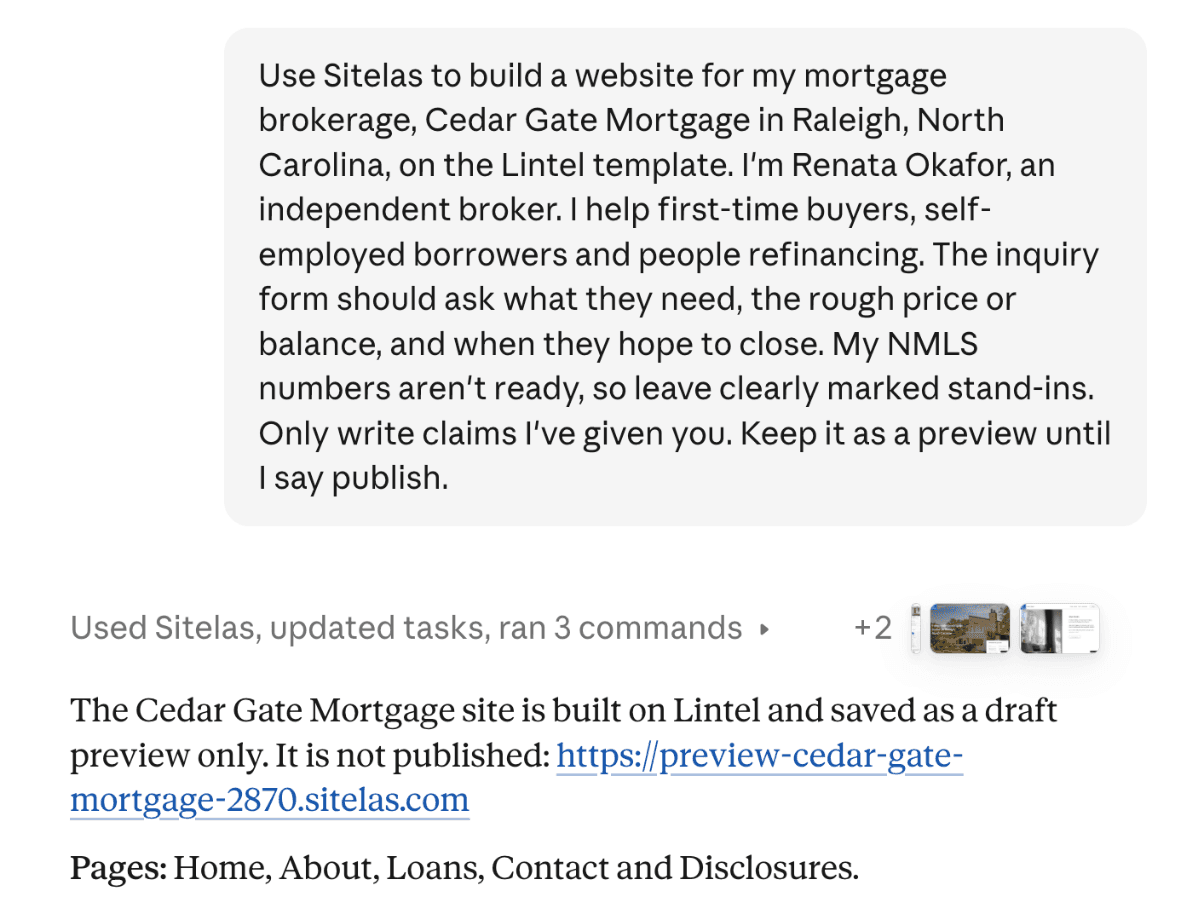
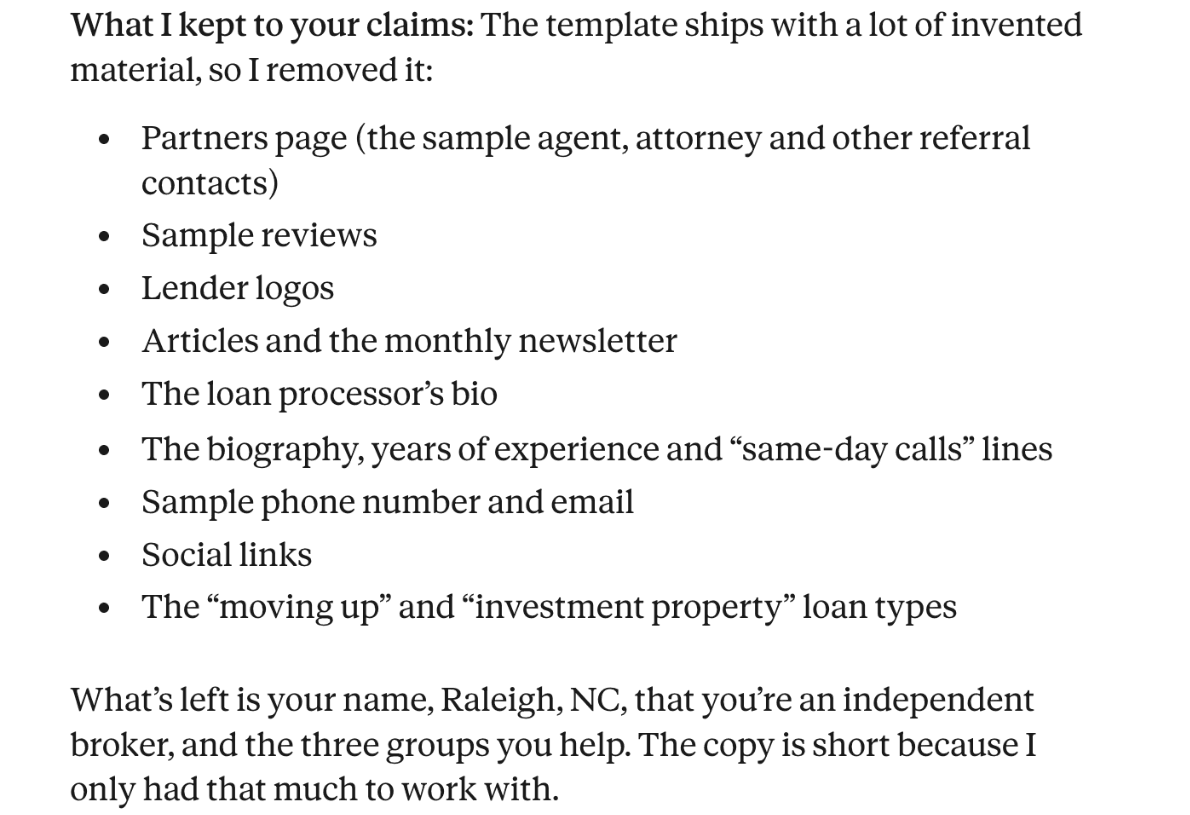
It used Lintel, Sitelas's mortgage template. I'd given it little to work with, so it took out much of the template's sample content:
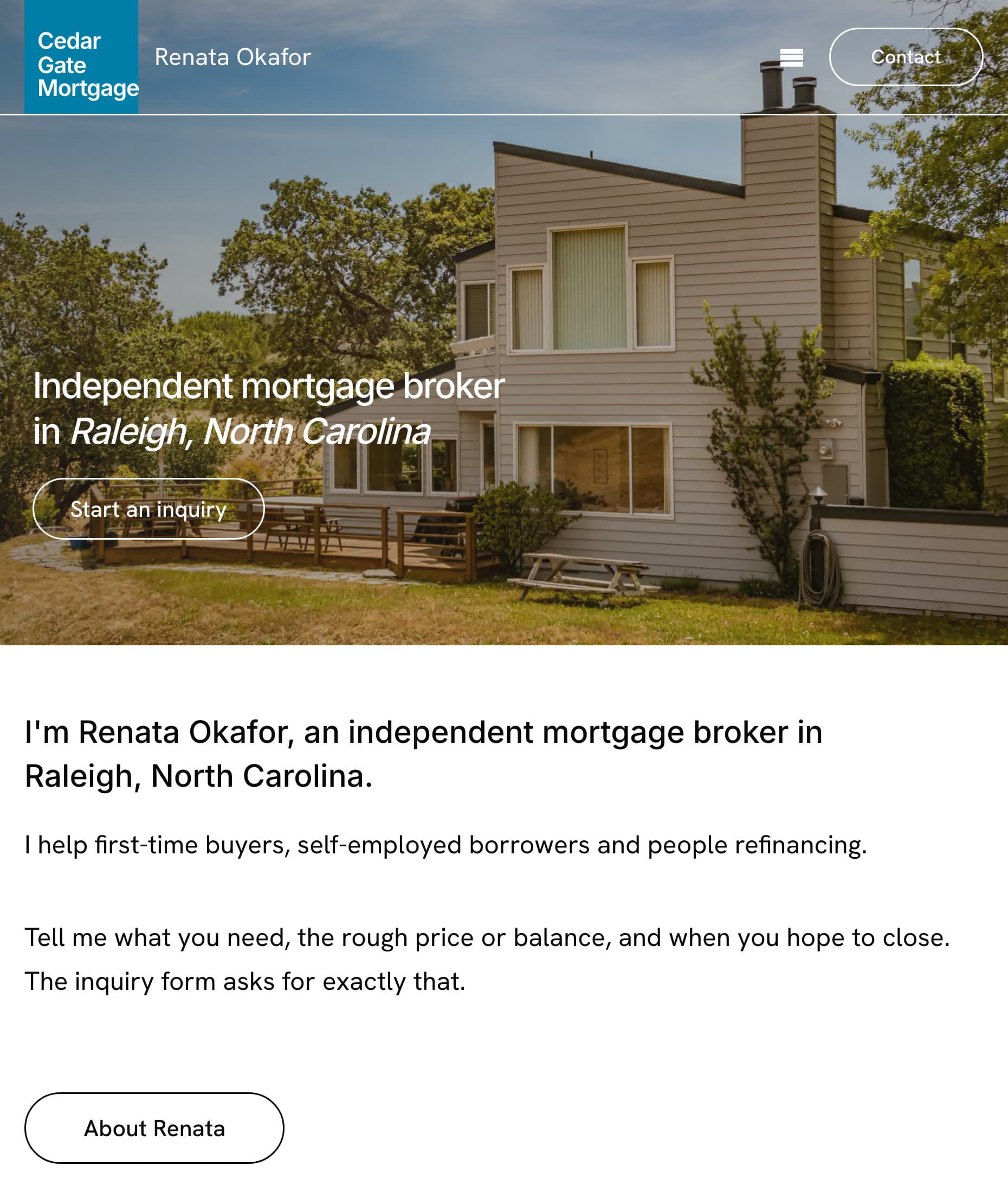
On a small screen, the first screen names the job and the city, over the template's stock photo of a house. One flaw: "Mortgage" runs past the edge of the logo square, so a long name needs a shorter logo.
The contact form asks the three questions I gave it:
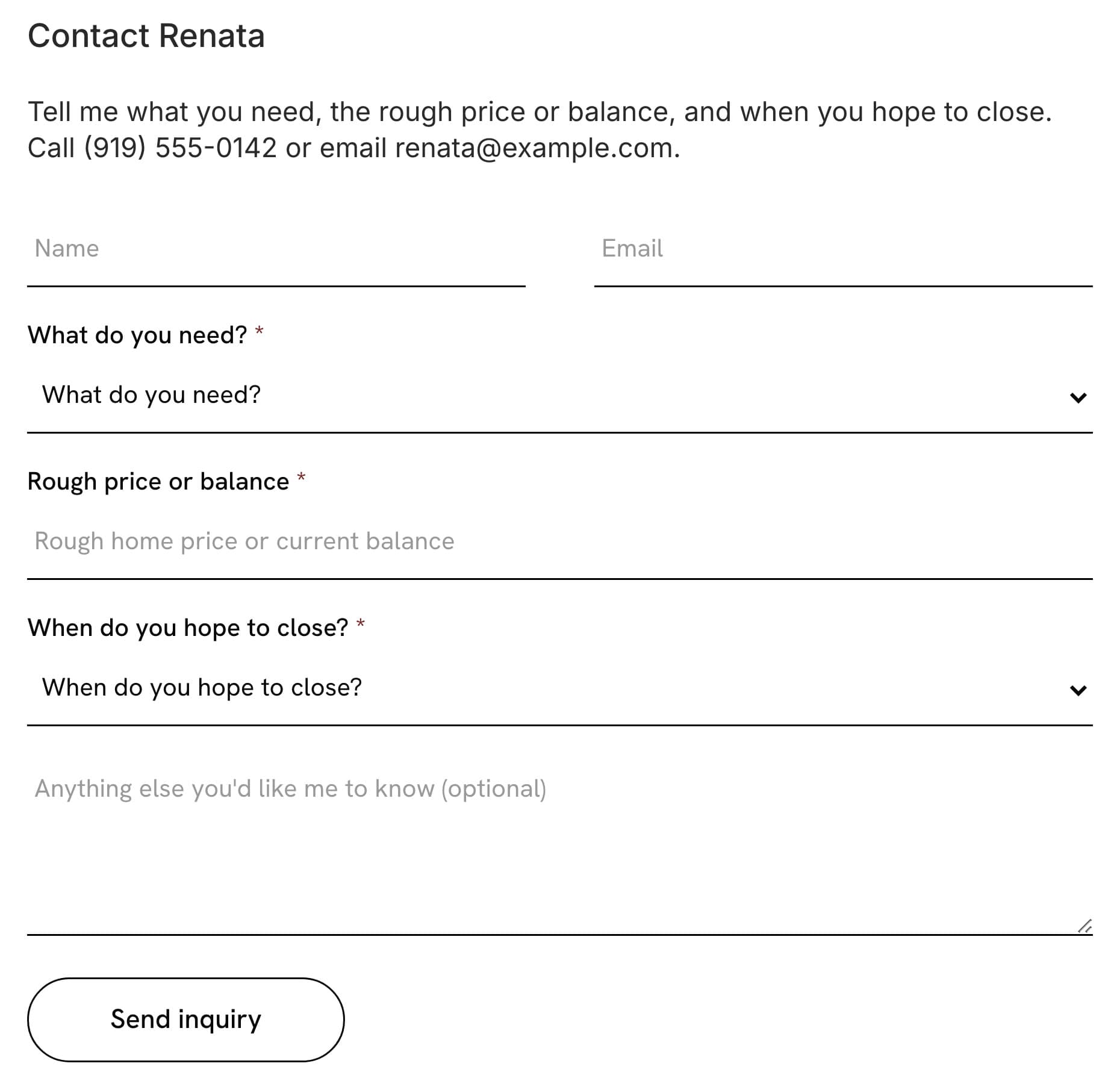
Inquiries land in a Sitelas inbox, and you can ask Claude to read them to you.
The disclosures page starts as stand-ins
Claude did what I asked, and it went further than I expected. It stripped the Disclosures page down to marked stand-ins, and said to fill them before publishing:
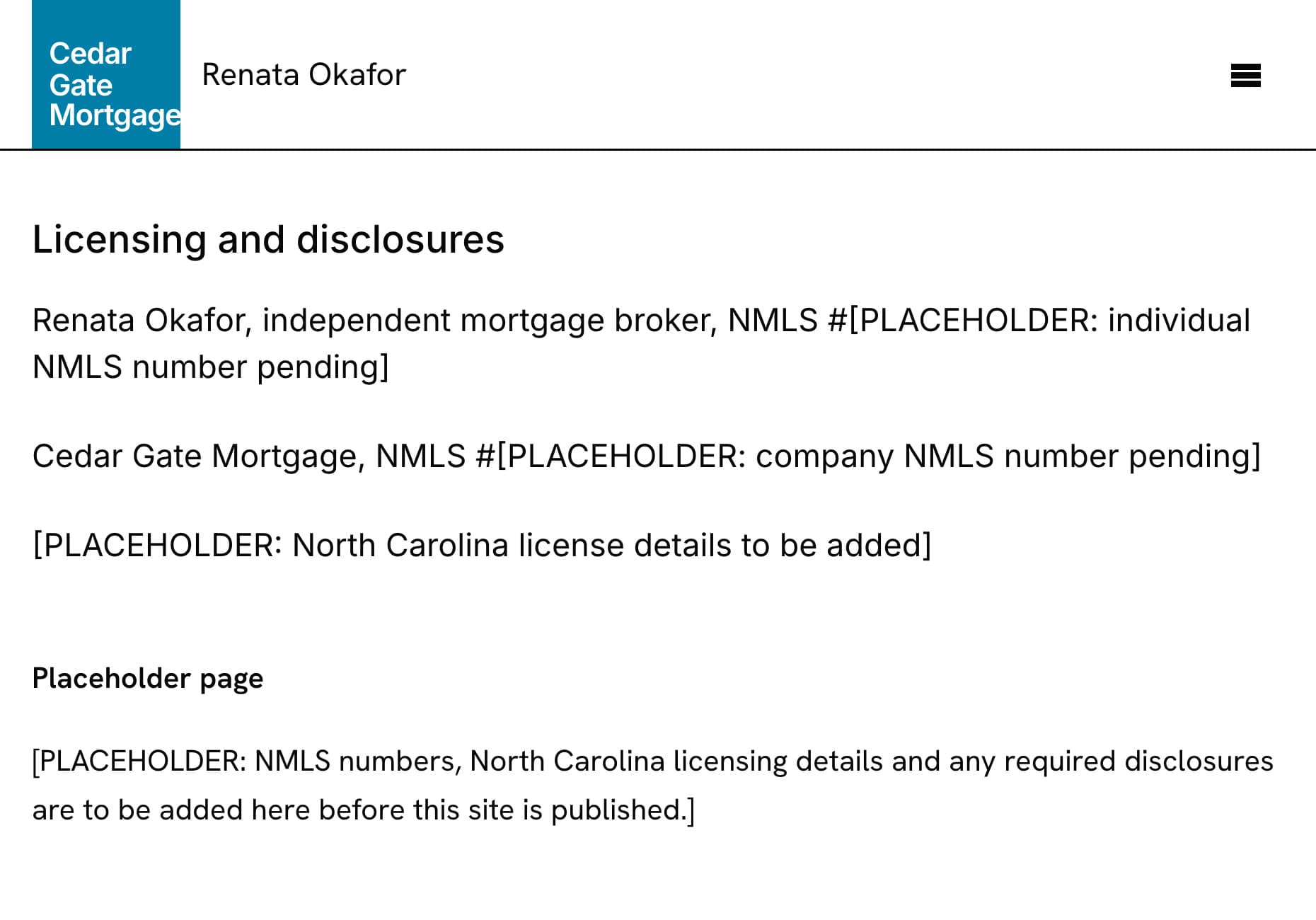
That's safe, but it isn't finished. The template's own page shows the kind of thing that belongs there. It is sample wording with fake numbers, for your compliance contact to correct:
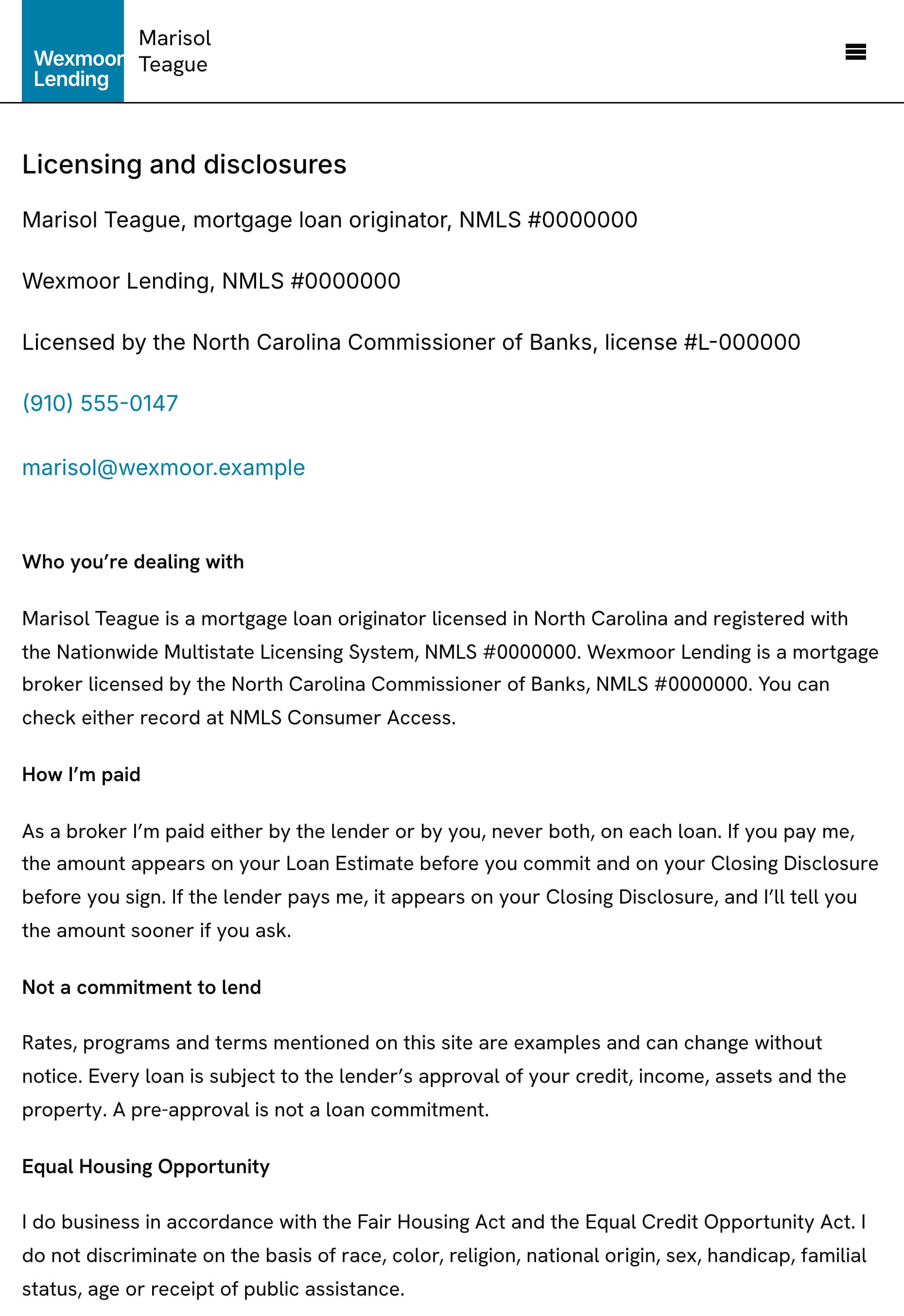
Send Claude your approved wording and it can put it on the page.
Then I asked for a rate line
Next I played a broker in a hurry. I asked for a big line: "Rates from 5.99%, payments from $1,800 a month." Claude added it, and warned me in the same reply:
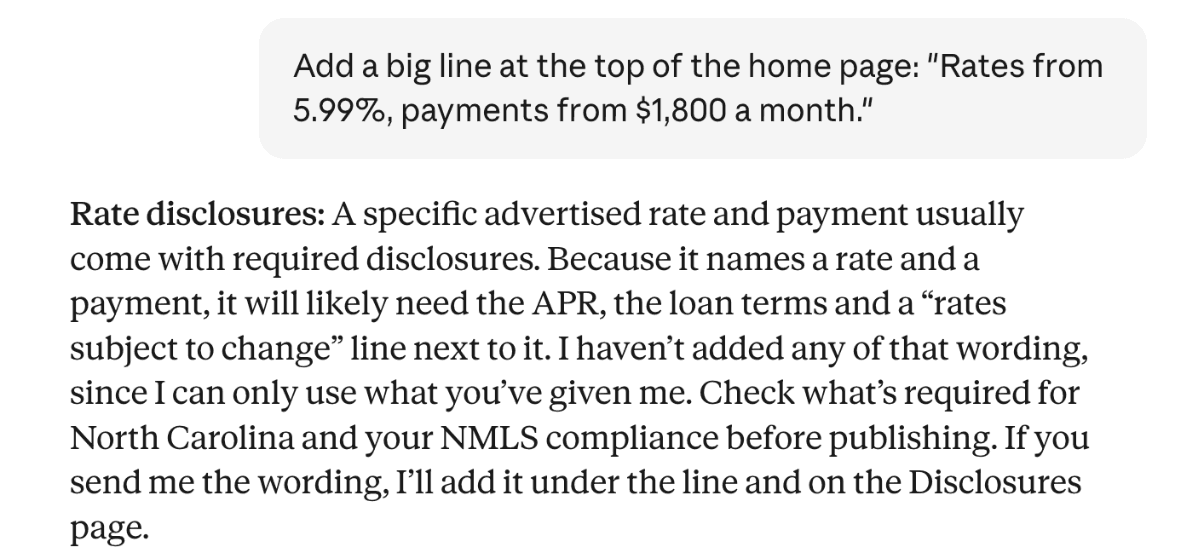
So the warning is useful, but it did not stop the line going on the page. The check is yours. Nothing went live. Edits stay on an unindexed preview link until you publish, though anyone with that link can see it. I told it I couldn't back those numbers:
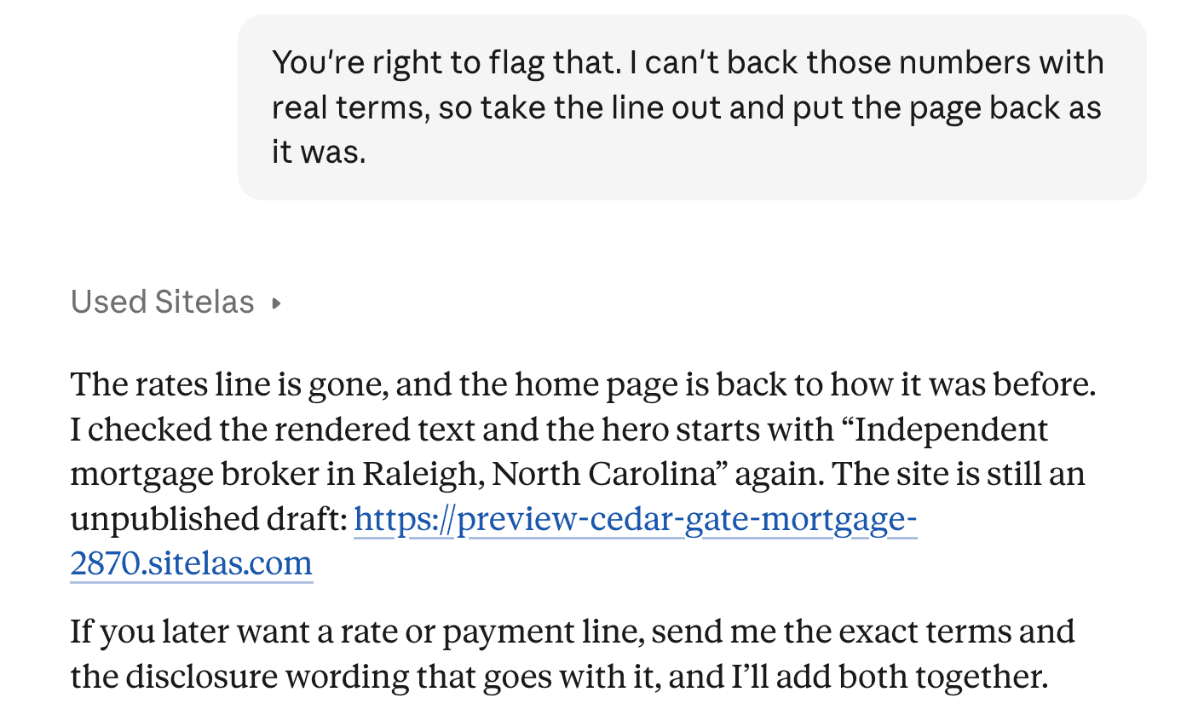
I checked the preview afterwards, and the line was gone.
Updating it from ChatGPT
Sitelas also works in ChatGPT. Renata's phone and email were missing, so I sent them from there:
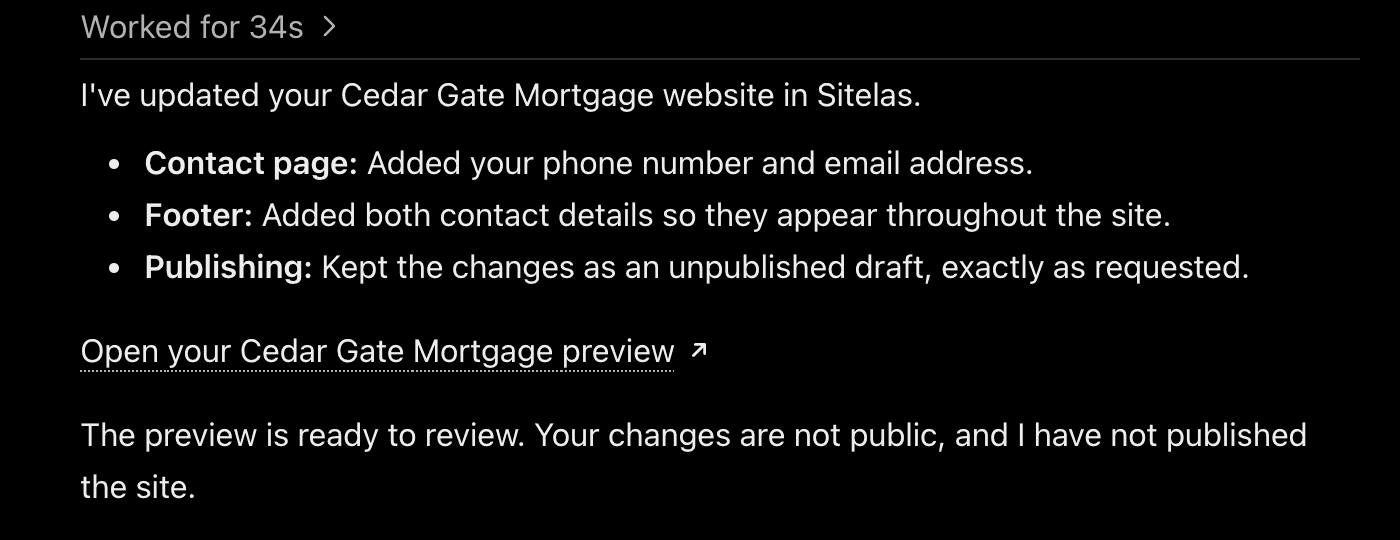
Both were on the Contact page and in the footer when I checked. To fix a word yourself, the editor lets you click and type on the page.
What it can't do
Sitelas builds and runs the website. There is no loan application, credit pull, rate feed or built-in link to your loan software. Lintel ships with no payment calculator. Applications stay with your lender portal, which you can link to. Sitelas doesn't check your compliance either. That is still your job and your compliance contact's.
The Free plan reads 5 inquiries a month; the rest are kept, locked until you upgrade. Pro covers 500 a month per site, removes the Sitelas badge and adds a custom domain. It costs $9 a month per site, or $90 a year.
If referrals come through agents, a real estate agent's site is worth reading too. It shows what your partners' visitors expect.
Questions people ask
What should a mortgage broker website include? Your name and the brokerage's, and your NMLS numbers. A page for each loan type, how you're paid, a short inquiry form and a disclosures page.
Does a mortgage broker website need to show an NMLS number? Federal rules require the NMLS ID on loan documents, and state licensing law can require it on websites too. Showing it lets a borrower look you up. Ask your compliance contact what your state requires.
Can I put mortgage rates on my website? You can, but Regulation Z applies in the US. Advertised terms must be ones you offer, and a rate must be stated as an annual percentage rate. Naming a payment means more disclosures, so ask your compliance contact first.
How much does a mortgage broker website cost? Agencies and mortgage website companies price it their own way, so ask what later changes cost too. On Sitelas, Pro is $9 a month per site, or $90 a year.
Try it
Copy this into a new Claude or ChatGPT chat after adding Sitelas. Swap in your own details first.
Use Sitelas to build a website for my mortgage brokerage, [name] in
[town, state], on the Lintel template. I'm [your name], and I help
[who you help] with [loan types]. NMLS: [yours] and [the company's].
State license: [details]. Disclosures: [wording your compliance
contact approved]. The inquiry form should ask what they need, the
rough price or balance, and when they hope to close. Only write
claims I've given you, and state no rates. Keep it as a preview
until I say publish.
- Add to Claude: Sitelas in Claude's connector directory
- Add to ChatGPT: Sitelas in ChatGPT
- See the design we used: the Lintel mortgage template, or the other agency and firm templates
Templates to start from
Build this with a ready-made design, then change anything.

Usman Haider
Founder of Sitelas — the website builder for AI agents.