Restaurant Marketing: Ideas That Fill Tables
Eleven restaurant marketing ideas for an independent restaurant: a complete Google profile, reviews asked for the right way, a text menu, slow-night events, private dining, regulars and local partners.

Usman Haider
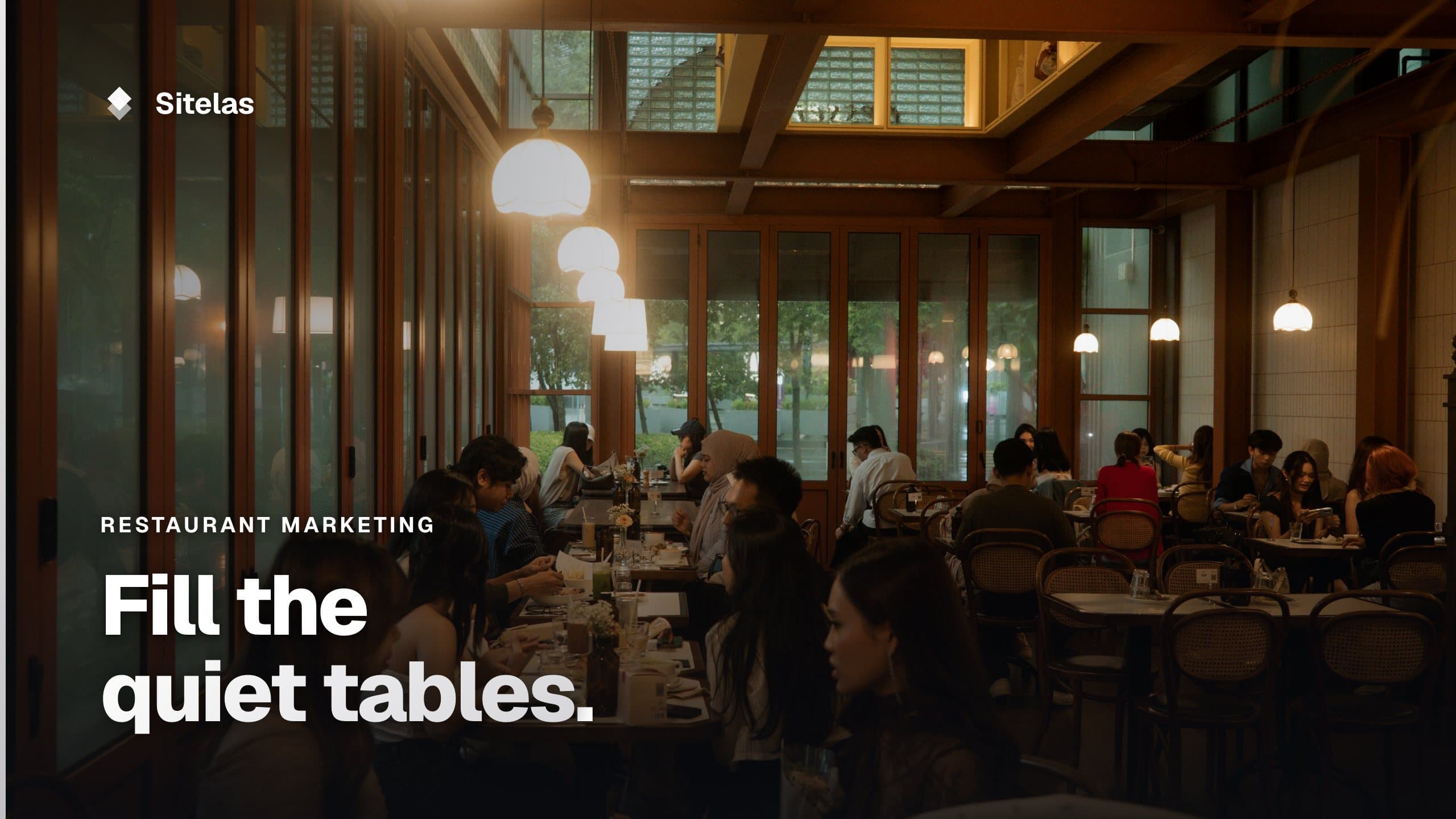
Plenty of independent restaurants are full on Friday and quiet on Tuesday. Restaurant marketing is how you fill the quiet tables without giving the food away.
You don't need an agency for that. You need a few things done well and kept up. This guide covers eleven that work for an owner-run restaurant, roughly in the order to do them.
Restaurant marketing starts with the tables you want to fill
"More customers" is too vague to act on. A slow lunch, a half-empty Tuesday and an unused back room need different fixes.
So write down where the empty seats are. For example:
- Slow shifts: weekday lunch, early evenings, the night after a holiday.
- Groups: birthdays, rehearsal dinners, team lunches, holiday parties.
- Off-site work: catering for offices and events, if your kitchen can take it.
Each idea below helps one of these more than the others. Pick the ones that match.
1. Fill in your Google Business Profile
When someone searches "restaurants near me", Google often shows a map of nearby places. Your Google Business Profile is what shows there.
Pick a specific main category, such as "Pizza restaurant" rather than "Restaurant". Add your hours and real photos of dishes and the room. Restaurants can also add their menu and links to order or reserve. Set special hours for holidays and private events. Our Business Profile checklist is written for trades, but the fields work the same way for a restaurant.
2. Ask for reviews the right way
Many guests read reviews before they pick a place. The rules for asking differ by site, so know them first.
On Google, you may ask any guest for a review. Its review policy bans, among other things, rewards for reviews, asking only happy guests, and telling people what to write. It also says not to pressure guests to review while they're still there. A small card with a QR code in the bill folder, with no pressure, is fine.
Yelp is different. It asks businesses not to ask for reviews at all, and its software may not recommend reviews that look prompted. So ask for Google reviews, and let Yelp reviews come on their own.
Reply to reviews on both, the bad ones too. Keep it short and calm. Thank people, fix what you can, and invite them back.
3. Put your menu on your website as text
A menu that only exists as a PDF or a photo is hard to read on a phone. Guests pinch, zoom and give up.
Put the menu on a page of its own, as text, with prices. Someone searching for "shrimp and grits" in your town can then find the dish by name. Keep it the same as the menu on Google and the delivery apps. When a dish changes, change it everywhere on the same day.
4. Give slow nights a reason
People need a reason to go out on a Tuesday. Give them one that also suits your kitchen:
- A regular night: trivia, live music, a local band, a chef's table.
- A set menu: two courses and a glass of wine at a fixed price, on slow nights only.
- An industry night: a late menu for people who work in other restaurants and hotels.
Hotel desk staff and bartenders are often asked "where should we eat?"
5. Sell private dining
One group of twenty can fill a room on a night that would be half empty. Groups also book ahead, so you can plan staff and stock.
If you offer it, say so online. Give it its own page: how many guests fit, which days, a sample menu and a short enquiry form. Link it from your menu bar and your reservations page, so a group of twelve finds it.
6. Collect guests' emails, then use them
Your regulars already like you. A short email brings them back for things they'd miss: a new menu, a wine dinner, holiday bookings.
Ask for emails with a sign-up box on your site and a line on the receipt. Send a few times a year, not all the time. Write it like a note from the owner, not an ad.
7. Reward the guests who come back
A loyalty program doesn't need an app. A stamp card works: the tenth lunch free, or a dessert on the fifth visit.
Your point-of-sale system may already include one. What matters is that staff mention it.
8. Work with your neighbors
Other local businesses can send you regular customers:
- Hotels: give the front desk a card and a reason to recommend you.
- Offices: offer a team lunch menu, delivered or in a reserved section.
- Theaters and venues: a pre-show menu that gets people out on time.
- Charities and schools: a fundraiser night with a share of sales to the cause.
If you cater, give it its own page too. Our guide to catering website design covers what a catering page needs.
9. Use delivery apps carefully
Delivery apps bring new customers, but they charge the restaurant a commission on orders. DoorDash, for example, lists 15% to 30% of each delivery order, by plan (as of November 2026).
Use them to be found. Then give app customers a reason to order direct, such as a card in the bag. If you take orders yourself, link your own ordering page from your site and your Business Profile.
10. Post what's real on social media
Post what's happening: today's special, the chef plating it, a full room on Saturday.
Short videos of food being made are easy to film on a phone. So are the people who work there. Once or twice a week is enough if it's real.
11. Answer the phone, and every message
None of this works if calls go unanswered. A guest calling at 6pm on a Friday may not leave a message. They may just book somewhere else.
Have someone own the phone during service. Reply to emails and form messages within a day, especially group enquiries. A group that hears nothing books somewhere else.
Track what fills tables
Ask new guests: "How did you hear about us?" Note it on the reservation. After three months, you'll know which ideas bring people in and which only cost you time.
Where the website part gets easier
Ideas 3, 5 and 8 all need changes to your website. A menu page, a private dining page, a catering page. That's where owners stall, because each change means waiting on someone.
Sitelas is one way to make it easier. It builds a website from a Claude or ChatGPT chat and keeps it updated by asking. I tried it with a made-up restaurant, Hollis & Pine in Richmond, Virginia, on Sitelas's bistro template, Trivet. In one message I asked for the site and for idea 5, a private dining page:
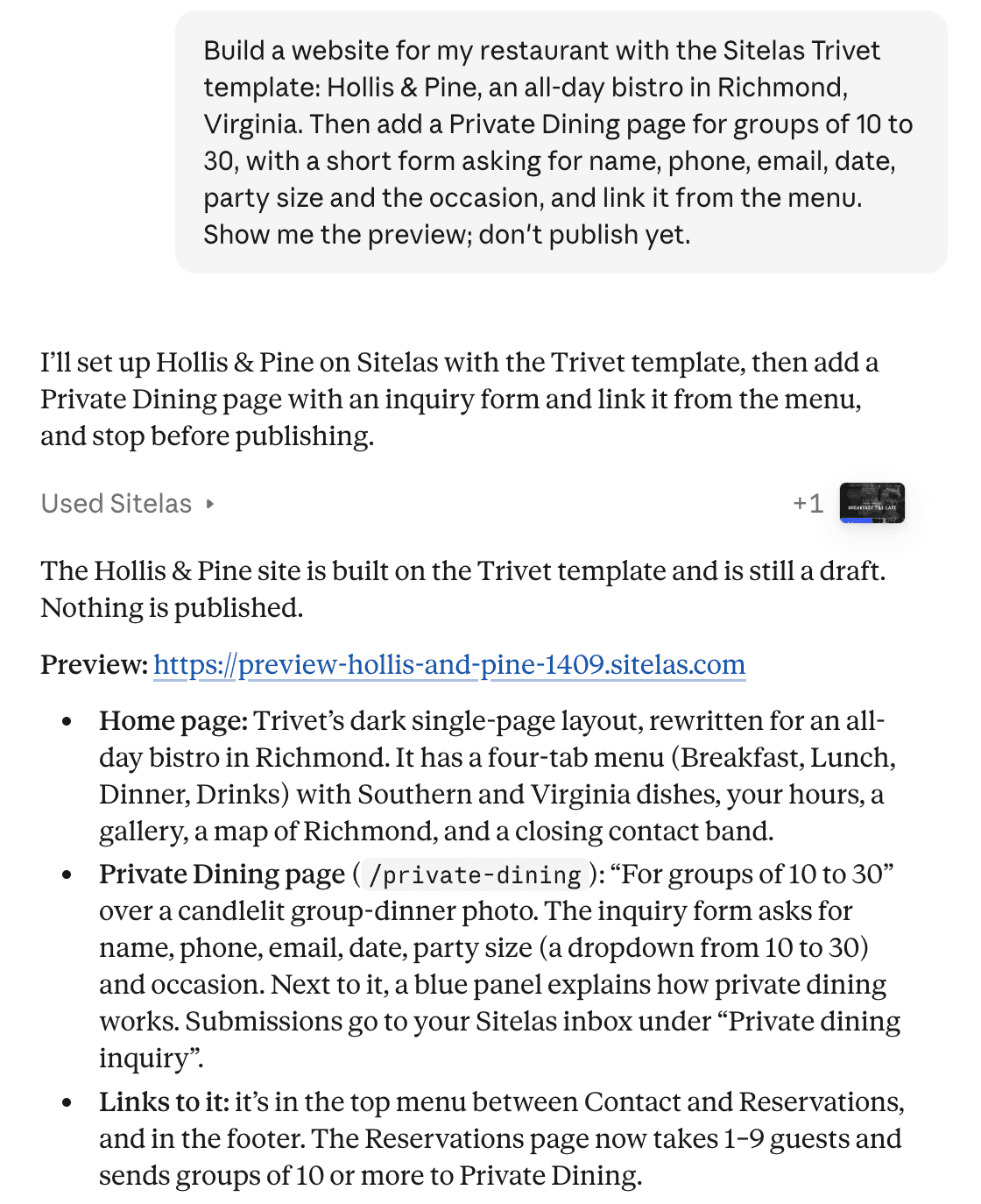
Claude did two things I didn't ask for. The reservations page now sends groups of ten or more to the new page. It also replaced the template's sample press quotes with plain lines, so the site quotes no made-up critics. Here is the page on a phone:
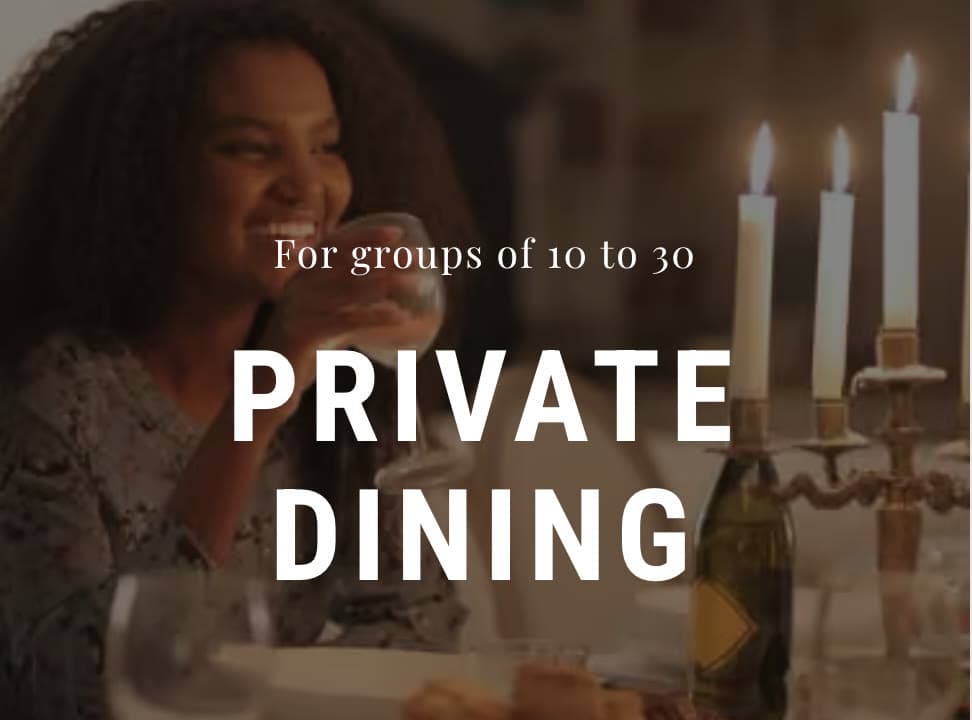
Below it is the enquiry form, with a dropdown for party size:
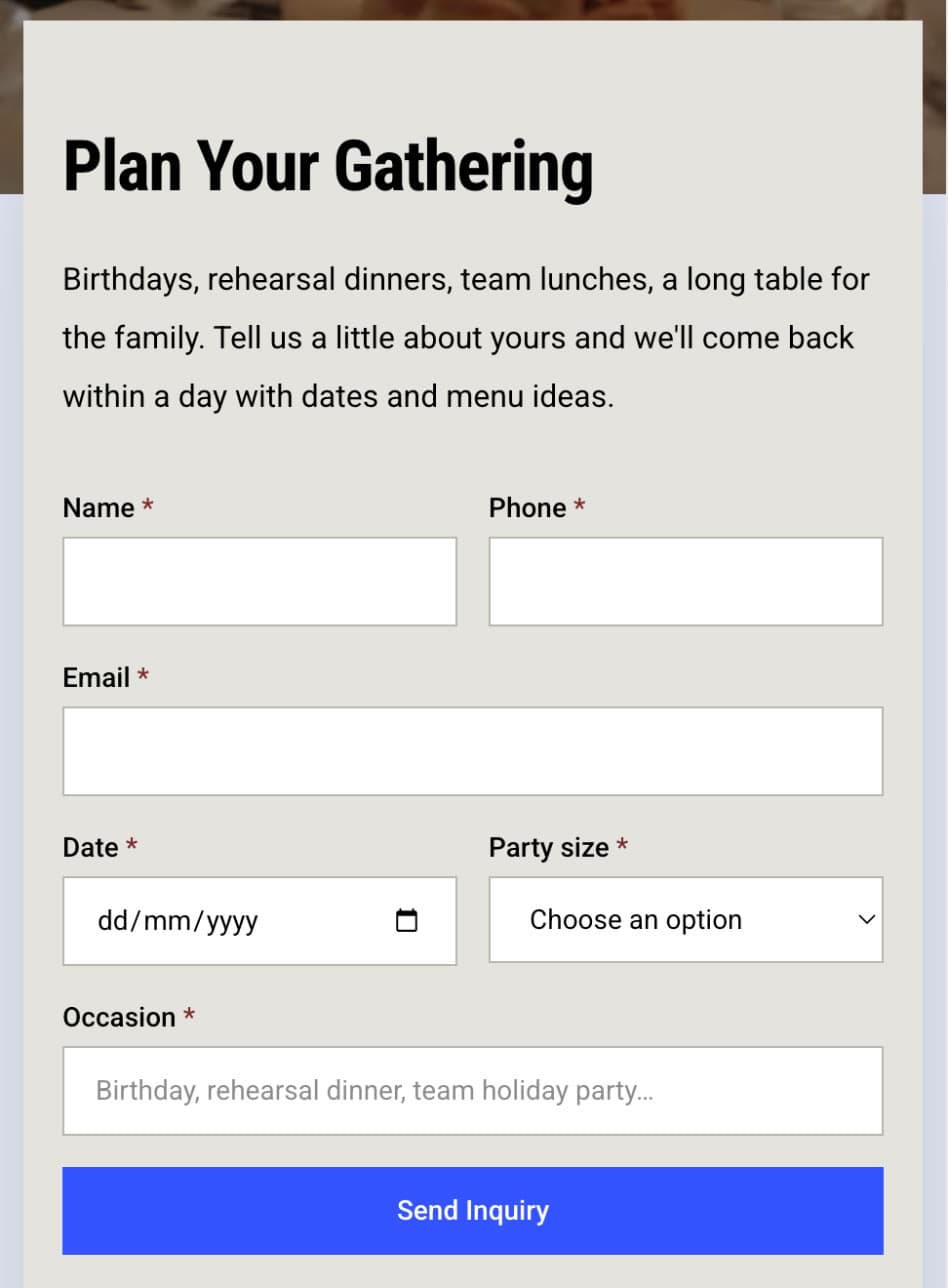
Enquiries from that form land in a Sitelas inbox. Changes stay in a preview until you publish them. On the Free plan you can read five messages a month. Pro covers 500 a month for each site. Busy restaurants will need Pro.
Sitelas doesn't manage your Google Business Profile, take reservations or orders, run ads or send email campaigns. The form collects a request, and you confirm it. If you use a booking service, link to it from the site instead. For more restaurant layouts, see the restaurant website templates.
Questions people ask
How do I market my restaurant? Start with the free basics: a complete Google Business Profile, a text menu on your website, and reviews you answer. Then pick ideas for your quietest shifts, such as a regular event, a set menu or private dining.
What is the best marketing for a small restaurant? Regulars and word of mouth bring steady business, because those guests already trust you. Reviews on Google and an email to past guests keep them coming back.
Should I hire a restaurant marketing agency? Only after the basics are done and you know which tables you want to fill. Ask any agency who owns your website, social and ad accounts. Then ask what it costs to leave.
For your own site's search basics, read our guide to custom domains and SEO.
Templates to start from
Build this with a ready-made design, then change anything.

Trivet
A dark site for bistros and all-day restaurants: a long home page with a tabbed menu and photos, plus table requests.
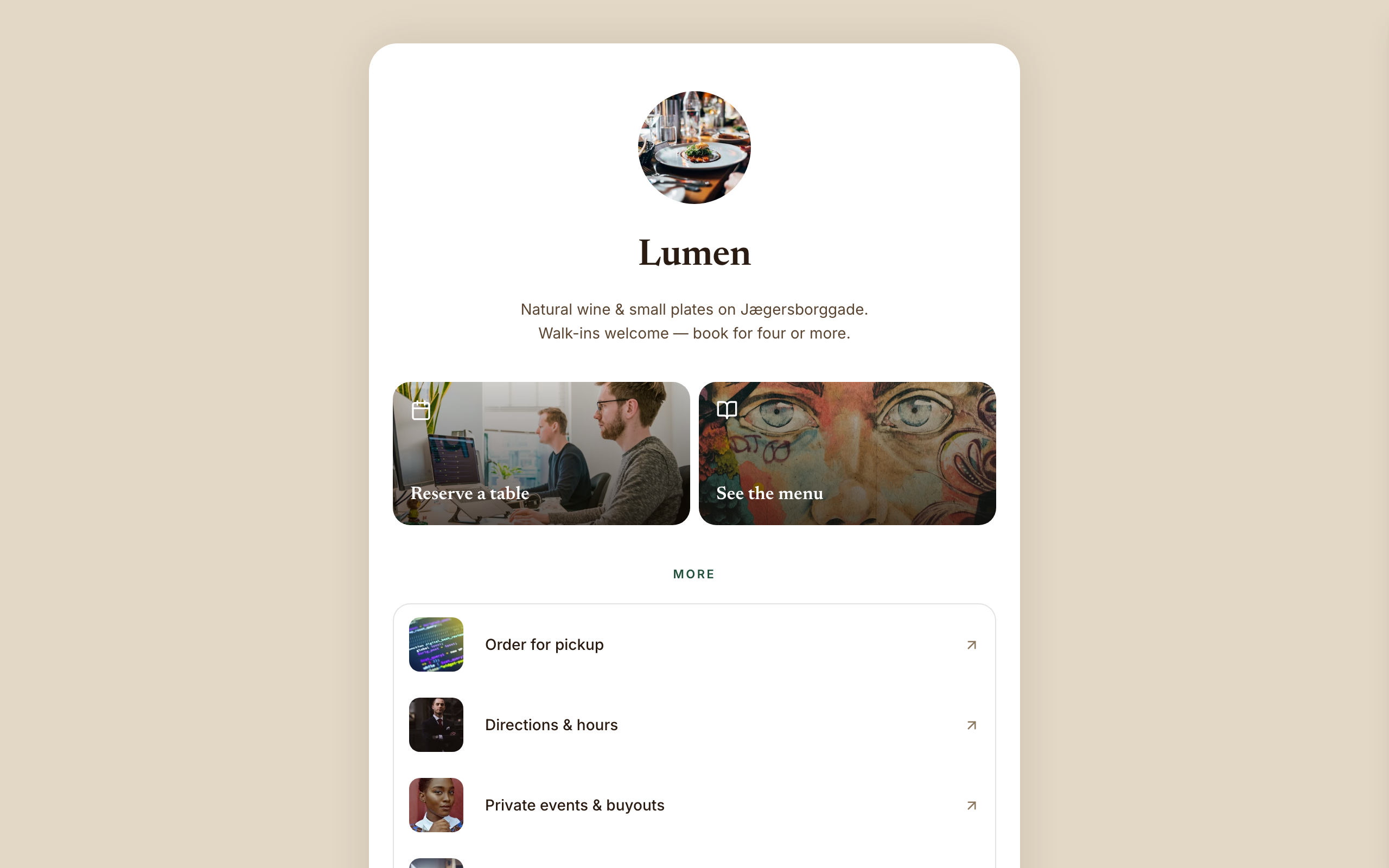
Amber
A link-in-bio page for restaurants and wine bars: reserve and menu tiles, tap-to-call and gift cards.
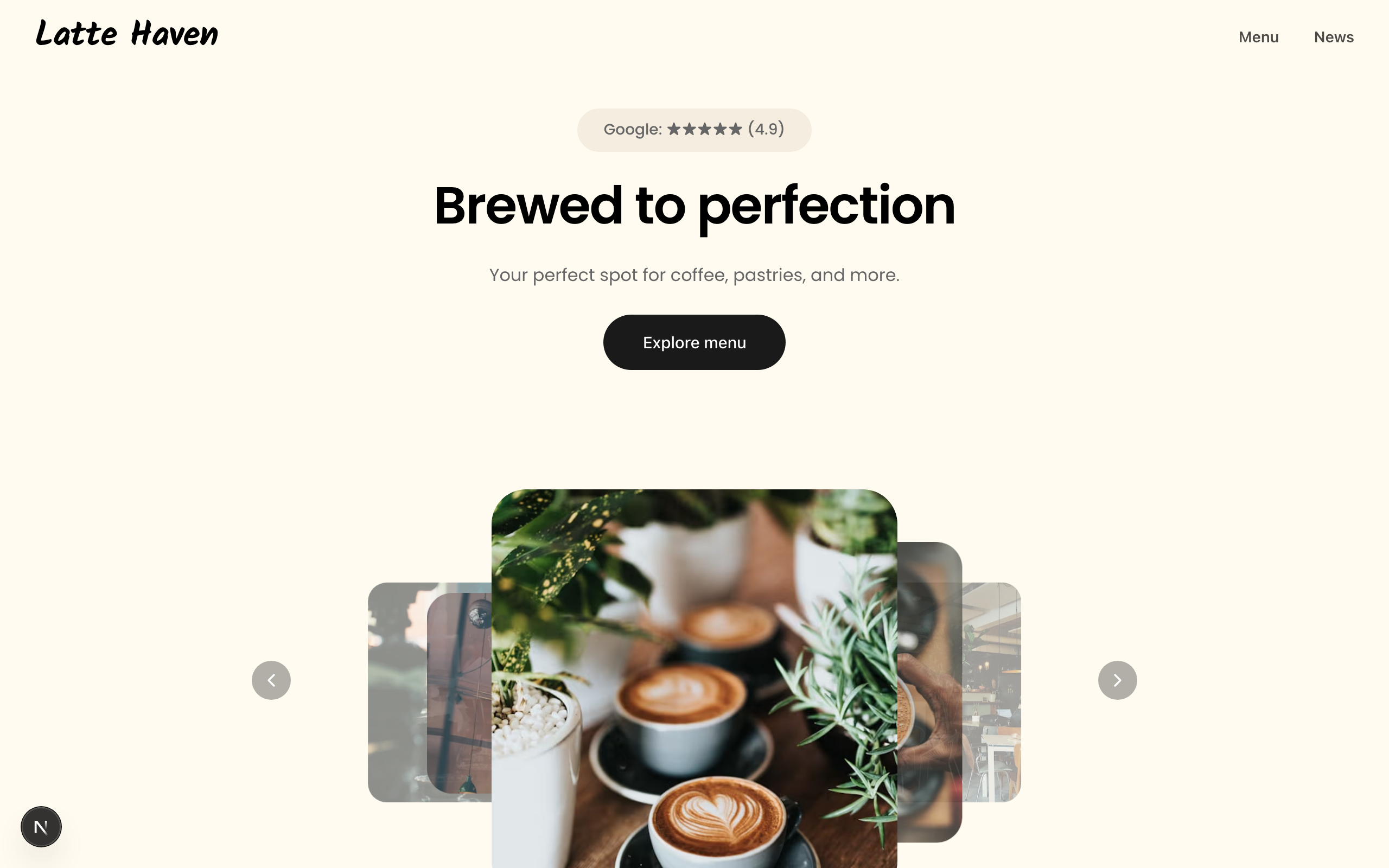
Latte
A warm site for coffee shops and bakeries: a picture-led menu, a journal, hours and directions.

Usman Haider
Founder of Sitelas — the website builder for AI agents.