Contractor Marketing: Ideas That Bring In Jobs Without an Agency
A do-it-yourself contractor marketing guide: turning finished jobs into proof, Google Business Profile, reviews, referral partners, fast replies, yard signs and when to pay for ads.

Usman Haider
Contractor marketing is everything that gets a homeowner to call you instead of the next name. For a remodeler, builder or deck company, most of it costs little. It's proof of past jobs, a Google listing, reviews and fast replies. This guide covers what works without an agency, in the order to do it.
It's written for owners of small residential contracting firms. Nothing here promises a number of leads. Every market is different, and so is every crew.
What contractor marketing has to do
A homeowner picking a contractor is about to let strangers into their house for weeks. So your marketing has three jobs:
- Be found when they search or ask a neighbor.
- Be trusted once they look you up: real photos, reviews, a license number.
- Answer first. Many homeowners call two or three firms, and the first good reply often wins.
Most marketing for contractors fails at the third job, not the first. An agency can buy you more calls, but it can't call people back for you.
1. Decide which jobs you want more of
"We do everything" is hard to market. Pick the two or three jobs with the best margin or the best fit for your crew. That might be kitchen remodels, home additions or decks. Those are the jobs your photos, pages and ads should push.
Then decide where you'll drive to. A clear service area stops you paying for leads 50 minutes away.
2. Turn every finished job into proof
Your finished work is your best marketing, but only if people can see it. Before you leave each job:
- Photograph it properly. Before, during and after, in daylight, from the same spots. Phone photos are fine; blurry ones aren't.
- Write three lines down: the town, what you did, and the problem you solved. "1990s kitchen in Cary, opened the wall to the dining room, new island."
- Ask for the review while the homeowner is still happy (more in step 4).
- Put a yard sign out while the job runs, if the homeowner agrees. Neighbors see the work in progress.
Then use the same photos everywhere. Put them on a project page on your website and on your Google Business Profile. Add Facebook or Instagram, and Houzz if you use it. One job, five places.
The project page matters most. A homeowner in Apex wants to see a kitchen you did in Apex. A page per job, naming the town, answers that. It also gives Google a page that matches "kitchen remodel Apex".
3. Get found where homeowners look
Google Business Profile. This is the free listing behind the map results. Pick the category that matches your main work, such as "General contractor" or "Remodeler". Add your service area, your services by name, and real job photos. Post a finished project now and then. The Google Business Profile checklist for contractors covers every field.
Your website. It needs a page per service, project pages, your license number and an easy quote form. It must work well on a phone. The full checklist is in local SEO for contractors.
Neighborhood sites. Nextdoor has free business pages, and neighbors recommend firms there. Houzz matters for remodelers and kitchen work. Keep your company name, phone and address the same on every site.
Lead sites. Angi and similar sites sell you leads. They can fill a slow month. The catch: the same lead is often sold to several contractors. Speed decides who wins it.
4. Get reviews and referrals on purpose
Reviews are what a homeowner reads before calling. Ask every happy customer at the final walk-through. Then text them the direct link to your Google review page the same day. Ask them to mention the job and the town. "Built our deck in Wake Forest" helps more than "great guys".
Reply to every review, the bad ones too. A calm reply to a complaint is what the next customer judges you by.
Referrals work best when you ask the people who see homeowners before you do:
- Real estate agents need repairs done before a sale and know every new buyer.
- Kitchen and bath showrooms, designers and architects get asked "who do you recommend?"
- Other trades you don't compete with. Your electrician hears about remodels first.
A short thank-you keeps them sending work. So does a referral fee, where that's legal and normal in your state.
5. Answer faster than the other bids
This is the cheapest marketing win most contractors miss. A quote request that waits until the weekend has often gone to someone else.
- Reply to every call and form the same day, even just to book a visit.
- Turn on a text-back for missed calls. Many business phone services offer one.
- Send the quote when you promised. Follow up once, two or three days later.
- Keep a simple list of every lead, where it came from, and whether you won it.
That list becomes your marketing report. After three months it tells you which channel brings jobs, not just calls.
6. Old-school contractor marketing that still works
Some offline marketing works well for contractors because your work is local and visible:
- Truck lettering with your name, phone and website. Your van is parked in good neighborhoods every day.
- Door hangers near the job. When you start a job, leave a note at the neighbors' doors. Apologize for the noise and say what you're building. The neighbors are the people most likely to want the same thing.
- Postcards to the streets around a finished project, with a photo of it.
- Local groups: the chamber of commerce, a home builders association, a booth at a home show.
7. Paid ads: when to pay
Paid ads bring calls this week and stop when you stop paying. Two kinds matter for contractors:
- Local Services Ads sit at the very top of Google. You pay per lead, not per click. Firms that pass Google's checks show the "Google Verified" badge, which replaced "Google Guaranteed" in 2025.
- Search ads charge per click and need a good landing page. Without one, you pay for visitors who leave.
Fix your reviews, photos and reply speed before you pay for ads. Ads send people to look at you. If what they find is thin, the money is wasted.
How much contractor marketing costs
Doing it yourself costs a few hours a week, plus your website and any ads. Agencies charge monthly; one contractor agency's guide lists programs from about $2,500 a month (October 2026). If you hire one, ask what they'll change each month. Ask how they'll count booked jobs, not just clicks.
Whatever you spend, ask every new customer "how did you hear about us?" and write it down. It's the most honest tracking a small firm has.
Where the website part gets easier
Step 2 is where most contractors stall. The photos sit on a phone, and the website never gets the new project.
One way round that is to have an AI assistant run the website. Sitelas does this from a Claude or ChatGPT chat. I tried it with a made-up firm, Hartwell Building Co. in Raleigh. One message asked for a page per service, a projects page and a quote form. Claude built it from Sitelas's construction template, Ironclad, as a private preview.
Then I tested step 2. I described a finished job the way I'd say it on the phone:
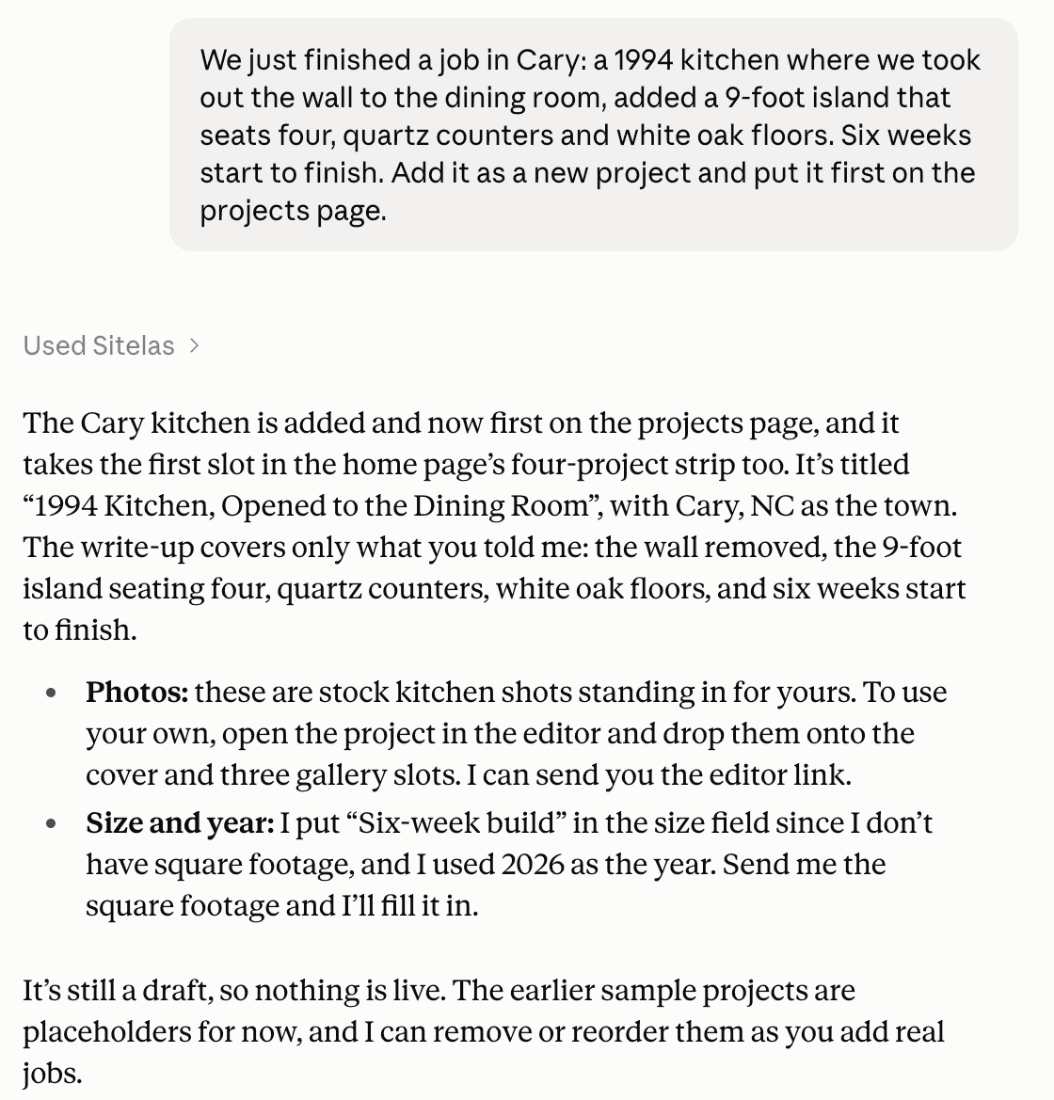
The new project page, on a phone:
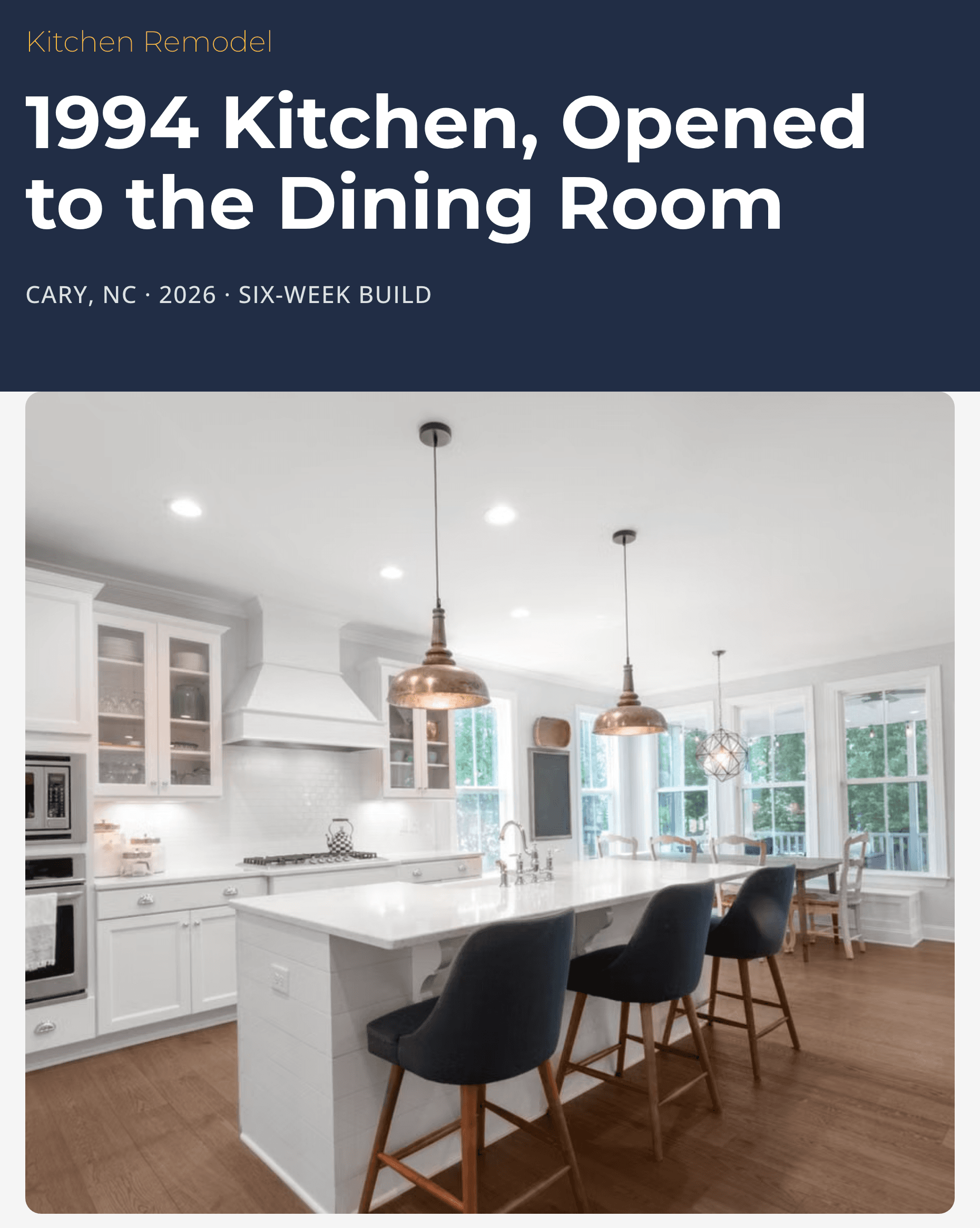
The photos are stock, as Claude said. Your own job photos are the point, and you swap them in from the editor. The page names the job and the town, which is what step 2 asks for.
Quote requests land in a Sitelas inbox. You can ask the same chat "any new quote requests today?" That helps with step 5. Running your website from a Claude chat shows the weekly routine.
Sitelas doesn't manage your Google Business Profile, run ads, collect reviews, track calls or book estimates. Those stay with you. A custom domain needs the Pro plan, $9 a month per site. Pro also reads up to 500 form messages a month; the Free plan reads 5.
Questions people ask
What is contractor marketing? It's how a contracting business gets found, trusted and hired: your Google listing, website, job photos, reviews, referrals, signs and any paid ads. For a small residential firm, most of it is showing past work and replying fast.
How do contractors get more jobs without an agency? Photograph and post every finished job, ask every happy customer for a review, and reply to every lead the same day. Add referral partners such as real estate agents and showrooms. Pay for ads only once those basics are in place.
How much should a contractor spend on marketing? It depends on your market and how full your schedule is. Doing it yourself costs time plus your website and any ads. Agency programs often start around $2,500 a month (one agency's figure, October 2026).
Do Local Services Ads work for contractors? They can, because they sit at the top of Google and you pay per lead, not per click. They work best when your reviews are strong, since homeowners compare ratings right there in the ad.
Is social media worth it for contractors? For visual work like kitchens, bathrooms and decks, yes, as a place to show finished jobs. Post the same photos you put on your website and Google profile. It rarely beats reviews and referrals for bringing in calls.
Templates to start from
Build this with a ready-made design, then change anything.

Ironclad
For civil engineering firms and heavy trades: services, a real project record and a contact form.
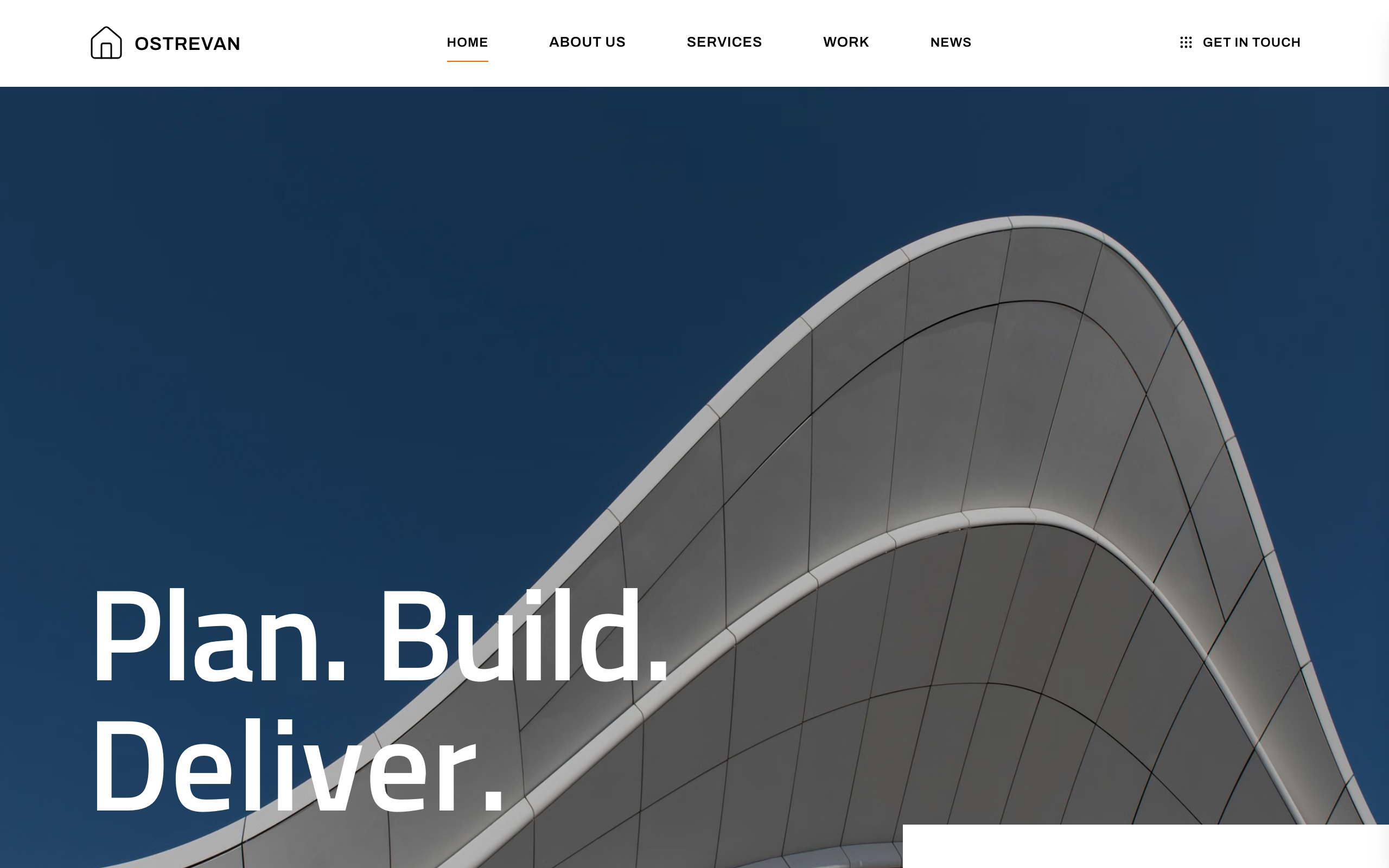
Girder
For general contractors and construction managers: a project strip, services, news, careers and an enquiry form.
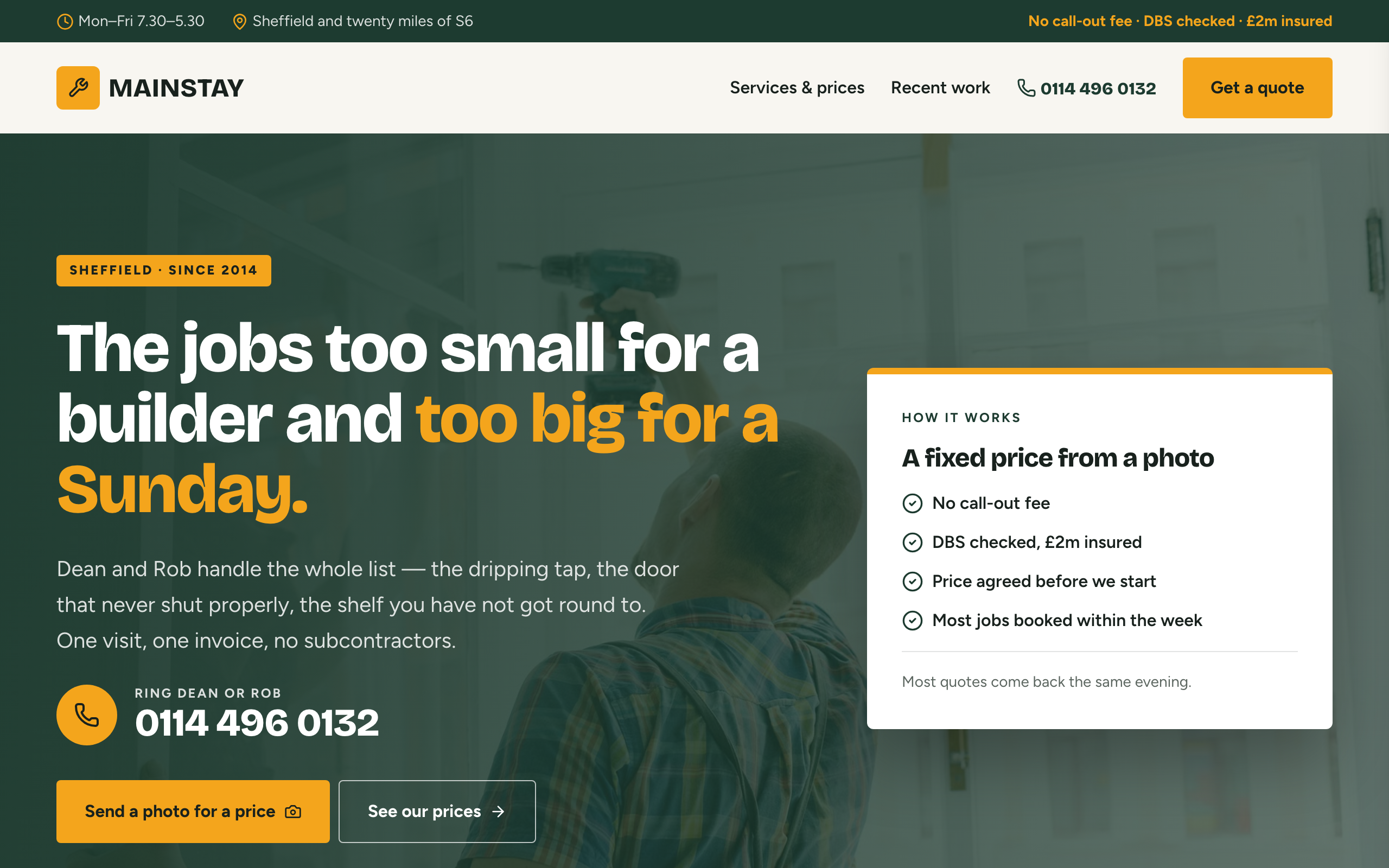
Mainstay
For handymen and local trades: tap-to-call everywhere, a service area, real job prices and a quote form.

Usman Haider
Founder of Sitelas — the website builder for AI agents.