Personal Injury Lawyer Marketing: What Works for a Small Firm
Personal injury lawyer marketing for a small firm: how injured people search, your Google profile and reviews, a page per injury, ads, referrals, fast intake and what it costs.

Usman Haider

Personal injury lawyer marketing is a hard field to be small in. Large firms spend on TV, billboards and the top ads on Google. A small firm can't outspend them. It can be found for the injuries it handles, answer faster, and earn the trust of the people who refer cases. This guide covers that work in the order that pays back first.
Nothing here promises cases or rankings. Before you publish an ad, a client's review or a past result, check your state bar's advertising rules.
How injured people look for a lawyer
Most people don't search "personal injury attorney". They search what happened to them. Here are some US searches and how often they happen each month (Ahrefs, October 2026):
| Search | Searches a month |
|---|---|
| personal injury lawyer near me | 123,000 |
| truck accident lawyer | 117,000 |
| motorcycle accident lawyer | 93,000 |
| slip and fall lawyer | 73,000 |
| car accident lawyer near me | 49,000 |
| dog bite lawyer | 45,000 |
| do i need a lawyer for a car accident | 300 |
| how much do personal injury lawyers take | 80 |
The "near me" searches are won mostly on the map. The injury searches are won by a page about that injury. The question searches are won by a plain answer. Each needs its own work, below.
1. Your Google Business Profile and reviews
The profile is what shows in the map beside the results. For "near me" searches it matters more than your website.
- Category: pick the one closest to personal injury law as your main category.
- Services: list the injuries you take, in the words clients use: car accidents, slip and fall, dog bites.
- Hours and phone: exact, including whether someone answers evenings and weekends.
- Photos: your office, your team and you, taken by you.
Reviews help you in the map, and they help a nervous person choose. Ask every client when their case ends, with a short link. Google's rules say you can't pay or reward people for reviews, or ask only the happy ones. Reply to each one politely, without discussing the case.
Our Google Business Profile guide is written for trades, but the setup steps are the same for a law firm.
2. A website page for each kind of injury
One "Practice Areas" page with ten injuries listed can't rank for ten searches. A page each can.
Write a page for each injury you take. Say what usually happened, who may be responsible, and what the person should do now. Then say what happens when they call you. Use their words: "slipped on a wet floor", not "premises liability" alone.
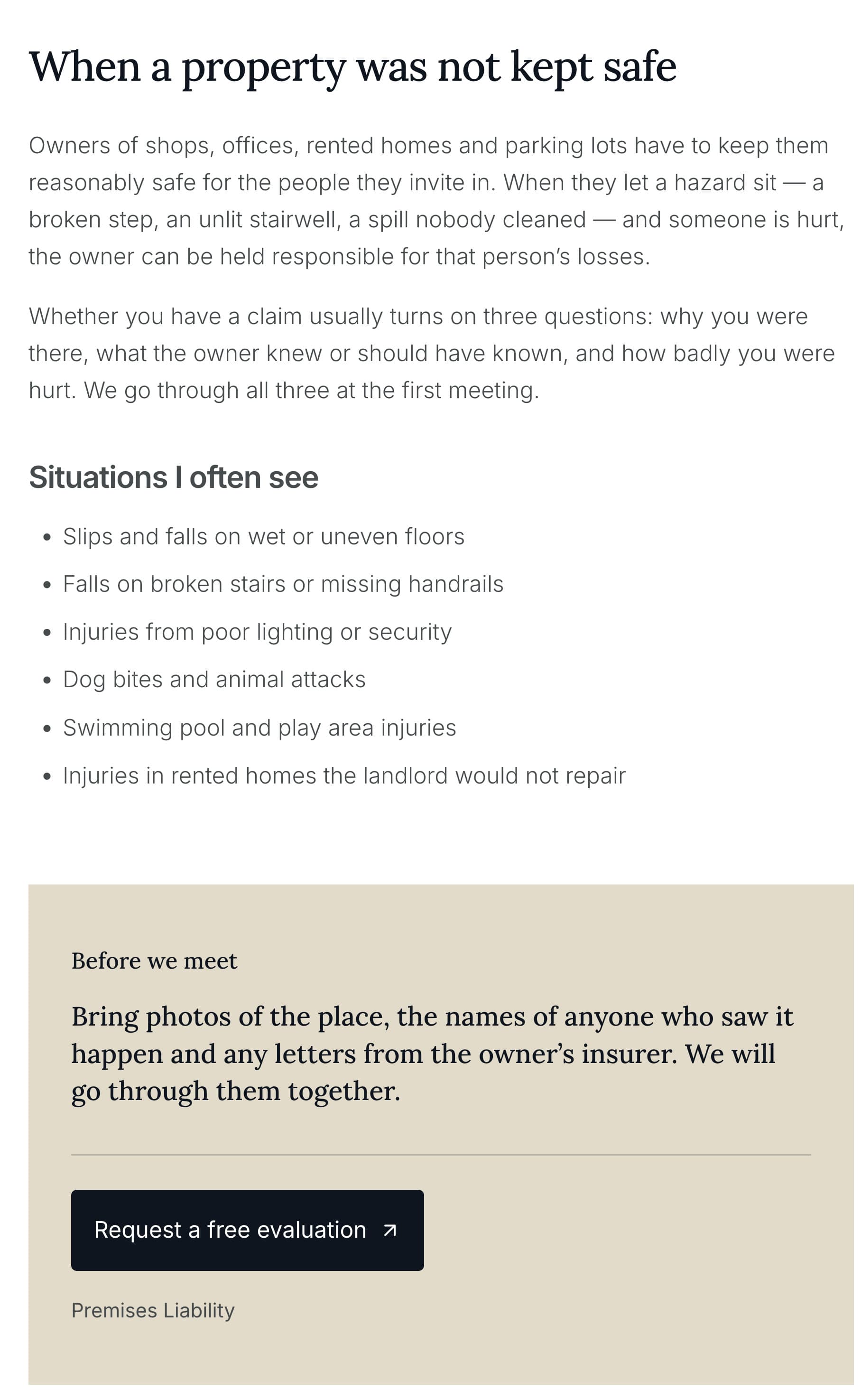
A practice page from the demo of Sitelas's Docket template. It explains the injury in plain words and says what to bring to the first meeting.
3. Answer the questions people ask before they call
Injured people search their questions first. "Do I need a lawyer for a car accident?" "How much do personal injury lawyers take?" "How long does a settlement take?"
Write one short article per question. Answer it in the first paragraph, then explain. If you work on contingency, explain what that means in plain words, and check your state bar's rules on describing fees. A fee explained up front removes a common reason people hesitate to call. If the first consultation is free, say so on every page.
A two-minute video answering the same question works too. People want to see who they would be calling.
One article a month that you finish beats a weekly plan that stops by spring. Link each article to the matching injury page.
4. SEO for personal injury lawyers: the basics
Most of SEO is the work above: the profile, reviews, a page per injury, and answers to questions. The rest is housekeeping:
- A title and description for every page that names the injury and your city. "Slip and fall lawyer in Columbus" beats "Practice Areas". Our domain and SEO guide shows where to set them.
- Your name, address and phone exactly the same on your site, your profile and every directory.
- The legal directories people check, such as Avvo and Justia. Claim your profile and link it to your site.
- A page per city or county you serve, if you cover more than one. Say what is true about each, not the same page with the town swapped.
- Fast on a phone. Many people search from the scene, the hospital or the couch.
- Google Search Console, free, so you can see which searches already show your pages.
Expect months. The map usually moves before the website does.
5. Paid search: Google Ads and Local Services Ads
Paid ads put you in front of searchers today, which SEO can't. Competition for injury searches is heavy, so set a daily limit and watch it.
Google's Local Services Ads cover personal injury lawyers too. Google's help page says they show "prominently in Google Search results". You "only pay when a customer gets in touch from your ad." For a small firm, that makes them a sensible first test.
Either way, track what each signed case cost you, not what each click cost.
6. Referrals: the cases you don't pay for
Many small firms get their best cases from people, not search.
- Other lawyers who don't take injury cases: estate, family and business lawyers meet injured people too.
- Doctors and chiropractors who treat accident patients and get asked who to call.
- Past clients, who are the most trusted voice a stranger can hear. A short note once or twice a year keeps your name in mind.
- Your community: a talk at a driving school, a sponsored youth team, a safety event.
Check your state bar's rules before you set up any referral arrangement.
7. Answer fast
An injured person may call several firms in one afternoon. The firm that calls back first has the best chance.
- Answer the phone, or use an answering service after hours.
- Reply to web forms the same day, ideally within the hour.
- Ask only what you need on the form: name, phone, what happened and when.
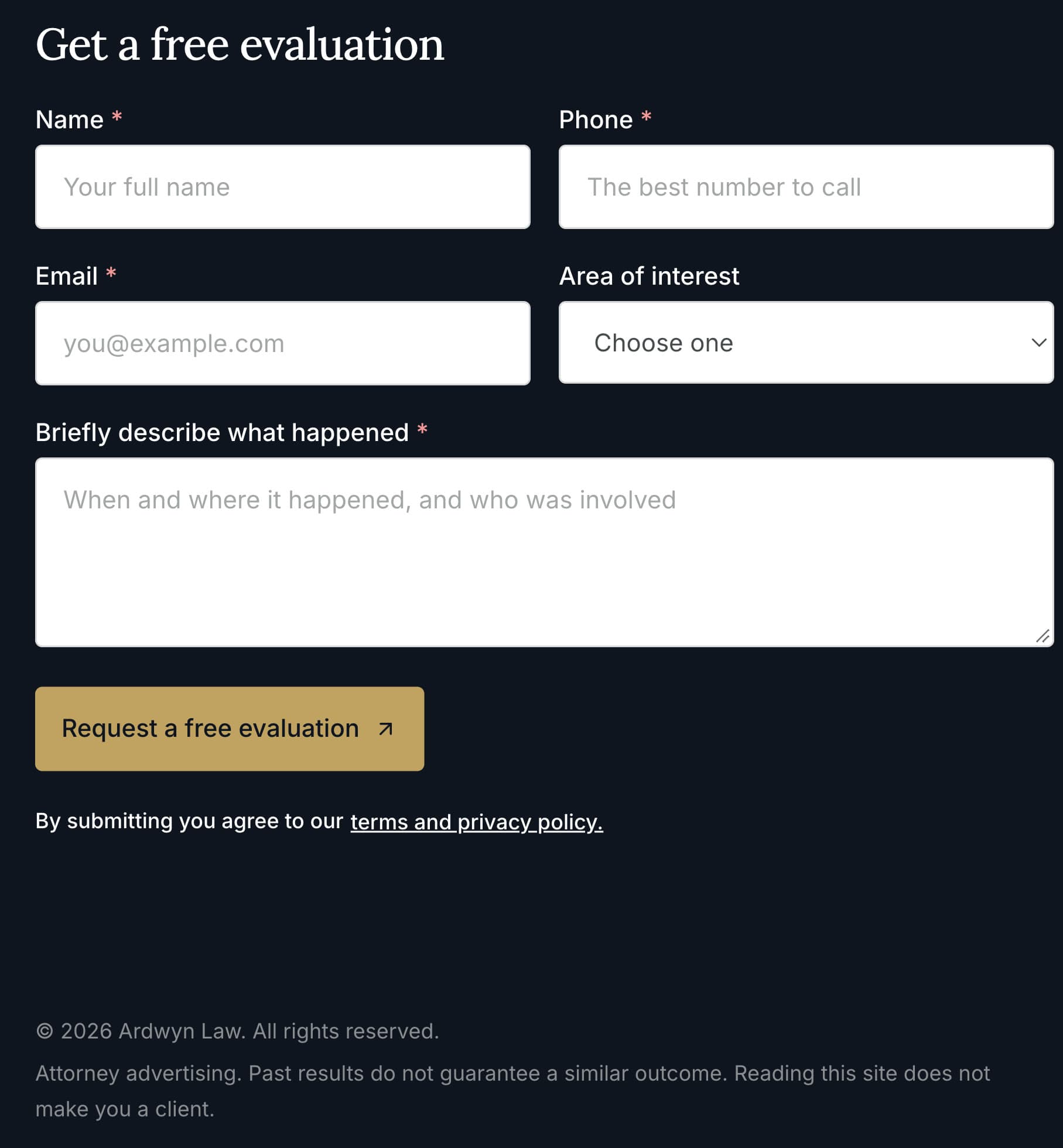
The free-evaluation form that ends every page of the Docket demo. Its footer carries a short advertising notice.
8. Track where every case came from
Ask every new client how they found you, and write it down. After six months you will know which channel signs cases and which only brings calls. Then move money to what works.
What personal injury lawyer marketing costs
- Doing it yourself: time, not money. The profile, Search Console and most directories are free.
- Ads: you set the budget. Judge it by what each signed case cost.
- Agencies: a monthly fee, often with a setup cost. Ask what they will change and how they will report signed cases, not traffic.
- Industry spend: MyCase puts personal injury firms at 15 to 20% of gross revenue on marketing. A small firm starting out can begin far smaller.
Where the website part gets easier
Most of this guide happens off your website. The website part is the injury pages, the articles and keeping them current.
That is the part Sitelas handles. You describe your firm to Claude or ChatGPT, and it builds a site from a template like Docket. Later you ask in the same chat: "Add a page for motorcycle accidents." You see a preview first, and nothing goes live until you say so. Small law firm website shows a full build.
It doesn't manage your Google profile, run ads or collect reviews. Evaluation requests arrive in your Sitelas inbox. The Free plan lets you read five form messages a month, which an injury practice will pass quickly. Pro is $9 a month per site and covers 500. For booked calls, you can embed your own Calendly page.
Questions people ask
How do you market a personal injury law firm?
Start where injured people look: your Google profile and reviews, then a page per injury and answers to their questions. Add ads when you can track what a signed case costs. Build referrals from other lawyers and past clients.
Why do personal injury lawyers advertise so much?
Most people need an injury lawyer once, so there are few repeat clients. Firms must keep finding new ones, and a single case can be worth a lot. That makes the competition for each search and each billboard fierce.
What marketing works best for a small personal injury firm?
Usually the free and cheap channels first: the Google profile, reviews, referrals and a page per injury. Local Services Ads are a sensible first paid test, because you pay when someone gets in touch.
How much do personal injury lawyers spend on marketing?
It varies widely. MyCase puts it at 15 to 20% of gross revenue across the field. A small firm starting out should set a budget it can track to signed cases.
Templates to start from
Build this with a ready-made design, then change anything.
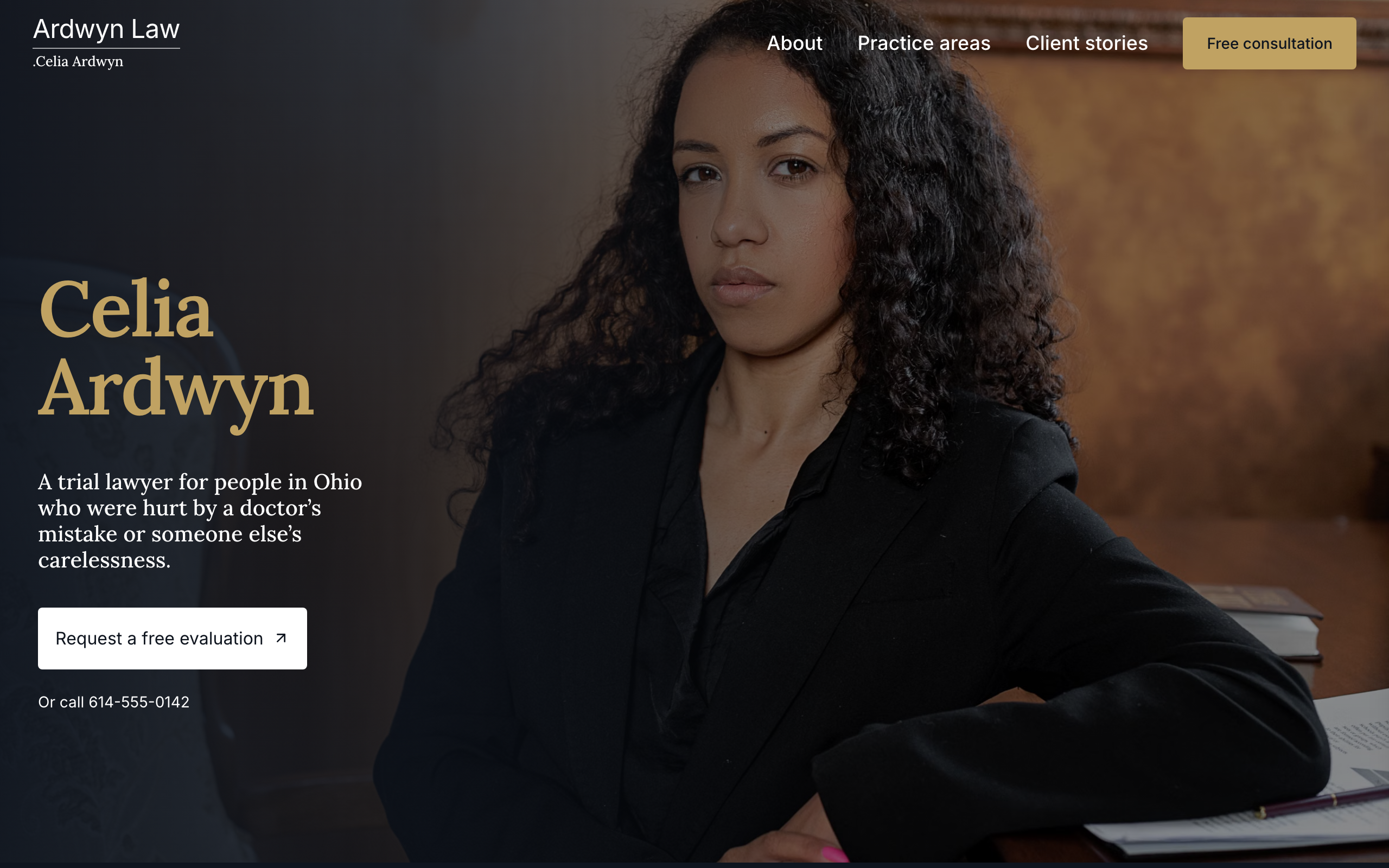


Usman Haider
Founder of Sitelas — the website builder for AI agents.