

Conduit
A website template for an electrician with a 24/7 emergency line
An electrician's site has one job on the worst day of its life: get somebody to a phone. So the largest piece of type on this template is not the headline — it is the emergency hotline number, safety orange at heading size on a near-black band, sitting under three promises with a time in each one. Everything above it is the case for calling; everything below it is proof the call was worth making.
Who Conduit is for
Built for these, and tested against them.
- An electrical contractor with a crew and a 24/7 emergency line
- Trades who publish a starting price rather than making people call to find out
- A firm doing both residential call-outs and commercial fit-outs
- Anyone installing EV chargers, panel upgrades or smart switching who needs the work shown
- A business that is hiring and wants the careers page to actually convert
What’s included
Everything below ships with the template, already filled in.
- Pages
- 10 pages, written and laid out
- Grows with you
- 6 project entries at /projects/, 3 post entries at /blogs/ — add one and its index and detail page both update
- Enquiries
- A working form — messages land in your Sitelas inbox
- Type
- Fira Sans and Work Sans · light theme
- Everywhere
- Built and checked at phone, tablet and desktop widths
- Yours to change
- Every colour, word and photograph — in the editor or by asking an AI agent
About This Template
The page is a dispatch board
Photographs under the type, not beside it
Every content page opens on a full-bleed photograph with a graded ink scrim over it, and the headline sits on the photograph rather than in a column next to it. Between the bands, warm cream and white alternate so the page has a rhythm rather than a wall of sections.
Prices on the cards
Six services, each with a photograph, an icon, two lines and a price anchor — "Starts From $15". Trades sites that hide the number make the visitor call to find out, and most of them do not call. The services page gives each of the six a full row with three specifics and its own booking button.
Work that grows
Projects and blog posts are collections, not hand-built pages. Add a job and it appears on the home strip, on the projects grid and at its own URL with a sticky rail carrying the category, the location, the completion date and how long you were on site. Six jobs and three articles ship as starters.
Hiring is part of the site
Trades businesses lose work because they cannot staff it. The careers page is built for that: why the job is worth having, a bento mosaic of the actual crew rather than four identical headshots, three openings with their requirements, and an open application for everybody else.
When to pick something else
Conduit is the wrong template for these. Where there is a better one, it is linked.
- A one-person trade with no crew and no gallery — try Mainstay
- A commercial contractor selling by tender rather than by phone call — try Ironclad
- Electrical engineering or panel-building sold on specification — try Busbar
- Any business with no emergency or same-day offer — the whole page is built around one
- A quiet, restrained or luxury register
Free to use · No credit card required
- 1Opens in the editor with the starter content in place
- 2Change the words and pictures to yours
- 3Publish to a sitelas.com address, or your own domain
Key Highlights
Questions about Conduit
Can I change how Conduit looks?
All of it. Colours, type, spacing, photographs and every word are yours to edit — in the visual editor, or by asking an AI agent to do it for you. Nothing is locked.
Do I need to know how to code to use Conduit?
No. You edit the page by clicking the thing you want to change. There is no code to write and nothing to install.
Can I add more project entries later?
Yes — that is what the project collection is for. Adding one from the editor creates its own page at /projects/ and updates the index automatically. You are not editing a list by hand.
What does Conduit cost?
Nothing to start, and there is no trial clock. A free site runs on a sitelas.com address; Pro is $9 a month per site when you want your own domain, analytics and more room.
Can I use my own domain?
Yes, on Pro. Point your domain at the site and SSL is issued automatically — there is no certificate to buy or renew.
Make Conduit yours
It opens in the editor with every page already written. Change what you want, publish when it reads like you.
Free to use · No credit card required
Related Templates
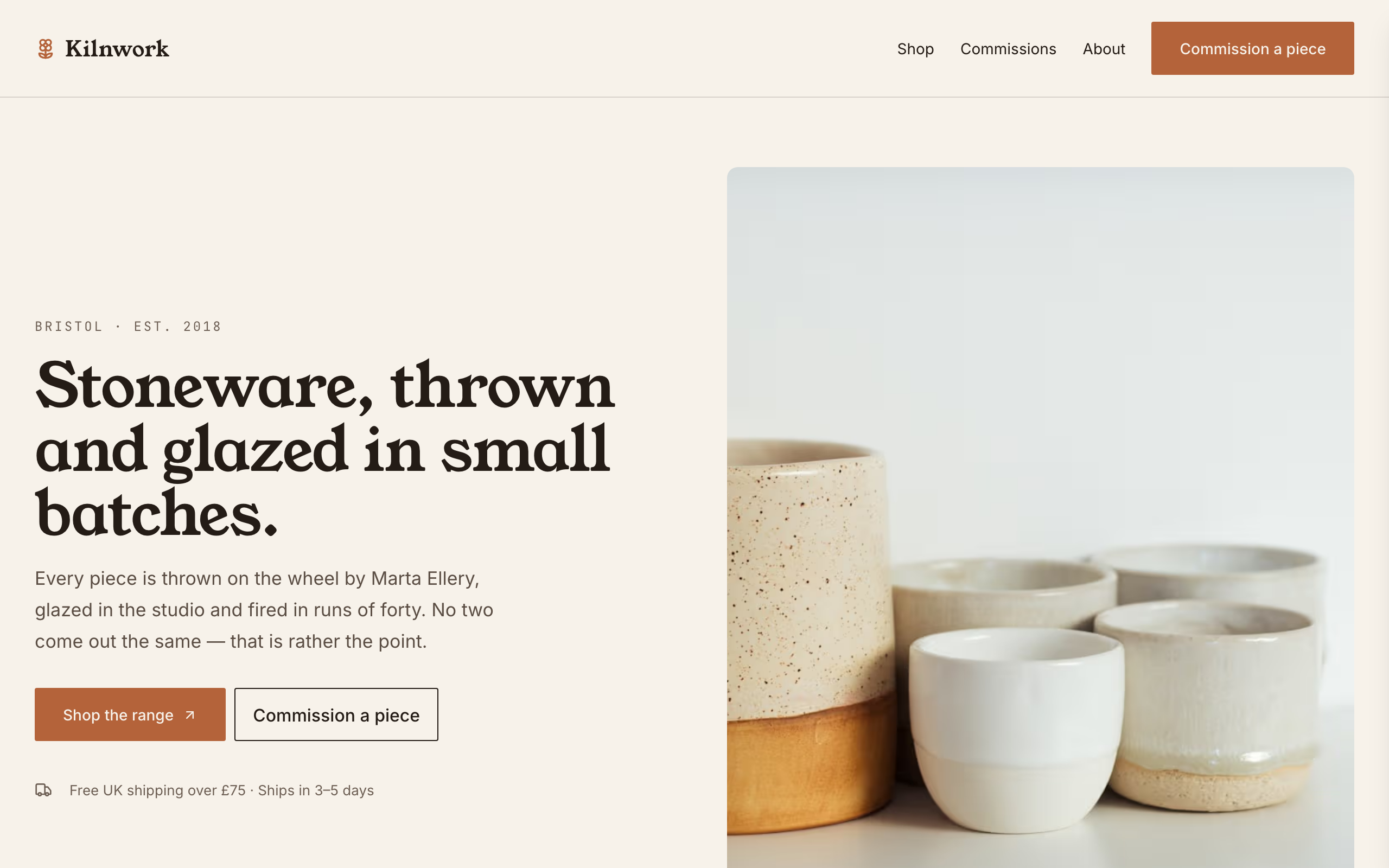
Kilnwork
Catalogue-first shop for a maker who sells physical work — ceramics, jewellery, candles, small-batch food. Warm clay palette on oatmeal, Young Serif display over Inter. A product collection with one Stripe payment link per item drives the shop; a separate commissions page carries the made-to-order enquiry form. Built for the maker who has a stocked range AND takes custom orders, which is the shape most small studios actually trade in. Distinct from cami and pazari (portfolios where the work is the pitch and the conversion is an enquiry) — here the conversion is a purchase.
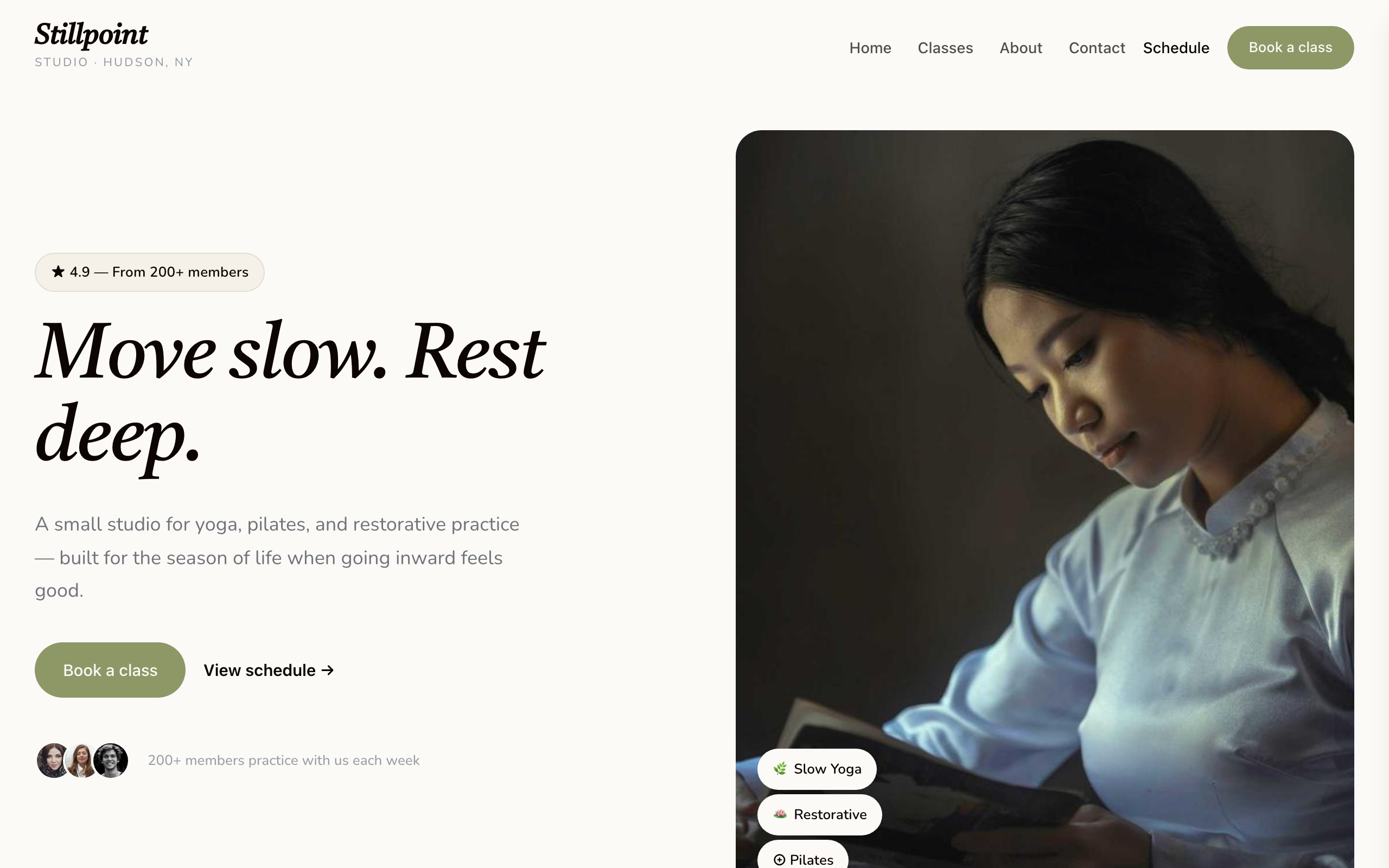
Lotus
Calm-professional wellness studio. Warm cream background with sage and coral accents, Castoro serif display + Nunito body. Designed for yoga / pilates / restorative-movement studios with a small-studio feel — soft photography, image-led hero, services-list class menu, simple membership tiers, and a booking-form conversion. Multi-page with home + classes + about + contact.
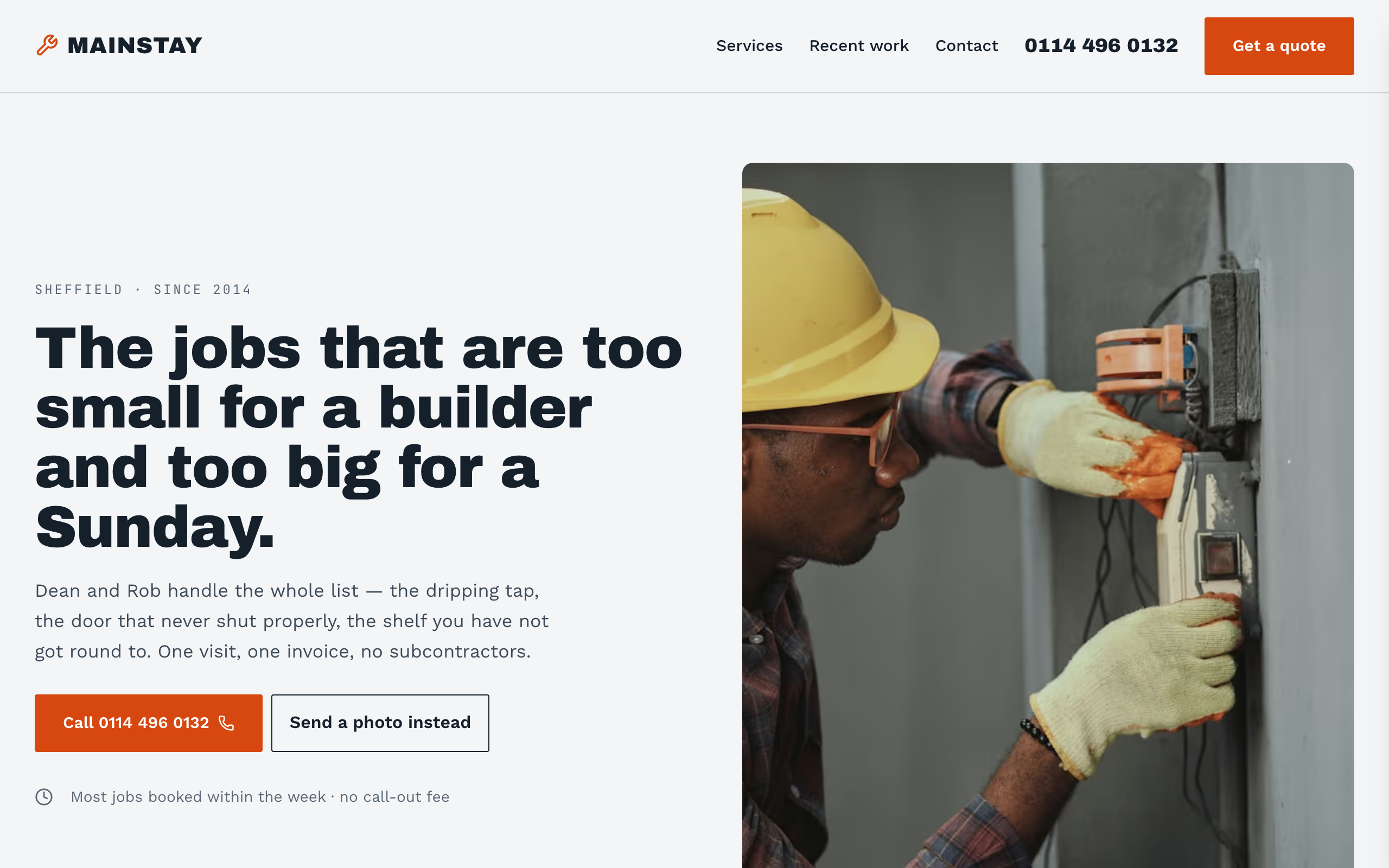
Mainstay
Phone-first site for a local multi-trade — handyman, property maintenance, small works. Slate and utility-orange on cool grey, Archivo Black over Work Sans. The phone number is the primary affordance: it sits in the header, both hero CTAs and the closing band as a real tel: link. Trust strip (DBS, insurance, fixed quotes, availability), six-trade service grid, named service area, a recent-jobs collection with the price actually charged, and a quote form that asks for a postcode and a photo. Distinct from ironclad (a workshop with a portfolio of craft) — this one sells availability and a straight price, not provenance.