HVAC SEO: How Heating and Cooling Companies Get Found on Google
A do-it-yourself HVAC SEO guide: the searches homeowners type, your Google Business Profile, service and town pages, seasonal timing, reviews, listings, and what it costs.

Usman Haider
HVAC SEO is the work that puts your company in front of someone whose AC just quit. It's a phone search, often late, often a little desperate. They call one of the first few names they see. This guide covers what decides those names, in the order that matters for a heating and cooling business.
It's for owners who want to do it themselves, or to understand what an agency would do. Nothing here promises rankings. It describes what Google says it looks at, and what's worked for local trades.
What HVAC SEO covers, and what it doesn't
A local search shows three kinds of results. At the top are paid ads, including Google's Local Services Ads with the "Google Guaranteed" badge. Below them is the map with three businesses, called the local pack. Under that are the ordinary website results.
SEO is the map and the website results. Ads are a separate budget. Many HVAC companies run both. Ads cover the busy weeks; SEO brings calls you don't pay for one by one. Referrals, reviews and fast replies matter as much; contractor marketing covers those.
For the version that fits every trade, read local SEO for contractors. This guide is the HVAC part.
1. Learn how your customers search
HVAC searches come in four kinds, and each needs a different page. Here's how many times some of them are searched in the US each month (Ahrefs, October 2026):
| Search | Searches a month | Kind |
|---|---|---|
| furnace repair near me | 129,000 | Emergency or repair |
| ac repair near me | 103,000 | Emergency or repair |
| heat pump installation | 39,000 | Planned job |
| emergency hvac service | 23,000 | Emergency |
| ac not blowing cold air | 11,000 | Problem |
| hvac maintenance plan | 2,400 | Planned job |
- Emergency and repair searches want a phone number and "we can come today".
- Planned jobs, such as a new heat pump, want prices, options and financing.
- Problem searches ("furnace not turning on") want an answer first. A short, honest troubleshooting page can win the call when the fix needs a technician.
- Town searches add a place name: "AC repair Westerville".
List the 10 jobs that earn you the most. Then write how a homeowner would say each one. That list becomes your pages.
2. Set up your Google Business Profile for HVAC
Your Google Business Profile drives the map results. Most of the work is free and takes an afternoon:
- Primary category: "HVAC contractor" for most companies. Add secondary ones that match real work, such as "Air conditioning contractor" or "Furnace repair service".
- Services: list each one by name, the way customers say it.
- Service area: the towns you actually drive to. Hide your address if you work from home.
- Hours: say "open 24 hours" only if someone really answers the phone at 2am.
- Photos: your vans, your technicians and real installs. Stock photos don't build trust.
3. Give each service and each town its own page
One "Services" page listing everything can't rank for 10 different searches. Give each money-making service its own page: furnace repair, AC repair, heat pump installation, maintenance plans. A good service page says:
- what the job involves and how long it usually takes;
- the signs a homeowner needs it ("short cycling", "warm air from the vents");
- a starting price or how you quote, and any financing;
- your license number and the brands you install;
- one clear way to call or book a visit.
Town pages work the same way, with one rule: make each one different. A page that swaps "Dublin" for "Hilliard" and changes nothing else helps nobody. Mention jobs you've done there, the age of the houses, or how fast you get there.
4. Plan your pages around the seasons
HVAC demand swings with the weather. AC searches climb in early summer, and furnace searches climb when the first cold night arrives. Google needs time to find and trust a page, so publish ahead of the season:
- Late winter to early spring: AC repair, AC tune-ups, "AC not blowing cold air".
- Late summer to early fall: furnace repair, furnace tune-ups, heat pump pages.
- Off-season: maintenance plans and planned replacements, when your schedule has room.
Put the season's service first on your home page, too. Visitors from the map often land there.
5. Ask for reviews that name the job
Reviews count for the map results, and they're what homeowners read before calling. Ask every happy customer, right after the job, with a direct link to your review page. A review that says "replaced our furnace in Westerville the same day" helps more than "great service". You can't write it for them, but you can ask them to mention what you did.
Reply to every review, including the bad ones. A calm, specific reply to a complaint is what the next customer reads. Your website can show your best reviews too.
6. Get listed where HVAC customers and Google look
Links and listings from trusted sites tell Google you're real. For HVAC, the useful ones are:
- Trade associations: ACCA, the Air Conditioning Contractors of America, runs a find-a-contractor directory for members.
- Manufacturer dealer locators: if you're a dealer for a brand you install, check that its locator links to you.
- Local and home-service sites: your chamber of commerce, the Better Business Bureau, Angi and Nextdoor.
Keep your company name, phone number and address exactly the same everywhere. Mismatched details make Google less sure they're one business.
7. Get the website basics right
Most HVAC searches happen on a phone, often in a hurry. So:
- the phone number sits at the top of every page and dials when tapped;
- pages load in a couple of seconds;
- every page has its own title and description, naming the service and town;
- the site tells Google it's an HVAC business, with your address and phone. This hidden label is called structured data.
How long HVAC SEO takes, and what it costs
Expect months, not weeks. A new service page can show up within weeks for a small town. Ranking for "AC repair" in a big city takes much longer. Some companies never get there without ads.
Doing it yourself costs your time. Agencies charge monthly: one agency's guide quotes $1,500 to $5,000 a month (October 2026). If you hire one, ask what they'll change each month. Ask how they'll report calls, not just rankings.
To see what's working, set up Google Search Console for your site. It shows the searches you appear for and which pages people click. For calls, ask every new customer how they found you, and note it.
Where the website part gets easier
Steps 3, 4 and 7 are website work, and that's usually where an HVAC owner gets stuck. Pages are slow to make, and the seasonal changes never happen.
One way to make it easier is to have an AI assistant build and update the site. Sitelas does this from a Claude or ChatGPT chat. I tried it with a made-up company, Ridgeway Heating & Air in Columbus, Ohio. One message asked for a page per service, a page per town and a quote form. Claude built all of it from Sitelas's HVAC template, Flue, as a private preview.
Then I tested the seasonal swap from step 4, in one sentence:
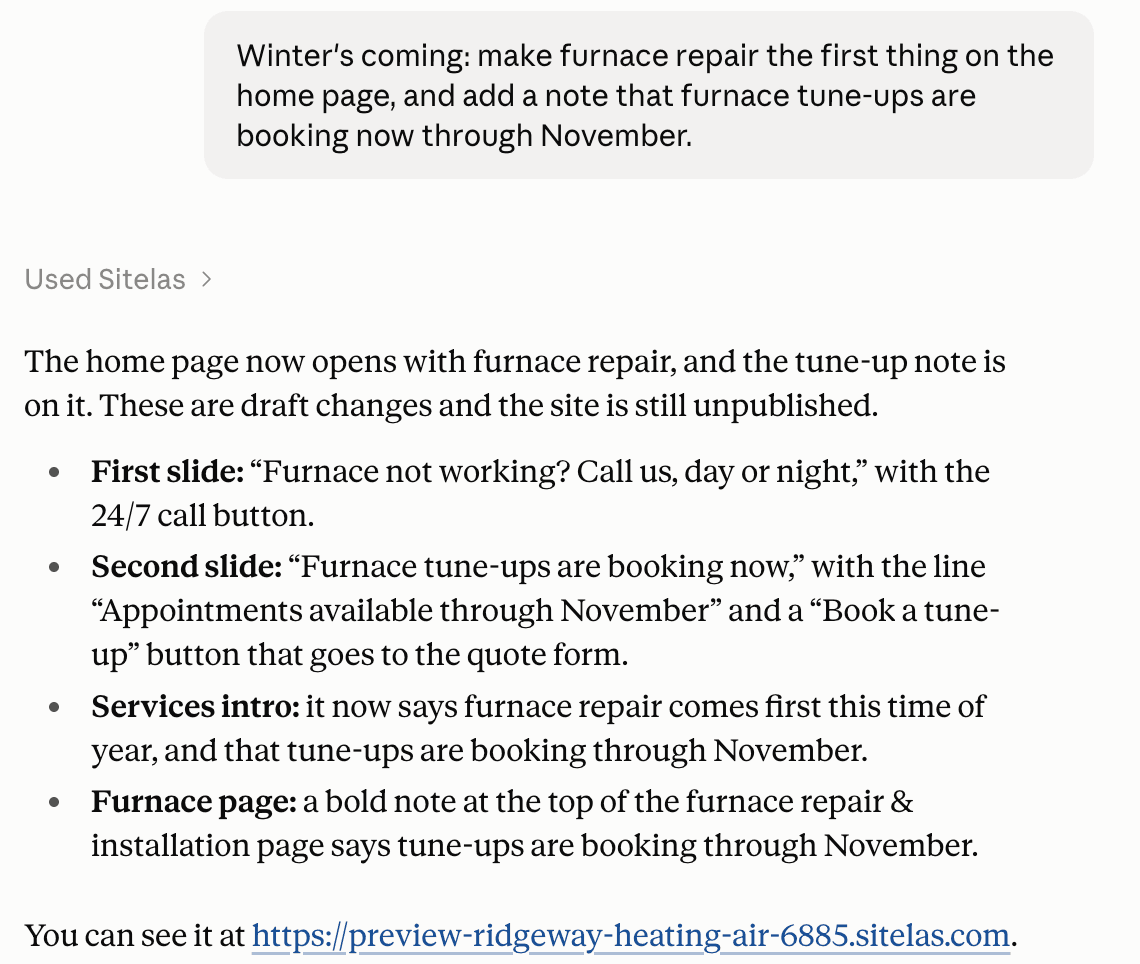
It was less good at step 3. The four town pages came out almost the same, because I hadn't told Claude anything about the towns. No tool can invent local knowledge honestly. So I gave it some for one town:
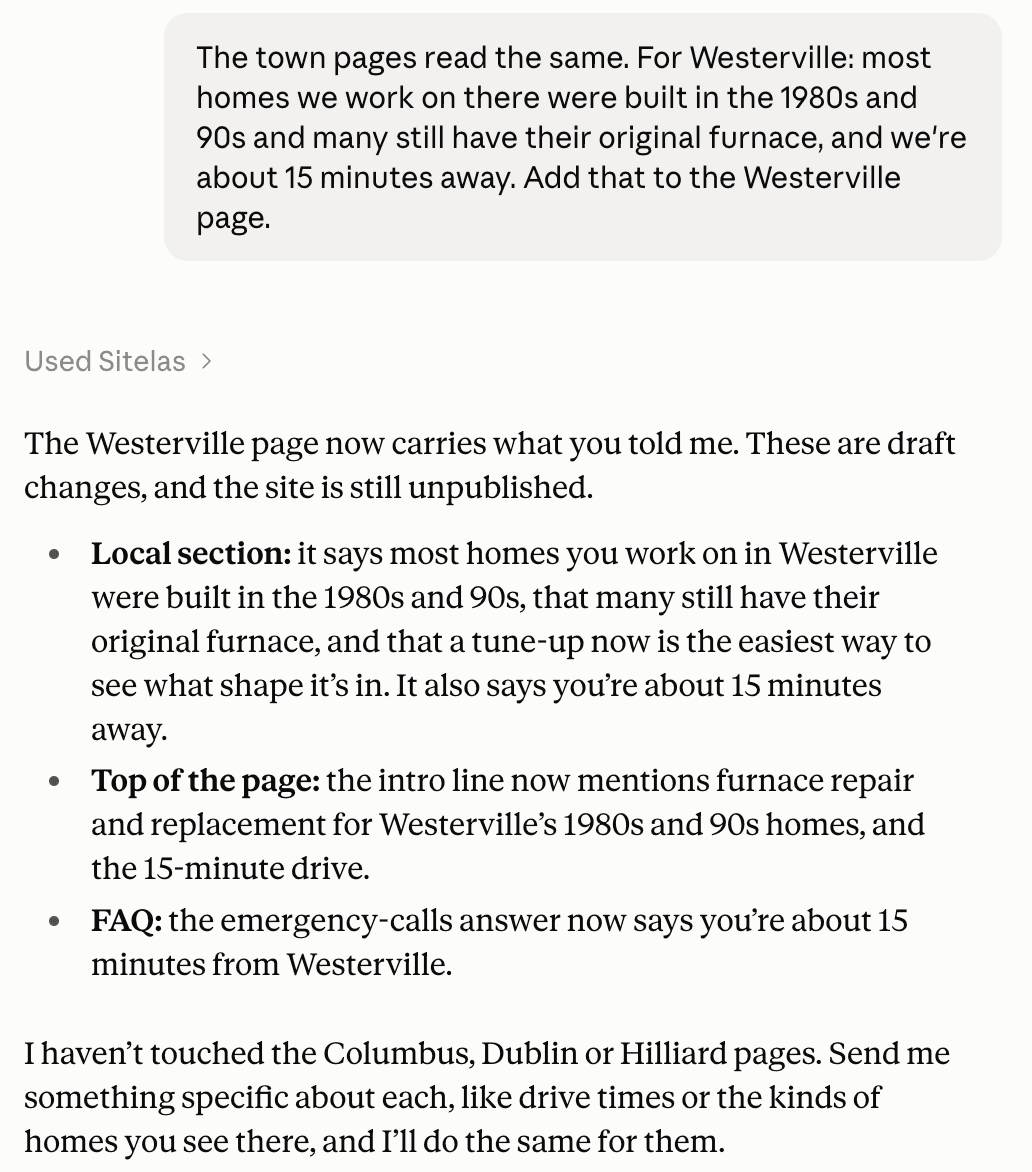
That line now opens the Westerville page:
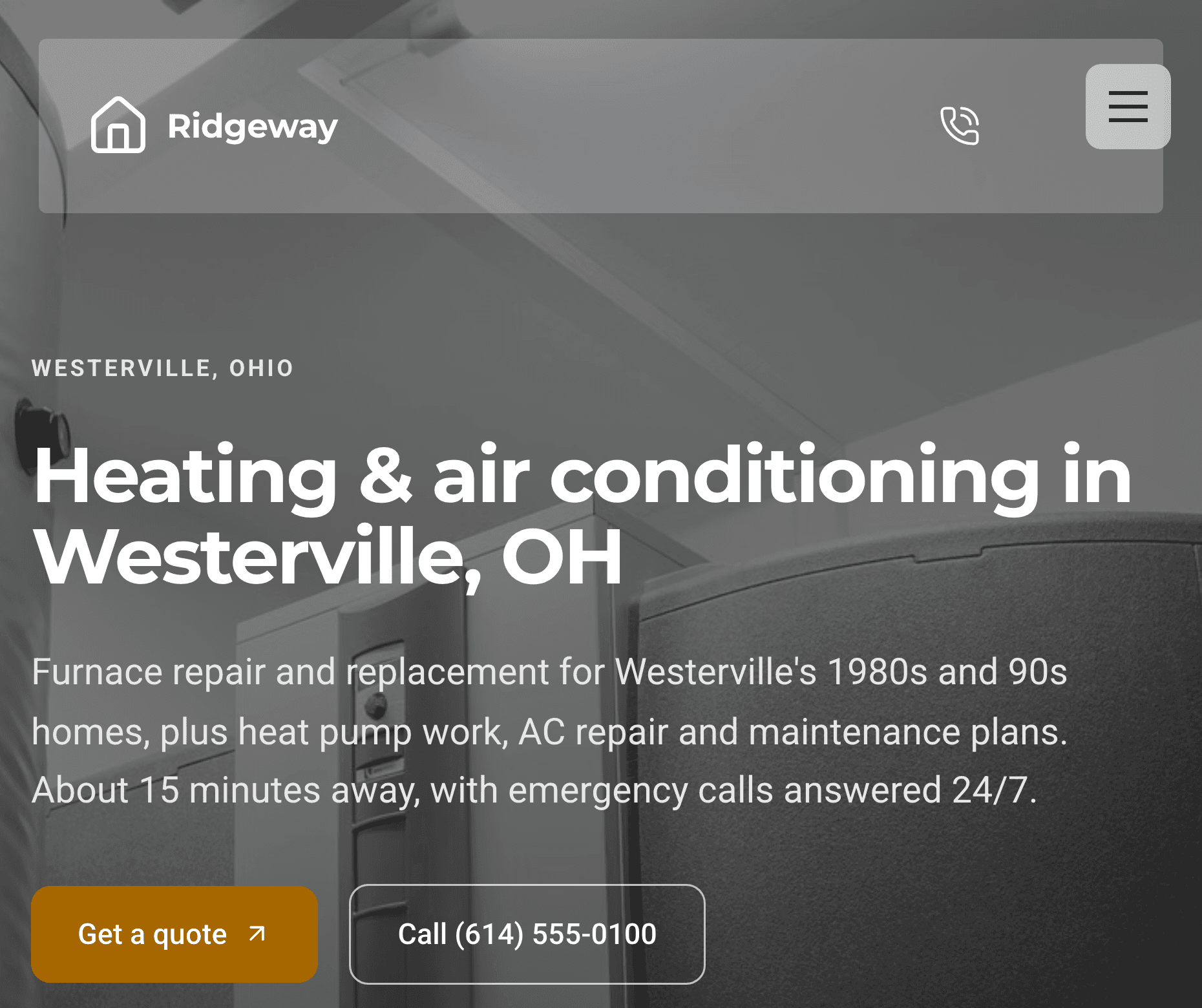
Quote requests land in a Sitelas inbox you can read from the same chat. Sitelas also adds the structured data from step 7 to your home page. Tell Claude your business type, address and phone, and it fills them in. Running your website from a Claude chat shows the weekly updates after launch.
Sitelas doesn't manage your Google Business Profile, run ads, collect reviews or book appointments. Those stay with you. A custom domain, on the Pro plan, keeps the site under your own name.
Questions people ask
How much does HVAC SEO cost? Doing it yourself costs time, plus your website. Agencies charge monthly; one HVAC agency guide quotes $1,500 to $5,000 a month (October 2026). Ask any agency what they'll change each month and how they'll report calls.
How long does HVAC SEO take to work? Months, not weeks. Small towns and specific services move faster than "AC repair" in a big city. Keep publishing pages ahead of each season, and check Search Console monthly.
What is the best Google Business Profile category for HVAC? "HVAC contractor" fits most companies as the primary category. Add secondary categories only for work you really do, such as "Air conditioning contractor" or "Furnace repair service".
Is SEO better than Google Ads for HVAC? They do different jobs. Ads bring calls this week and stop when you stop paying. SEO is slower, but the calls it brings don't cost you per click. Many HVAC companies use both.
Do HVAC companies need a page for every city? Only for the towns you really serve, and only if each page says something true about that town. Ten copied city pages can do more harm than good.
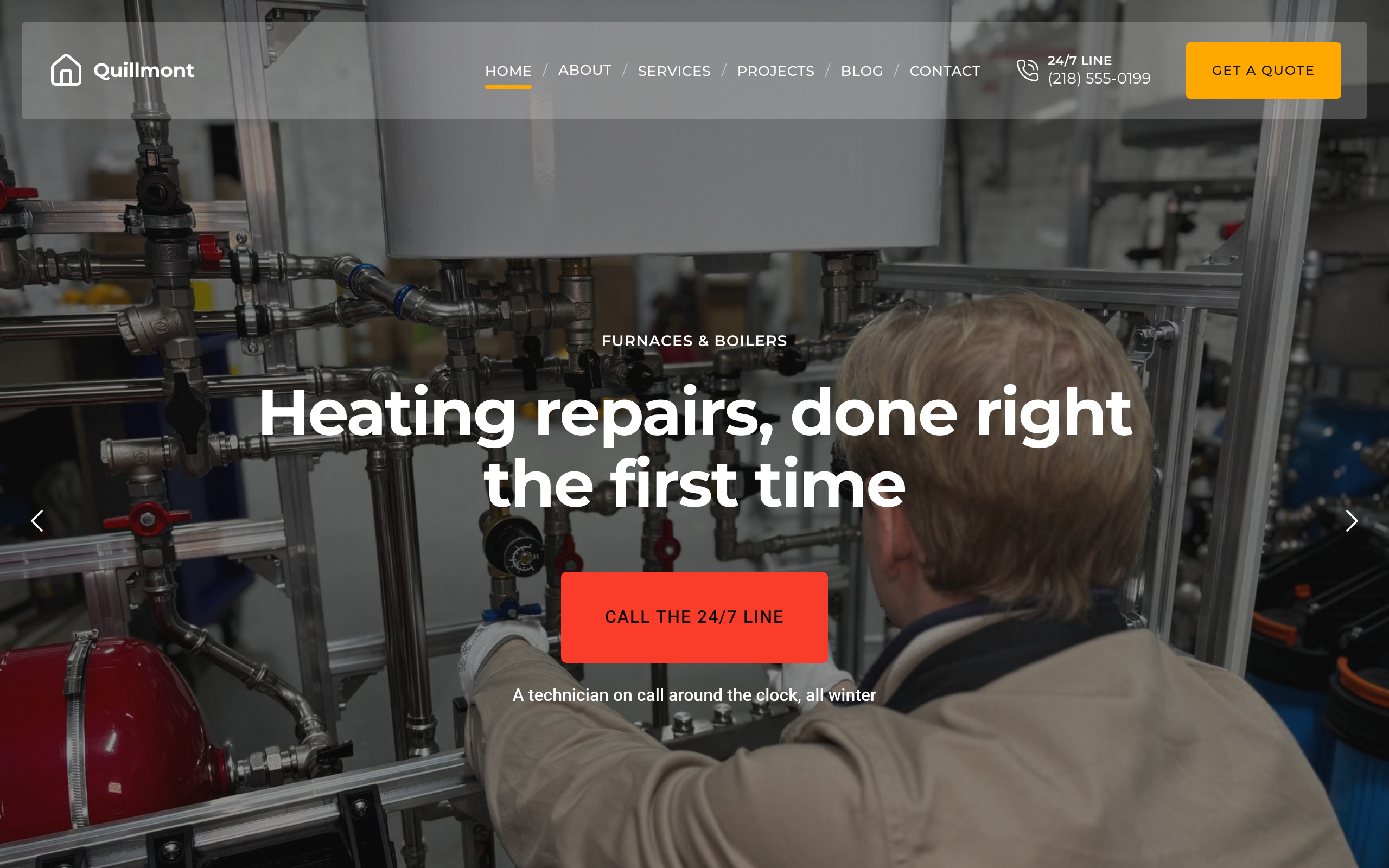
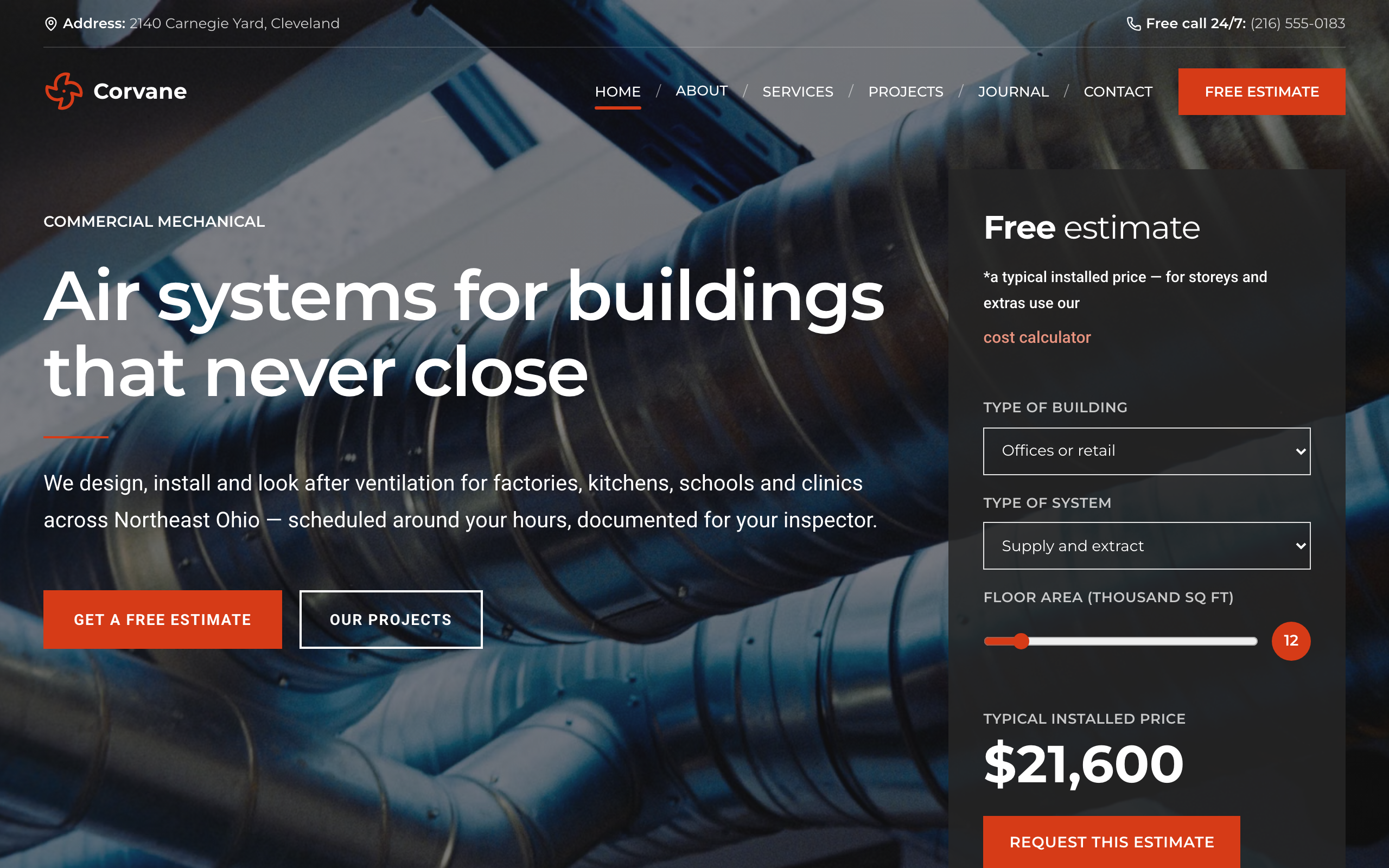
Templates to start from
Build this with a ready-made design, then change anything.

Usman Haider
Founder of Sitelas — the website builder for AI agents.